
TL;DR:
- Dental implants are titanium posts surgically placed into the jawbone to replace missing tooth roots. They offer a high success rate but require careful planning, proper aftercare, and financial consideration. Patients who understand the procedure, explore assistance options, and maintain regular cleaning tend to achieve the best long-term results.
Dental implants are defined as titanium posts surgically placed into the jawbone to replace missing tooth roots, providing a permanent base for artificial teeth. Getting help with dental implants in Australia means understanding four things: the clinical procedure, realistic costs, available financial assistance, and the aftercare required to protect your investment. The Australian Dental Association recognises implants as the gold standard for tooth replacement, and with long-term success rates of 90–95%, they are one of the most predictable procedures in modern dentistry. What most people do not realise is that financial assistance for dental implants exists at both federal and state levels, and knowing where to look changes the conversation entirely.
What does the dental implant procedure actually involve?
The standard implant procedure runs across 4 to 5 stages over 3–6 months, and each stage has a specific clinical purpose. Skipping or rushing any stage increases the risk of failure significantly.
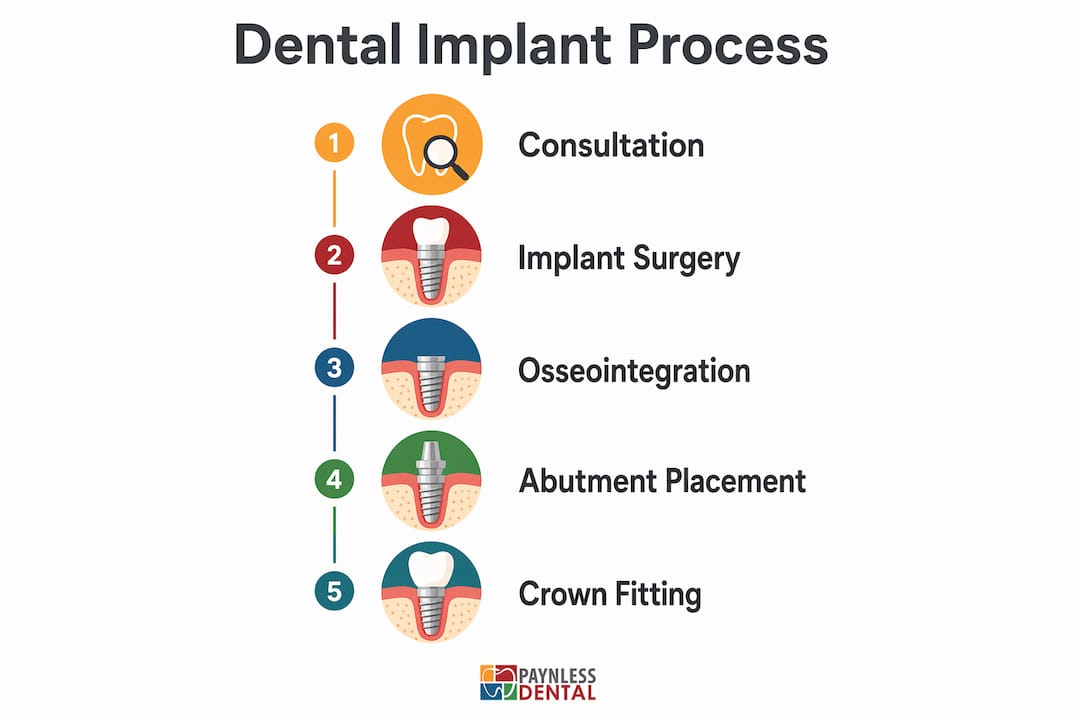
Here is how the process unfolds:
- Consultation and imaging. Your dentist takes X-rays or a cone beam CT scan to assess bone volume, nerve positions, and sinus proximity. This stage determines whether bone grafting is needed before implant placement.
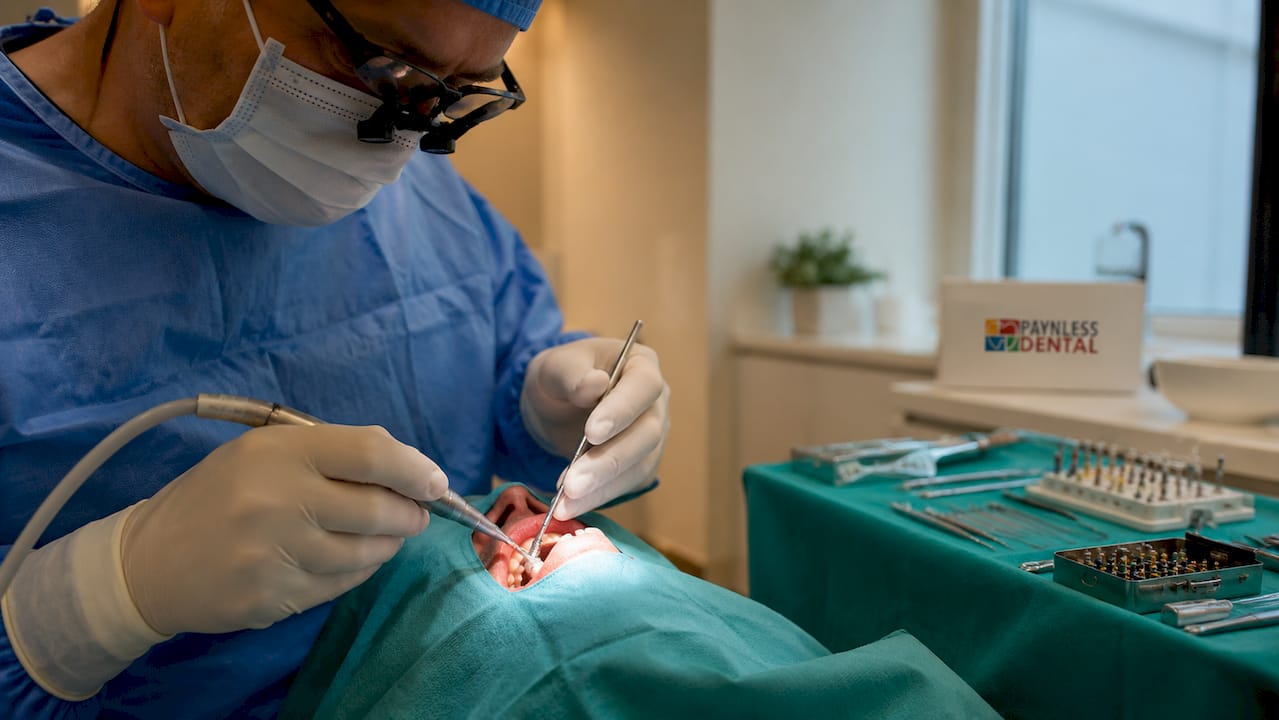
- Surgical placement. The titanium implant post is inserted into the jawbone under local anaesthetic. Most patients describe the experience as pressure rather than pain.
- Osseointegration. The implant fuses with the surrounding bone over 3–6 months. This biological process is what gives implants their strength and stability.
- Abutment placement. Once osseointegration is confirmed, a small connector piece called an abutment is attached to the implant post.
- Crown fitting. A custom dental crown is placed over the abutment, completing the restoration and matching your natural teeth in colour and shape.
The osseointegration phase is the most critical and the most misunderstood. Patients often feel fine within days of surgery and assume the process is complete. The bone is still integrating during this period, and loading the implant too early with hard foods or pressure can cause the post to fail before the crown is ever fitted.
Pro Tip: Ask your dentist for a written treatment timeline at your consultation. A clear schedule of each stage helps you plan time off work, arrange transport after surgery, and budget for each payment milestone.
How much do dental implants cost in Australia, and what financial help is available?
Cost is the single biggest barrier for most Australians seeking assistance for dental implants. A single implant typically ranges from $3,000 to $6,500 depending on the complexity of the case, the location of the clinic, and whether bone grafting is required. Full mouth reconstruction using All-on-4 or All-on-6 solutions costs considerably more. These are not small numbers, and understanding what help is available makes a real difference.
Government and subsidised assistance options:
- DVA funding. The Department of Veterans’ Affairs provides dental benefits for eligible veterans. The DVA biennial limit is set at $5,980.30 indexed over two years, which can offset a meaningful portion of implant costs for eligible patients.
- Public dental services. State and territory public dental schemes offer subsidised care for eligible low-income Australians, pensioners, and concession card holders. Wait times can be long, but the cost savings are substantial.
- Child Dental Benefits Schedule (CDBS). This federal scheme covers basic dental services for eligible children but does not currently extend to implants.
- Medicare. Standard Medicare does not cover dental implants. However, some hospital-based procedures related to implants may attract a Medicare benefit under specific circumstances.
- Payment plans. Many private clinics, including Paynless Dental, offer interest-free or low-interest payment plans that spread the cost over months or years without requiring upfront payment in full.
The Australian Government’s Medical Costs Finder tool is a practical starting point for anyone who needs help paying for dental implants. It allows you to compare typical out-of-pocket costs for procedures by postcode, giving you a realistic benchmark before you book a consultation.
Pro Tip: If you hold a Pensioner Concession Card or Health Care Card, contact your state’s public dental service before approaching a private clinic. You may qualify for subsidised treatment or a referral programme that reduces your costs significantly.
For seniors specifically, affordable implant options for older Australians have expanded in recent years, with some community health centres and university dental clinics offering reduced-fee treatment. Free government dental implants in the traditional sense do not exist as a universal programme, but targeted subsidies and DVA entitlements come close for eligible groups.
What are the risks, and how do you reduce complications?
Dental implants have a 90–95% long-term success rate, which means complications occur in roughly 5–10% of cases. That figure applies to procedures performed by qualified practitioners. The risk profile changes significantly when implants are placed by practitioners without adequate training or planning.
Common risks include:
- Peri-implantitis. A bacterial infection of the tissue surrounding the implant, similar to gum disease around natural teeth. It is the leading cause of late implant failure.
- Nerve or sinus involvement. Poor pre-surgical planning can result in implants placed too close to the inferior alveolar nerve or the maxillary sinus, causing numbness or chronic sinus issues.
- Implant failure. The implant does not integrate with the bone, most commonly due to infection, smoking, or uncontrolled systemic conditions like diabetes.
- Bone loss. Insufficient bone volume at the implant site leads to instability over time.
“Serious implant issues do not always involve intense pain. Early warning signs include light bleeding when cleaning, mild puffiness around the implant site, or a small amount of discharge. Patients who dismiss these subtle signals often present later with advanced peri-implantitis that is far harder to treat.”
Choosing an AHPRA-registered dentist who uses digital imaging and provides a formal informed consent process reduces your risk substantially. AHPRA registration is the minimum standard in Australia, and you can verify any practitioner’s registration on the AHPRA public register at no cost. Risk factors like smoking, uncontrolled diabetes, or bruxism (teeth grinding) require tailored care plans rather than automatic disqualification. A skilled clinician will address these factors before and during treatment, not use them as a reason to turn you away.
What daily care keeps dental implants lasting decades?
Implants do not require exotic maintenance, but they do demand consistent daily cleaning equivalent to what you would give natural teeth. The titanium post itself cannot decay, but the surrounding gum tissue and bone can still be damaged by bacterial buildup. That is the distinction most patients miss.
A practical daily care routine looks like this:
- Brush twice daily with a soft-bristled toothbrush. Electric toothbrushes are effective and gentle on implant surfaces.
- Floss with implant-appropriate aids. Standard floss works, but implant-specific floss, interdental brushes, or a water flosser reaches the areas around the abutment that a toothbrush cannot.
- Avoid abrasive toothpastes. Whitening pastes with coarse particles can scratch the implant crown surface over time, creating microscopic grooves where bacteria accumulate.
- Wear a nightguard if you grind your teeth. Bruxism places enormous lateral force on implants and is a leading cause of crown fracture and implant loosening.
- Quit smoking. Smoking reduces blood flow to gum tissue, impairs healing, and significantly increases the risk of peri-implantitis.
Professional cleaning every 3–6 months is non-negotiable for implant longevity. Dentists and hygienists use special instruments during these visits, specifically designed to clean around implants without scratching the titanium or zirconia surfaces. Standard metal scalers used on natural teeth can damage implant components and create rough surfaces that attract bacteria. This is why periodontal maintenance after implants is a distinct clinical discipline, not just a routine scale and clean.
Pro Tip: Tell your hygienist you have implants before every professional clean, even if they are in your records. This prompts them to select the correct instruments and check for early signs of peri-implantitis at every visit.
Key takeaways
Getting help with dental implants in Australia requires understanding the full clinical process, identifying available financial assistance, choosing an AHPRA-registered practitioner, and committing to consistent aftercare to protect long-term results.
| Point | Details |
|---|---|
| Procedure takes 3–6 months | The implant process runs across 4–5 stages; osseointegration alone takes 3–6 months. |
| Financial assistance exists | DVA limits, public dental schemes, and payment plans reduce out-of-pocket costs for eligible patients. |
| Success rate is 90–95% | Complications occur in 5–10% of cases; choosing an AHPRA-registered dentist lowers your personal risk. |
| Early warning signs are subtle | Bleeding during cleaning or mild puffiness signals peri-implantitis risk before pain appears. |
| Professional cleans every 3–6 months | Special instruments protect implant surfaces and prevent bacterial buildup that causes late failure. |
What I have learned from patients who get this right
The patients who get the best outcomes from dental implants share one habit: they treat the decision like a financial and medical project, not a single appointment. They research costs before they walk into a clinic, they ask about payment plans upfront, and they do not let sticker shock push them toward unqualified providers offering suspiciously low prices.
The cost conversation is the one most people avoid, and it is the one that matters most. I have seen patients delay treatment for years because they assumed implants were completely out of reach financially. When they finally sat down and looked at DVA entitlements, public dental waitlists, or a structured payment plan, the path forward became clear. The money was always more manageable than they expected once they actually asked the question.
The aftercare side is where I see the most preventable failures. Patients invest thousands of dollars in a procedure and then skip their 6-month professional clean because they feel fine. Peri-implantitis does not announce itself with dramatic pain. It creeps in quietly, and by the time it is obvious, the bone loss is already significant. The patients who keep their implants for 20 years are the ones who show up for their maintenance appointments without being reminded.
If you are considering implants and feel uncertain about costs or eligibility, the most useful thing you can do right now is book a consultation with a qualified provider and ask every financial question you have. Paynless Dental offers that conversation without pressure, and the clarity it provides is worth more than any amount of online research.
— Ashish
Paynless Dental’s implant services and support options
Paynless Dental provides dental implant treatment across two Sydney locations, Toongabbie and North Ryde, with flexible payment plans designed to make treatment accessible without compromising on quality. The team handles everything from single tooth implants to All-on-4 and All-on-6 full mouth solutions, bone grafting, and implant-supported dentures. Every treatment plan starts with a thorough consultation, digital imaging, and a clear cost breakdown so you know exactly what you are committing to before any procedure begins. For Australians who need help getting dental implants and want a clinic that combines advanced technology with patient-centred care, Paynless Dental is a practical and trusted option in Western Sydney and the North Shore.
FAQ
What is the success rate of dental implants in Australia?
Dental implants have a long-term success rate of 90–95% when placed by qualified practitioners. Complications occur in approximately 5–10% of cases, most commonly due to infection, smoking, or inadequate bone volume.
Does the Australian Government fund dental implants?
There is no universal government programme for free dental implants. However, DVA-eligible veterans can access up to $5,980.30 indexed over two years, and state public dental schemes offer subsidised care for eligible low-income and concession card holders.
How long does the dental implant process take?
The full process takes 3–6 months from surgical placement to crown fitting. The osseointegration phase, where the implant fuses with the jawbone, accounts for most of that time.
Are dental implants suitable if I smoke or have diabetes?
Smoking and conditions like diabetes increase complication risk but do not automatically disqualify you from implants. A qualified dentist will develop a tailored care plan that addresses these risk factors before and during treatment.
How often do I need professional cleaning after getting implants?
Professional cleaning every 3–6 months is the standard recommendation for implant patients. Clinicians use special instruments to clean around implants without damaging the surface, which prevents the bacterial buildup that causes peri-implantitis.