
TL;DR:
- Traditional dental implants consist of titanium posts implanted into the jawbone to replace roots and support artificial teeth. The procedure involves staged placement, healing, and final crown fitting over several months, utilizing advanced imaging and guided surgery for accuracy. Implants offer superior function and bone preservation compared to dentures and bridges, with long-term durability and health benefits in Australia.
Traditional dental implants are titanium posts surgically placed into the jawbone to replace missing tooth roots and support permanent artificial teeth. In implant dentistry, the full system consists of three components: the titanium screw, the abutment, and the porcelain or zirconia crown. Each component is placed in stages, which explains why the overall process spans several months. What sets this solution apart from dentures or bridges is its ability to restore near-natural function, preserve jawbone density, and last decades without replacement. If you are weighing up your tooth replacement options, this guide covers everything you need to make a confident decision.
What does the traditional dental implant procedure involve?
The dental implant procedure follows a structured sequence from consultation through to final crown placement. Your dentist or oral surgeon begins with a thorough assessment, including 3D cone beam CT scans to evaluate bone volume, density, and the position of nerves. This planning stage determines whether you need preparatory work such as bone grafting before surgery can proceed.
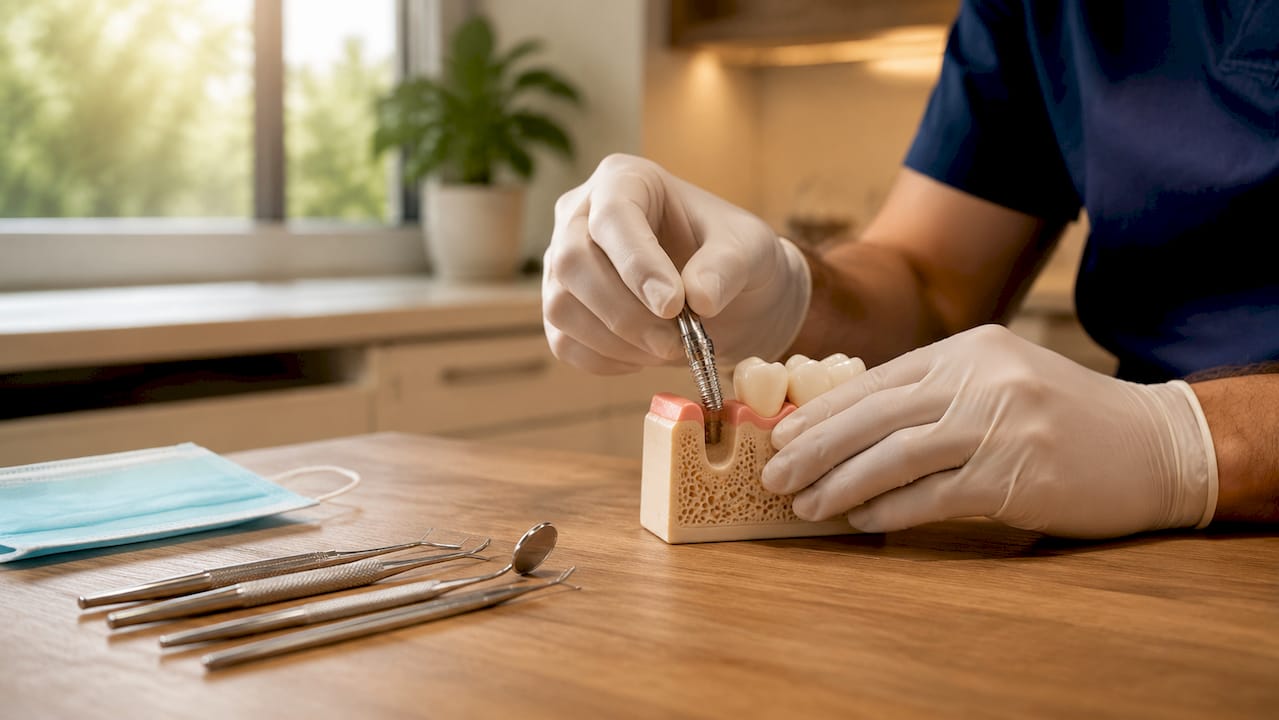
The surgical stage involves placing the titanium implant into the jawbone under local anaesthetic, typically taking 1–2 hours per implant. After placement, the healing phase begins. Osseointegration, the biological process by which bone bonds directly to the titanium surface, takes 3–6 months to complete. This bonding is what gives the implant its stability and is the critical factor behind long-term success.
Once osseointegration is confirmed, the abutment is attached to the implant. The final crown is then fitted, completing the restoration. The full treatment timeline typically spans 3–9 months, though bone grafting can extend this by several additional months. Some patients are candidates for immediate implant placement and loading, where the implant and a temporary crown are placed in a single visit, though this depends on bone quality and clinical judgement.
Modern practices now use 3D-printed surgical guides and AI-assisted planning to improve placement precision and reduce complications. These technologies represent a meaningful shift from freehand placement, lowering the margin for error and improving the fit of the final restoration.
Pro Tip: Ask your clinician whether guided surgery is used at their practice. Guided techniques reduce human error and produce more predictable outcomes compared to freehand implant placement.
Traditional implants vs. dentures, bridges, and mini implants
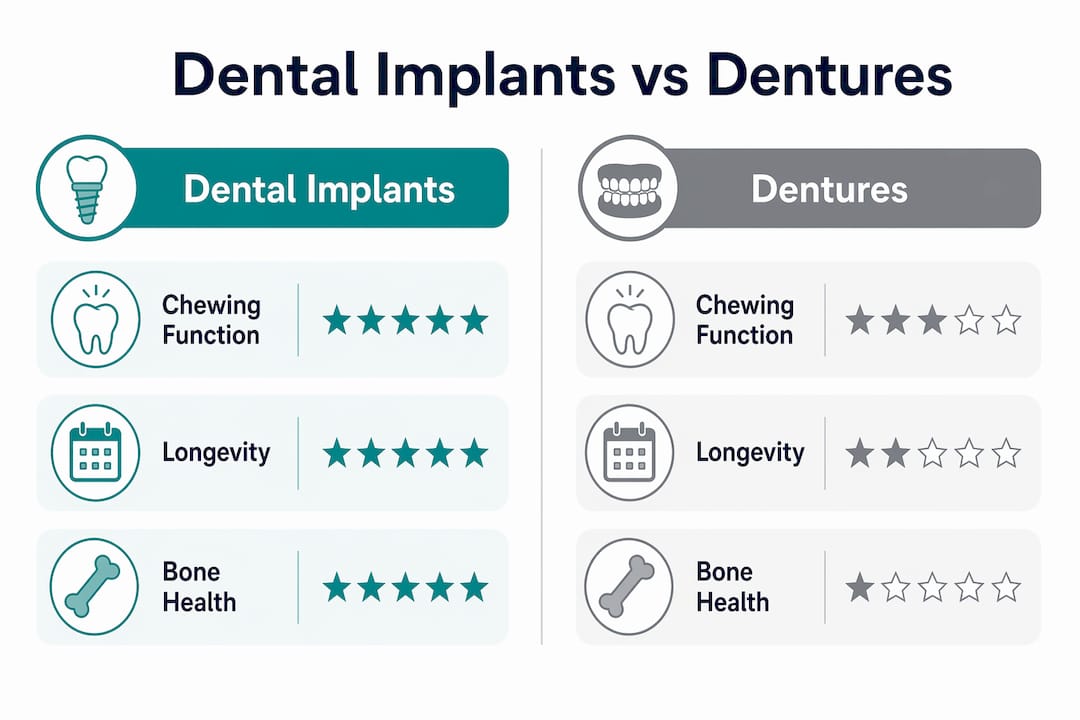
Choosing between tooth replacement options comes down to function, longevity, cost, and impact on surrounding teeth. The table below compares the most common options side by side.
| Option | Chewing Function | Longevity | Bone Preservation | Adjacent Teeth Affected | Approximate Cost (AUD) |
|---|---|---|---|---|---|
| Traditional implants | Up to 90% of natural | 20+ years | Yes | No | $3,000–$6,500 per tooth |
| Dentures | Around 25% of natural | 5–10 years | No | No | $1,500–$4,000 full arch |
| Dental bridges | Moderate | 10–15 years | No | Yes (grinding required) | $2,000–$5,000 |
| Mini implants | Moderate | 10–15 years | Partial | No | $1,500–$3,500 per tooth |
| All-on-4 | High | 15–20+ years | Yes | No | $20,000–$35,000 full arch |
Dental implants restore up to 90% of natural chewing ability, compared to roughly 25% with traditional dentures. That gap has real consequences for nutrition, comfort, and quality of life. Dentures also sit on top of the gum rather than integrating with the bone, which means they do not prevent the jawbone deterioration that follows tooth loss.
Traditional bridges require grinding down the healthy teeth on either side of the gap to anchor the restoration. This permanently damages those teeth and increases the risk of future dental problems. Implants leave neighbouring teeth completely untouched.
Mini implants are narrower in diameter and are generally suited to patients with limited bone volume or those seeking a lower-cost option for smaller teeth. They carry a shorter track record than standard implants and are not always appropriate for molar replacement. All-on-4 solutions use four implants to support a full arch of teeth, making them a strong option for patients who have lost most or all of their teeth and want to avoid full dentures.
What does a traditional dental implant cost in australia?
The cost of dental implants in Australia varies based on the complexity of your case, the technology used, and the experience of your clinician. Here is a breakdown of the typical components:
- Initial consultation and imaging: $150–$500, covering clinical assessment and 3D scans
- Bone grafting (if required): $500–$3,000 depending on the extent of bone loss
- Implant placement surgery: $1,500–$3,000 per implant
- Abutment: $500–$1,000
- Crown: $1,500–$2,500
- Total per single implant: approximately $3,000–$6,500 in most Australian cities
Multiple implants, full-mouth reconstruction, or All-on-4 solutions carry higher total costs but often offer better per-tooth value. Location also plays a role. Metropolitan clinics in Sydney, Melbourne, and Brisbane typically charge more than regional practices, though they often invest in more advanced technology.
Medicare does not cover standard dental implants for adults. Some private health funds provide partial rebates under major dental cover, but the amount varies significantly between funds and policies. Check your policy’s annual limit and waiting periods before booking.
The long-term value proposition is strong. Dentures and bridges require replacement or adjustment every 5–15 years, adding cumulative costs over time. A well-placed implant, maintained properly, can last a lifetime. Patients in their 50s who invest in implants often find they require no repeat treatment into their 70s and beyond. That durability changes the cost calculation considerably.
What are the benefits and risks of dental implants?
The dental implant benefits extend well beyond aesthetics. A clinical study of 70 patients found a 98.6% implant survival rate at 12 months, with patient satisfaction rising from 48% before treatment to 92% afterwards. That jump in satisfaction reflects how significantly implants improve daily life, from eating and speaking to confidence in social situations.
Implants preserve jawbone density by stimulating the bone in the same way natural tooth roots do. Without this stimulation, the jawbone resorbs over time, causing the facial structure to change and making future dental work more complex. No other tooth replacement option replicates this function.
Key benefits include:
- Natural appearance and feel: The crown is matched to surrounding teeth in colour and shape
- No impact on adjacent teeth: Neighbouring teeth are left intact
- Restored speech: Dentures can slip and affect pronunciation; implants do not
- Long-term bone health: Prevents the facial collapse associated with prolonged tooth loss
- High satisfaction rates: Backed by clinical outcome data
Risks worth understanding include peri-implantitis, an inflammatory condition affecting the gum and bone around the implant, similar to gum disease. Screw loosening, nerve sensitivity, and surgical complications such as infection are also possible, though uncommon when the procedure is performed by an experienced clinician. Bone quality is the single biggest predictor of implant success. Smokers, people with uncontrolled diabetes, and those with significant bone loss face higher risk and should discuss this openly with their dentist.
Pro Tip: Support bone health before and after surgery through diet. Calcium, vitamin D, and protein all contribute to faster osseointegration. For specific nutritional guidance, bone health nutrition strategies can help you prepare your body for the procedure.
What is the recovery process after implant surgery?
Recovery from implant surgery follows a predictable pattern, though individual timelines vary based on bone quality, the number of implants placed, and whether bone grafting was required. Here is what to expect:
- Days 1–3: Swelling, bruising, and mild to moderate discomfort are normal. Ice packs applied to the cheek in 20-minute intervals reduce swelling. Your dentist will prescribe pain relief and, in most cases, antibiotics to reduce infection risk.
- Week 1–2: Gum tissue begins to close around the implant site. Stick to soft foods such as yoghurt, scrambled eggs, and soup. Avoid hard, crunchy, or chewy foods entirely.
- Months 1–3: The implant integrates with the bone during osseointegration. You will have follow-up appointments to monitor healing. Avoid smoking during this period as it significantly impairs bone integration.
- Months 3–6: Once osseointegration is confirmed, the abutment is placed and impressions are taken for the final crown. Post-surgical recovery involves managing swelling and infection risk over this full period, with most patients returning to normal activity within a week of surgery.
- Crown placement: The final restoration is fitted, and you begin using the implant as a normal tooth.
Signs that warrant an immediate call to your dentist include persistent pain beyond the first week, unusual swelling that worsens rather than improves, a loose implant, or any discharge from the surgical site. Catching complications early protects the implant and your overall oral health. Maintaining gum health after implants through regular professional cleaning is one of the most important factors in long-term success.
Pro Tip: Book your follow-up appointments before you leave the surgery. Patients who attend scheduled check-ups consistently show better healing outcomes than those who only return when something feels wrong.
Key takeaways
Traditional dental implants deliver the closest functional and aesthetic result to natural teeth, making them the strongest long-term investment for most tooth replacement candidates.
| Point | Details |
|---|---|
| Three-component system | Each implant consists of a titanium screw, abutment, and crown placed across several months. |
| Osseointegration is the key | Bone bonding to the titanium post takes 3–6 months and determines long-term implant stability. |
| Superior chewing function | Implants restore up to 90% of natural chewing ability versus around 25% with dentures. |
| Cost varies but value is long-term | A single implant costs $3,000–$6,500 in Australia, but typically outlasts bridges and dentures. |
| Bone health drives success | Patients with good bone density and no smoking history achieve the highest survival rates. |
Why i think most people underestimate the long-term value
By Ashish
After working in implant dentistry for years, the question I hear most often is whether implants are “worth it.” My honest answer is that the upfront cost and timeline put people off, but the long-term maths almost always favours implants over alternatives.
The thing most people do not consider is what happens to the jawbone when a tooth is missing for years. Bone resorption changes the shape of your face, makes future dental work harder, and can rule out implants altogether if left too long. Choosing a bridge or denture to save money now can cost significantly more in bone grafting and reconstruction later.
I also think the fear around surgery is overstated. With guided surgery and modern anaesthesia, most patients describe the procedure as far less uncomfortable than they expected. The recovery is real, but it is manageable. What is not manageable is spending years with a tooth replacement that slips, affects your speech, or limits what you can eat.
The patients I see who are most satisfied are those who asked the right questions upfront, chose a clinician experienced in implant lifespan outcomes, and committed to the aftercare. Implants are not a passive investment. They reward the patients who look after them.
— Ashish
Start your implant journey at paynless dental
Paynless Dental offers affordable dental implants at both the Toongabbie and North Ryde clinics, serving patients across Western Sydney and the North Shore. The team uses digital planning and guided surgery to deliver precise, predictable outcomes with a strong focus on patient comfort throughout every stage. From your first consultation through to crown placement, you receive clear explanations, realistic timelines, and support at every step. Whether you need a single tooth replaced or are exploring full-mouth reconstruction, Paynless Dental has the experience and technology to guide you through the process. Book a consultation today and find out whether implants are the right fit for you.
FAQ
What are traditional dental implants made of?
Traditional dental implants are made from medical-grade titanium, which is biocompatible and bonds directly with the jawbone through osseointegration. The crown placed on top is typically made from porcelain or zirconia to match surrounding teeth.
How long do traditional dental implants last?
With proper care, traditional dental implants can last 20 years or more, and many patients retain them for life. Clinical data shows a 98.6% survival rate at 12 months, with long-term outcomes depending on bone health, oral hygiene, and regular dental check-ups.
Are traditional implants better than mini implants?
Traditional implants are generally more durable and better suited to replacing molars and load-bearing teeth, while mini implants suit patients with limited bone volume or smaller teeth. Your dentist will assess bone density and tooth position to recommend the right type for your situation.
Does the dental implant procedure hurt?
The procedure is performed under local anaesthetic, so most patients feel pressure rather than pain during surgery. Post-operative discomfort is manageable with prescribed pain relief and typically settles within the first week.
Does private health insurance cover dental implants in australia?
Some private health funds provide partial rebates for implants under major dental cover, but Medicare does not cover standard adult implants. Check your policy’s annual limit, waiting periods, and item number coverage before committing to treatment.