
TL;DR:
- High-quality dental implants have a success rate of 95% to 98% over ten years and can last over 25 years with proper care. The procedure involves assessment, possible bone grafting, implant placement, osseointegration, abutment attachment, and crown fitting, with most stages requiring mild recovery. Implants outperform bridges in longevity, bone preservation, and overall cost-effectiveness over the long term.
Dental implants are titanium posts surgically placed into the jawbone to replace missing tooth roots, and high-quality implants deliver a success rate of 95%–98% over ten years. That figure matters because no other tooth replacement option comes close to that level of reliability over the long term. When people search for “high dental implants,” they are typically looking for premium osseointegrated implants, which is the clinical term for titanium fixtures that fuse directly with living bone. These restorations function like natural teeth, preserve jawbone density, and can last 25 years or more with proper care. For adults weighing their options, that longevity changes the financial and health calculation entirely.
What does the high dental implant procedure involve?
The implant procedure follows a structured sequence, and understanding each phase removes most of the anxiety patients feel before treatment.
Initial assessment and planning. Your dentist takes 3D scans and X-rays to evaluate bone volume and map the surgical site. This planning stage determines whether supporting procedures are needed before implant placement.
Bone grafting or sinus lift (if required). When bone volume is insufficient, a graft rebuilds the site using synthetic material or donor bone. A sinus lift raises the sinus floor to create space for upper jaw implants. These steps add healing time but make implant placement possible for patients who would otherwise be ineligible.
Implant placement. The surgeon places the titanium post into the prepared jawbone under local anaesthetic. The site is then closed and left to heal.
Osseointegration. This is the biological process where bone cells grow around and fuse with the titanium surface. Osseointegration typically takes 3–4 months and is the foundation of long-term implant stability. Rushing this phase is the single most common cause of early implant failure.
Abutment placement. Once the implant has fused, a small connector called an abutment is attached to the post. This piece supports the final crown.
Crown fitting. A custom porcelain or zirconia crown is fitted to the abutment, matched to the colour and shape of your surrounding teeth. At this point, the restoration looks and functions like a natural tooth.
Recovery between stages involves mild swelling and discomfort managed with over-the-counter pain relief. Most patients return to normal eating within a few days of each procedure. For a detailed breakdown of procedure and aftercare steps, Paynless Dental provides a thorough patient guide.
Pro Tip: Ask your clinician for a written treatment timeline before you start. Knowing the exact sequence of appointments and healing windows helps you plan work leave and dietary adjustments well in advance.
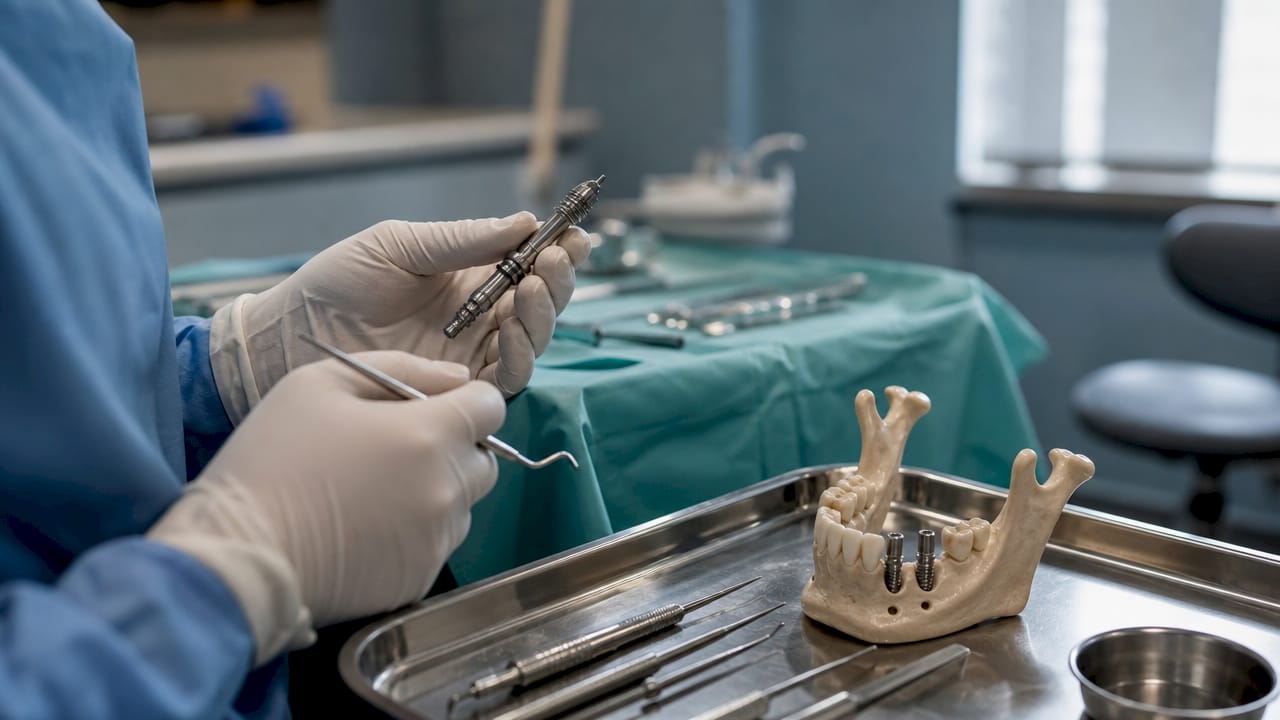
How do high dental implants compare to dental bridges?
The comparison between implants and bridges is not simply about upfront cost. It is about what happens to your mouth over the next two decades.
Lifespan and survival rates
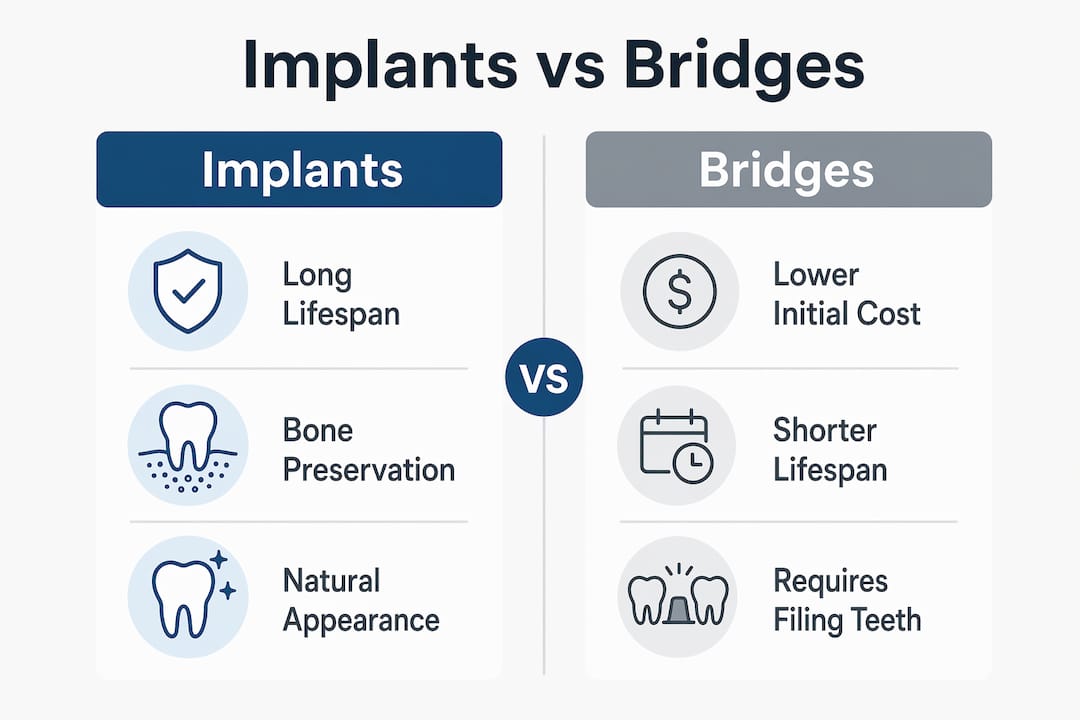
Implants last 25 years or more with proper maintenance. Traditional dental bridges have a functional lifespan of 10–15 years, with survival rates of 70%–85% over 15 years. That means a bridge placed in your 40s will likely need replacement at least once before retirement, adding cost and clinical complexity each time.
Biological impact on surrounding teeth and bone
Bridges require the dentist to file down the two healthy teeth on either side of the gap to anchor the restoration. Up to 30% of those reshaped teeth may need root canal treatment within ten years. Implants leave adjacent teeth completely untouched. Beyond that, implants stimulate the jawbone the way a natural root does, preventing the bone resorption that follows tooth loss. Bridges and dentures provide no such stimulation.
When a bridge makes sense
Bridges remain a valid option when bone volume is too low for implants and grafting is not feasible, or when a patient needs a faster, lower-cost solution. For multiple missing teeth in a row, an implant-supported bridge uses fewer implants than replacing each tooth individually. This approach distributes bite forces effectively and reduces the number of surgical sites, making it a practical middle ground.
| Factor | Implants | Traditional bridges |
|---|---|---|
| Typical lifespan | 25+ years | 10–15 years |
| Bone preservation | Yes, stimulates bone | No, bone loss continues |
| Adjacent teeth affected | No | Yes, filed down |
| Replacement likelihood | Low | High over a lifetime |
| Best for | Single or multiple gaps | Multiple teeth, limited bone |
Pro Tip: If you are missing more than two adjacent teeth, ask specifically about implant-supported bridges. They reduce surgical burden while still preserving bone better than a conventional bridge.
What is the typical cost of high dental implants?
Cost is the most common reason patients delay implant treatment, and the delay often makes things more expensive. Here is what the numbers actually look like in Australia in 2026.
The base cost for a single implant procedure breaks down into two main components. Implant placement starts at around $2,500, and the crown restoration adds another $2,500 or more. That means a single tooth replacement typically starts at $5,000 before any additional procedures.
Additional costs that affect the total include:
- Bone grafting: from $1,500 per site, required when bone volume is insufficient after tooth loss
- Sinus lift: additional surgical fee for upper jaw implants where sinus space is limited
- Full arch solutions: All-on-4 and All-on-6 treatments replace an entire arch with four or six implants, offering a more cost-effective route than replacing every tooth individually
- Diagnostic imaging: 3D cone beam CT scans are often required for treatment planning and carry a separate fee
The long-term value calculation changes the picture significantly. A bridge replaced twice over 30 years, combined with the potential cost of root canal treatment on the anchor teeth, can exceed the upfront cost of a single implant. For a clearer picture of affordable implant options, Paynless Dental outlines the pricing variables in plain language.
Payment options in Australia include interest-free instalment plans through dental finance providers, and in some circumstances patients can access their superannuation early on compassionate grounds to fund dental treatment. Ask your clinic about which options apply to your situation before assuming implants are out of reach.
Who is a good candidate for high dental implants?
Most healthy adults are candidates for implants, but several factors determine whether treatment can proceed immediately or requires preparation first.
Bone density is the primary requirement. The implant post needs sufficient bone to anchor into and fuse with. Jawbone resorbs roughly 25% of its width in the first year after a tooth is lost. This means timing matters. Patients who act within months of extraction often avoid the need for bone grafting entirely. Those who wait years may face more complex and costly preparation.
Systemic health conditions affect healing. Uncontrolled diabetes slows the osseointegration process and raises infection risk. Autoimmune conditions, long-term steroid use, and bisphosphonate medications (used to treat osteoporosis) can all affect bone healing and implant outcomes. These are not automatic disqualifiers, but they require careful assessment and sometimes medical clearance before treatment begins.
Gum health must be addressed before implant placement. Active periodontal disease creates a bacterial environment that undermines osseointegration. Your dentist will treat any existing gum disease before proceeding.
When implants are not immediately suitable, options include implant-retained dentures as a transitional solution, or a staged approach where bone grafting is completed first and implant placement follows after healing. For more detail on what dental implants involve and who benefits most, Paynless Dental’s patient resource covers the key eligibility factors.
Pro Tip: If you have recently had a tooth extracted, book an implant consultation within eight weeks. Acting early gives you the best chance of avoiding bone grafting and reduces total treatment time significantly.
How to care for high dental implants to ensure longevity
Implants do not decay, but the tissue and bone around them can still fail without proper care. Maintenance is straightforward and mirrors what you already do for natural teeth.
Daily care essentials include:
- Brushing twice daily with a soft-bristle toothbrush, paying attention to the gumline around the implant crown
- Flossing or using an interdental brush around the implant daily to remove plaque from areas the toothbrush cannot reach
- Avoiding hard foods that could crack the crown, particularly in the first months after placement
- Not smoking, as tobacco use significantly reduces implant survival rates by impairing blood flow and healing
Regular dental check-ups every six months allow your dentist to monitor the implant, check for early signs of peri-implantitis (inflammation around the implant), and perform professional cleaning of areas that are difficult to reach at home. Catching problems early prevents the kind of bone loss that leads to implant failure.
Warning signs that warrant an immediate appointment include persistent pain around the implant site, visible gum recession, the implant feeling loose, or any unusual taste or discharge near the crown. These symptoms are uncommon in well-placed implants but should never be ignored.
Key takeaways
High-quality dental implants are the most durable and biologically sound tooth replacement available, with success rates of 95%–98% over ten years and a functional lifespan exceeding 25 years when properly maintained.
| Point | Details |
|---|---|
| Long-term success rate | Implants achieve 95%–98% success over ten years, outperforming all other tooth replacement options. |
| Bone preservation | Implants stimulate the jawbone like a natural root, preventing the bone loss that follows tooth extraction. |
| Procedure timeline | Osseointegration takes 3–4 months; acting soon after extraction often avoids the need for bone grafting. |
| Cost versus alternatives | A single implant starts at around $5,000 but typically costs less than replacing a bridge twice over 30 years. |
| Candidacy factors | Bone density, gum health, and systemic conditions all affect eligibility, but most healthy adults qualify. |
Why I think most patients underestimate the value of implants
Patients often come to me having already decided that implants are “too expensive” before they have had a proper consultation. That framing frustrates me, because it compares the upfront cost of an implant against the upfront cost of a bridge, and ignores everything that happens over the next 20 years.
A bridge placed on two healthy teeth means those teeth are filed down permanently. They are now structurally compromised for life, regardless of what restoration sits on top. I have seen patients return a decade later needing root canal treatment on both anchor teeth, then a new bridge, then eventually implants anyway. The total cost and clinical complexity far exceeded what a single implant would have cost at the start.
The other misconception I encounter regularly is that implants are only for older patients or those with severe tooth loss. Adults in their 30s and 40s are excellent candidates, and acting earlier means better bone volume, simpler procedures, and a longer period of benefit. The benefits of dental implants compound over time in a way that no other restoration does.
My honest advice is this: get the consultation, get the full picture, and then make the financial decision. Most patients who do that choose implants. The ones who do not often wish they had.
— Ashish
Paynless Dental: implant care built around your budget
Paynless Dental offers affordable dental implants across two Sydney locations, with clinics in Toongabbie and North Ryde serving patients from Westmead, Chatswood, Ryde, and surrounding suburbs. Every implant consultation includes a personalised cost breakdown so you know exactly what your treatment involves before committing. Flexible payment options, including interest-free plans, make it easier to start treatment without delay. The team at Paynless Dental handles the full implant process in-house, from bone grafting through to final crown placement, so your care stays consistent from start to finish. Book a consultation to get a clear quote and a treatment plan matched to your situation.
FAQ
What are dental implants made of?
Dental implants are titanium posts designed to fuse with living jawbone through a process called osseointegration. The crown attached to the implant is typically made from porcelain or zirconia to match natural tooth colour.
How long does the full implant process take?
The full process from placement to final crown typically takes 4–6 months, with most of that time allocated to the osseointegration healing phase. Additional procedures like bone grafting extend the timeline.
Are dental implants suitable for seniors?
Age alone does not disqualify a patient from receiving implants. Bone density and overall health are the key factors, and many seniors are excellent candidates, particularly when treatment begins promptly after tooth loss.
How do implant-supported bridges differ from traditional bridges?
An implant-supported bridge anchors to implants rather than filing down adjacent natural teeth, preserving those teeth and providing better bone stimulation across the gap. It suits patients missing multiple consecutive teeth.
Does private health insurance cover dental implants in Australia?
Most Australian private health funds provide partial cover for implants under major dental extras, but the amount varies significantly by fund and policy level. Check your specific policy or ask your clinic to help you confirm your entitlements before treatment.