
Finding time for fitness while juggling work, school runs, and family commitments challenges many Western Sydney households. You want exercise that fits into 30 minutes, protects dental health, and works for everyone from kids to grandparents. This guide shares five simple routines that boost overall wellness and oral health, helping your family stay active without complex equipment or gym memberships.
Table of Contents
- How to Choose the Right Simple Exercise Routine
- Routine 1: Walking
- Routine 2: Bodyweight Circuit Training
- Routine 3: Low-Impact Yoga
- Routine 4: Jump Rope
- Routine 5: Swimming
- Quick Comparison of Exercise Routines
- Which Simple Exercise Routine Is Best for Your Family?
- Explore Dental Solutions Tailored for Active Families in Western Sydney
- FAQ
Key Takeaways
| Point | Details |
|---|---|
| Simple routines fit busy schedules | Low-impact exercises under 30 minutes improve fitness and dental health for the whole family. |
| Walking boosts oral health | Daily walks increase salivary flow by 15%, reducing plaque risks naturally. |
| Circuits save time | Bodyweight training combines cardio and strength in 20-30 minutes without equipment. |
| Yoga supports gum health | Stress reduction through yoga lowers inflammation affecting gums and immunity. |
| Jump rope burns calories fast | 15 minutes burns 200 calories with minimal dental trauma risk when done properly. |
How to Choose the Right Simple Exercise Routine
Selecting the right workout matters more than choosing the most intense option. Your routine should match your family’s schedule, fitness levels, and dental health needs.
Exercise routines under 30 minutes per session achieve 60% higher compliance among families with children under 12. Short sessions fit between school pickups and dinner prep. You’re more likely to stick with a 20-minute circuit than abandon a 90-minute gym plan after two weeks.
Low-impact exercises protect joints and teeth while building fitness. High-impact activities can aggravate existing dental issues or interfere with healing after procedures. Swimming, walking, and yoga offer excellent cardiovascular benefits without jarring movements that stress dental work or implants.
Accessibility determines whether you’ll actually do the routine. Choose exercises requiring minimal space and equipment. Your living room, local parks in Western Sydney, or backyard work perfectly. No gym membership or expensive equipment means fewer barriers between you and better health.
Consider how routines affect saliva production and oral immunity. Activities that increase blood flow and reduce stress hormones support healthy gums and natural bacteria balance. Avoid high-impact exercises immediately after dental surgery or implant placement until your dentist clears you.
Pro Tip: Start with the gentlest option that interests you and gradually increase intensity over 4-6 weeks. This approach builds sustainable habits while protecting dental health during your fitness journey.
Match your current dental status to appropriate activities:
- Recent dental work requires low-impact options
- Healthy teeth and gums allow moderate-intensity routines
- Dental sensitivity benefits from swimming or walking
- Implant maintenance works well with affordable family dental care approaches
Routine 1: Walking
Walking stands as the most accessible exercise for families. No special skills, equipment, or locations required. You simply step outside and move.
Walking daily for at least 30 minutes increases salivary flow rate by approximately 15%, reducing plaque accumulation risks. Saliva neutralises acids, washes away food particles, and delivers minerals that strengthen tooth enamel. More saliva means better natural defence against decay and gum disease.
Every family member can participate regardless of age or fitness level. Toddlers in strollers, active teens, and older adults all benefit. You control the pace, making it perfect for mixed-age groups.
Integrate walking into existing routines without adding extra time pressure. Walk to school dropoffs instead of driving. Take evening strolls after dinner. Use weekend mornings to explore parks and trails throughout Western Sydney. These small changes accumulate into significant health improvements.
Cardiovascular benefits appear quickly. Your heart becomes more efficient, blood pressure improves, and stress hormones decrease. Mental wellbeing improves through outdoor exposure and family connection time. Walking creates opportunities for conversation without screens or distractions.
Start with your current comfort level:
- Begin with 10-15 minute walks if you’re inactive
- Build to 30 minutes over several weeks
- Add hills or stairs for extra challenge
- Maintain steady pace where conversation remains easy
This foundation exercise supports healthy dental habits for families while building cardiovascular fitness. The benefits of regular walking extend beyond teeth to include weight management, improved sleep, and stronger bones.
Routine 2: Bodyweight Circuit Training
Bodyweight circuits deliver maximum results in minimum time. Twenty to thirty minutes provides a complete workout combining strength and cardio.
These workouts require zero equipment. Your body provides all the resistance needed. Living rooms, backyards, or outdoor spaces work equally well.
Circuits improve muscle strength, cardiovascular fitness, and metabolism simultaneously. You burn calories during the workout and for hours afterward as muscles recover. This efficiency matters when juggling family schedules.
Basic circuits include exercises everyone knows: squats, pushups, lunges, and planks. Modify intensity by adjusting repetitions or adding variations. Parents do full pushups while kids do knee pushups. Everyone works at their capacity.
Pro Tip: Always include a 5-minute warmup and cooldown. This protects muscles, joints, and helps prevent jaw clenching during intense effort, supporting both physical and dental health.
Sample 20-minute circuit:
- Squats: 30 seconds
- Rest: 10 seconds
- Pushups: 30 seconds
- Rest: 10 seconds
- Lunges: 30 seconds
- Rest: 10 seconds
- Plank: 30 seconds
- Rest: 1 minute
- Repeat 3-4 times
The moderate impact level suits most people with dental concerns when performed with proper form. Avoid clenching your jaw during difficult movements. Breathe steadily and maintain relaxed facial muscles.
Circuits provide fitness benefits similar to walking but with added strength training. You build lean muscle that supports metabolism and bone density.
Routine 3: Low-Impact Yoga
Yoga combines flexibility, strength, and stress reduction in one practice. The mental health benefits directly support oral wellness.
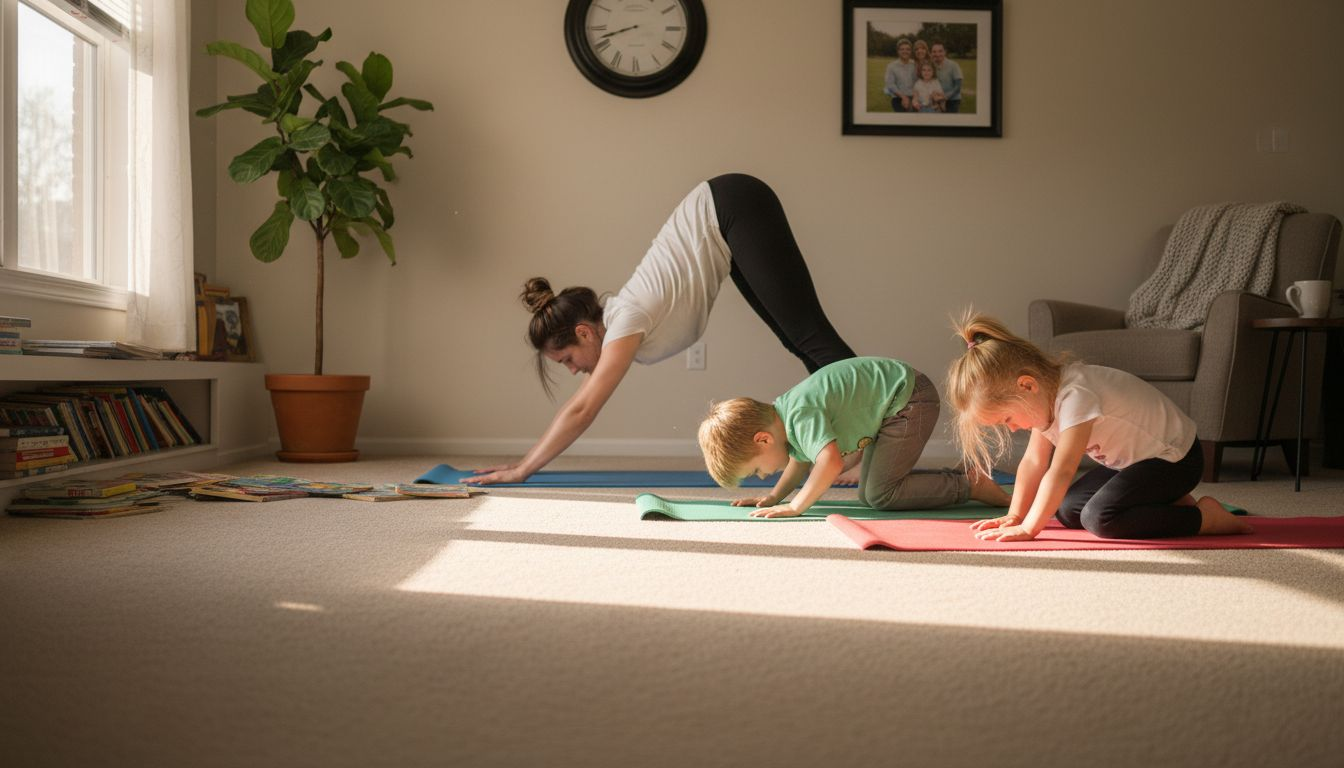
Stress elevates cortisol levels, which increases inflammation throughout your body including your gums. Yoga reduces cortisol, lowering your risk of gum disease and improving immune response. Your mouth’s ability to fight bacteria and heal tissue improves when stress hormones decrease.
Gentle poses suit all ages and fitness levels. Families with dental sensitivity or recent procedures benefit from yoga’s non-jarring movements. You stretch and strengthen without impact or dental trauma risk.
Minimal space and equipment needs make yoga accessible. A small clear area and optional mat provide everything necessary. Free online videos guide beginners through proper form and sequences.
Breathing exercises enhance the physical benefits. Deep breathing increases oxygen delivery to tissues, supporting healing and cell function. This becomes especially valuable during post-dental surgery recovery phases.
Mental wellbeing improvements reduce stress-related oral health problems. Many people clench or grind teeth when stressed, causing wear and jaw pain. Regular yoga practice helps break these patterns.
Start with beginner sequences:
- Child’s pose for relaxation
- Cat-cow for spine flexibility
- Downward dog for full-body stretch
- Warrior poses for strength
- Corpse pose for stress release
Each session should last 15-30 minutes depending on available time. Morning yoga energises your day while evening practice promotes better sleep. Both timing options support oral hygiene and immune function through stress management.
Routine 4: Jump Rope
Jump rope delivers serious cardiovascular benefits in compact timeframes. This efficient exercise suits families with limited space and schedules.
15 minutes of jump rope can burn approximately 200 calories, similar to a 20-minute jog. You achieve significant calorie expenditure without leaving your driveway. The intensity level elevates heart rate quickly, improving cardiovascular fitness with shorter workout duration.
Minimal equipment cost makes this accessible. A quality rope costs under $20 and lasts years. Small spaces work fine as long as you have overhead clearance and a few square metres.
Moderate coordination requirements mean most children and adults can learn quickly. Start with basic two-foot jumps before progressing to alternating feet or tricks. Family members can challenge each other with different patterns, making it fun rather than just exercise.
Careful technique prevents dental trauma. Land softly on the balls of your feet with slightly bent knees. Avoid clenching your jaw during jumps. Keep your mouth closed but relaxed. If you have recent dental work or implants, consult your dentist before starting.
Adjust intensity to match fitness levels:
- Beginners: 30 seconds jumping, 30 seconds rest, repeat 10 times
- Intermediate: 1 minute jumping, 20 seconds rest, repeat 8 times
- Advanced: 2 minutes jumping, 15 seconds rest, repeat 6 times
The high calorie burn in short duration appeals to busy families. You complete an effective workout during kids’ screen time or while dinner cooks. This efficiency helps maintain consistency when time feels scarce.
Routine 5: Swimming
Swimming provides comprehensive fitness benefits with minimal injury risk. Water supports your body weight, eliminating impact stress on joints and teeth.
The gentle nature protects oral structures during exercise. No jarring movements threaten dental work or implants. Swimming suits people in recovery phases or those with dental sensitivity requiring extra caution.
Cardiovascular improvements match or exceed land-based exercises. Your heart and lungs work hard against water resistance. Blood circulation increases, delivering oxygen and nutrients to all tissues including gums. This enhanced circulation supports oral immune function and healing capacity.
Full-body conditioning develops strength and endurance simultaneously. Every stroke engages multiple muscle groups. Legs kick, arms pull, and core stabilises throughout each lap. This complete workout builds functional fitness for daily activities.
All ages participate safely together. Toddlers splash in shallow areas while older children and adults swim laps. Family pool time becomes exercise and bonding combined. Community pools throughout Western Sydney offer affordable access.
Stress reduction occurs naturally in water. The rhythmic breathing and smooth movements calm your nervous system. Lower stress means reduced inflammation and better gum health. Your immune system functions optimally when stress hormones remain balanced.
Swimming works perfectly for families with access to pools:
- Community centres offer family swim times
- School holidays provide extra pool hours
- Indoor pools enable year-round exercise
- Lap swimming and water play both deliver benefits
The low-risk profile makes swimming ideal during dental recovery or for maintaining oral health while staying active. You protect your investment in dental work while building whole-body fitness.
Quick Comparison of Exercise Routines
Comparing key features helps you match routines to your family’s specific needs and circumstances.
| Routine | Duration | Equipment | Impact Level | Dental Health Support | Suitable With Dental Issues | Accessibility |
|---|---|---|---|---|---|---|
| Walking | 30 mins | None | Very Low | Increases saliva 15% | Excellent for all conditions | Highest – anywhere |
| Circuit Training | 20-30 mins | None | Low-Moderate | Stress reduction | Good with caution | High – home/park |
| Yoga | 15-30 mins | Optional mat | Very Low | Reduces inflammation | Excellent for recovery | High – small space |
| Jump Rope | 15 mins | Rope ($20) | Moderate | Requires care | Consult dentist first | High – small outdoor space |
| Swimming | 30-45 mins | Pool access | Very Low | Immune support | Excellent for all | Moderate – pool needed |
This comparison reveals walking and yoga as the safest choices for families managing dental concerns. Both offer very low impact with direct oral health benefits.
Circuit training provides time efficiency for busy schedules but requires slightly more caution with dental issues. The moderate intensity demands proper form to avoid jaw clenching.
Jump rope delivers maximum calorie burn in minimum time but suits healthy teeth better than recent dental work. Swimming combines safety with comprehensive fitness but requires pool access, limiting convenience for some families.
Consider your priorities:
- Safety during dental recovery: Yoga or swimming
- Maximum convenience: Walking or circuits
- Time efficiency: Jump rope or circuits
- Family inclusiveness: Walking or swimming
- Cost effectiveness: Walking, yoga, or circuits
Which Simple Exercise Routine is Best for Your Family?
Your ideal routine depends on current circumstances, dental health status, and family dynamics. These recommendations help narrow choices to your situation.
Post-dental surgery recovery: Choose low-impact yoga for gentle movement supporting healing. The stress reduction benefits accelerate recovery while flexibility work maintains fitness without risk. Wait 4-6 weeks before higher-impact options.
Busy families with minimal time: Select bodyweight circuit training for efficient full-body workouts. Twenty minutes delivers strength and cardio combined. No travel time to gyms or pools means easier consistency.
Families with young children or seniors: Walking provides the safest, most inclusive option. Everyone participates at their own pace. The 15% increase in salivary flow benefits oral health across all ages without special considerations.
Families concerned about dental trauma: Swimming eliminates impact risks while delivering excellent cardiovascular benefits. The water environment protects dental work and implants completely. Stress reduction supports gum health naturally.
Active families seeking variety: Rotate through multiple routines weekly. Monday walks, Wednesday circuits, Friday swimming keeps exercise interesting while targeting different fitness aspects. This approach prevents boredom and overuse injuries.
Families managing dental implants: Consult your dentist before starting new routines. Most low-impact exercises work well, but individual healing timelines vary. Your dental professional knows your specific situation best.
Families on tight budgets: Walking, yoga, and circuit training require zero ongoing costs. These options deliver excellent results without gym memberships or equipment purchases.
Start conservatively regardless of which routine you choose. Build intensity gradually over weeks rather than days. This protects both dental health and overall physical wellbeing while establishing sustainable habits.
Explore Dental Solutions Tailored for Active Families in Western Sydney
Maintaining oral health supports your active lifestyle. Paynless Dental specialises in dental implants designed for families prioritising both fitness and dental wellness. Our implant solutions restore function while withstanding the demands of active living.
Understanding whether dental implants are safe helps you make informed decisions about tooth replacement. Modern implants integrate naturally with bone, providing stability for all activities from walking to swimming. Proper gum care after implants ensures long-term success while you maintain your exercise routines.
Our Toongabbie and North Ryde clinics serve Western Sydney families with convenient locations and flexible scheduling. We understand busy households need dental care that fits around work, school, and fitness commitments.
FAQ
What simple exercise routines support dental health?
Low-impact exercises like walking and yoga increase salivary flow and reduce stress hormones affecting gum inflammation. Walking boosts saliva by 15%, naturally washing away bacteria and neutralising acids that cause decay.
Can families with dental implants safely do jump rope or swimming?
Swimming poses virtually no risk to dental implants due to its low-impact nature, making it ideal post-procedure. Jump rope requires more caution and dental consultation, especially during initial healing phases, though many people enjoy it safely after complete integration.
How can busy families fit exercise into daily routines?
Choose routines under 30 minutes like walking or circuit training that integrate with existing activities. Walk during school dropoffs, do circuits while dinner cooks, or swim during weekend family pool time for better consistency without adding schedule pressure.
Does exercise really affect oral health beyond general wellness?
Yes, physical activity directly influences oral health through increased blood flow, enhanced saliva production, and reduced stress hormones. These physiological changes improve gum tissue health, strengthen immune response against oral bacteria, and reduce inflammation that contributes to periodontal disease.
Which routine works best for families with mixed ages and fitness levels?
Walking accommodates the widest range of ages and abilities, from toddlers in strollers to seniors. Everyone moves at their comfortable pace while staying together as a group, making it the most inclusive option for diverse family fitness needs.