
Every australian family wants to avoid painful dental emergencies and unexpected medical bills. Yet, research shows that over half of australian children experience tooth decay by age six, often due to misunderstood oral hygiene habits. For families in Western Sydney, knowing the truth about dental care myths and the real value of preventative routines can make all the difference in protecting your children’s smiles and avoiding costly visits to premium clinics like Paynless Dental.
Table of Contents
- Oral Hygiene Explained And Common Myths
- Key Daily Practices For Healthy Mouths
- How Poor Oral Care Causes Dental Issues
- Major Benefits For Families And Children
- Risks Of Neglect And Costly Treatments
Key Takeaways
| Point | Details |
|---|---|
| Comprehensive Oral Hygiene is Essential | Effective oral care extends beyond brushing, including flossing, regular check-ups, and a balanced diet to prevent serious health issues. |
| Address Myths About Dental Health | Misconceptions like the unimportance of baby teeth can lead to long-term complications; proactive care is crucial from an early age. |
| Invest in Preventative Care | Consistent dental hygiene practices can reduce the risk of costly treatments and protect overall family health. |
| Engage the Whole Family | Creating a collaborative oral hygiene routine not only builds good habits but also strengthens family bonds and promotes wellness. |
Oral hygiene explained and common myths
Oral hygiene extends far beyond simple tooth brushing. It represents a comprehensive approach to maintaining your family’s overall health through consistent, evidence-based dental care practices. Dental Health Week campaigns by the Australian Dental Association highlight the critical importance of understanding proper oral care techniques that protect not just teeth, but entire body wellness.
Many families harbour misconceptions about dental health that can significantly compromise their long-term oral wellbeing. Common myths include believing that children’s baby teeth aren’t important, thinking brushing alone is sufficient, and assuming dental visits are only necessary when pain occurs. In reality, preventative care is fundamental. Establishing proper oral hygiene routines from early childhood helps prevent tooth decay, gum disease, and potential systemic health complications.
Effective oral hygiene involves more than just brushing. It requires a holistic approach including regular professional check-ups, proper brushing techniques, consistent flossing, and a balanced diet low in sugary foods. Hygiene for Health resources emphasise that oral health connects directly to overall bodily health, with poor dental hygiene potentially contributing to infections, cardiovascular issues, and other chronic conditions.
Key Tip: Implement a family oral hygiene routine that includes brushing twice daily with fluoride toothpaste, flossing, and scheduling regular dental check-ups every six months.
Here’s a summary of how common oral hygiene myths compare with the actual facts and their potential impacts:
| Myth | Fact | Long-term Impact |
|---|---|---|
| Baby teeth unimportant | Baby teeth essential for development | Early tooth loss, nutrition issues |
| Brushing is enough | Flossing and check-ups also needed | Higher risk of gum disease |
| Visit dentist only when sore | Regular visits crucial for prevention | Delayed diagnosis, costly treatments |
Key daily practices for healthy mouths
Maintaining optimal oral health requires consistent and strategic daily practices that go beyond simple brushing. Core oral healthcare principles recommended by the Australian Dental Association emphasise a comprehensive approach to dental wellness that families can easily implement at home.
The foundation of good oral hygiene involves several key daily practices. Brushing teeth thoroughly twice daily with fluoride toothpaste remains critical, but equally important is cleaning between teeth using dental floss or interdental brushes. These techniques help remove plaque and food particles that standard brushing might miss, preventing potential tooth decay and gum disease. Hygiene practices recommended by health professionals also highlight the significance of diet in maintaining oral health, suggesting families minimise sugary snacks and drinks that contribute to tooth erosion.
Developing a consistent routine is essential for long-term dental health. This includes not just mechanical cleaning, but also mindful dietary choices and regular dental check-ups. Children should be taught proper brushing techniques from an early age, using age-appropriate toothbrushes and learning to brush for at least two minutes. Adults should similarly maintain meticulous oral care, paying special attention to hard-to-reach areas and using additional tools like tongue scrapers to reduce bacterial buildup.
Pro Tip: Create a family oral hygiene chart that tracks daily brushing and flossing, making dental care a fun and accountable activity for all family members.
How poor oral care causes dental issues
Dental problems can rapidly escalate when oral hygiene is neglected. Advanced Dental Hygiene research highlights the critical consequences of inadequate dental care, demonstrating how simple negligence can trigger complex health complications that extend far beyond surface-level tooth damage.

The primary mechanism of dental deterioration involves bacterial accumulation and plaque formation. When teeth aren’t regularly cleaned, harmful bacteria multiply exponentially, creating acidic environments that erode tooth enamel and inflame gum tissues. Oral health experts from La Trobe University explain that this progressive damage can lead to serious conditions like dental caries, periodontal disease, and potentially systemic health challenges that impact overall bodily wellness.
Poor oral care doesn’t just affect teeth and gums but can trigger broader health risks. Untreated dental infections may spread bacteria into the bloodstream, potentially contributing to cardiovascular problems, diabetes complications, and respiratory infections. Chronic inflammation from neglected oral hygiene can weaken the immune system, making individuals more susceptible to various health challenges. Regular dental check-ups and consistent home care remain the most effective strategies for preventing these potentially serious health consequences.
Pro Tip: Invest in an electric toothbrush with a built-in timer to ensure you’re brushing thoroughly for the recommended two minutes, helping combat bacterial buildup more effectively than manual brushing.
Major benefits for families and children
Family oral health represents a critical foundation for overall wellness, extending far beyond simple tooth maintenance. Comprehensive research from Curtin University demonstrates that proactive dental care provides multifaceted benefits for every family member, particularly children during their crucial developmental stages.
The impact of consistent oral hygiene extends well beyond preventing cavities. Oral health therapy experts from the University of Newcastle highlight that early intervention supports critical developmental milestones, including proper speech formation, nutritional absorption, and social confidence. Children who develop strong dental habits early experience fewer health complications, reduced dental anxiety, and improved self-esteem, setting the groundwork for lifelong physical and emotional wellbeing.
Effective family oral care strategies create a holistic health environment that benefits multiple generations. By establishing shared dental routines, families can transform oral hygiene from a mundane task into a collaborative wellness practice. Parents who model consistent dental care teach children valuable self-care skills, reducing future medical expenses and promoting a proactive approach to personal health. These shared experiences also strengthen family bonds, turning dental care into an opportunity for education, support, and mutual growth.
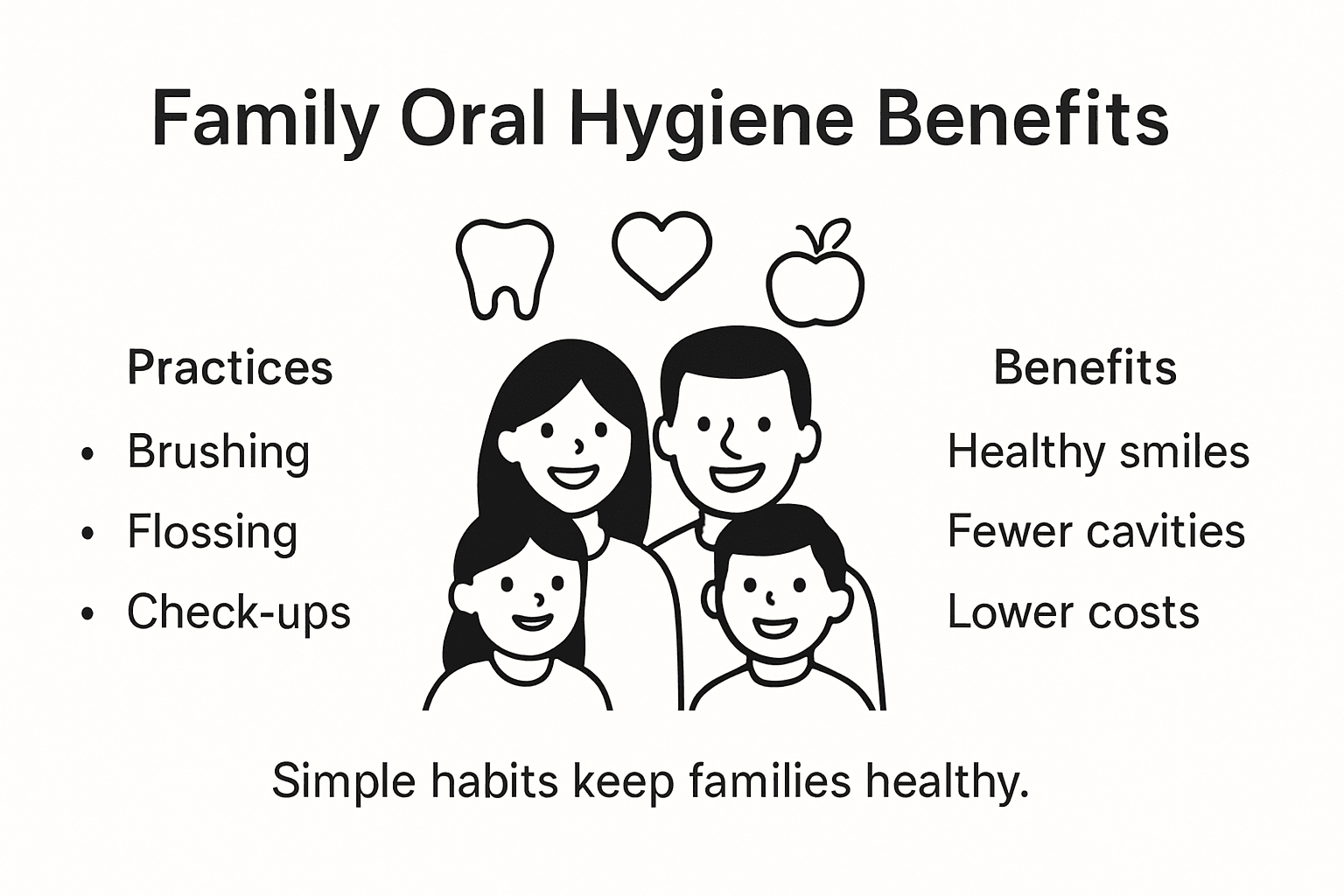
Pro Tip: Create a fun family oral hygiene challenge with rewards for consistent brushing and flossing, transforming dental care into an engaging and positive shared experience.
Risks of neglect and costly treatments
Dental neglect represents a significant financial and health risk for families, with consequences that extend far beyond simple tooth problems. Research from the University of Queensland Oral Health Centre reveals that delayed oral care can transform minor issues into expensive, complex treatments that drain family resources and compromise overall health.
The progression of untreated dental conditions follows a predictable and costly trajectory. What might begin as a small cavity can rapidly evolve into extensive decay requiring root canal treatment, crowns, or even complete tooth extraction. Oral health experts from La Trobe University emphasise that each stage of dental deterioration increases treatment complexity and expense, potentially resulting in thousands of dollars of unexpected medical costs. Beyond financial implications, these interventions also carry significant physical discomfort and potential long-term health complications.
Negligent oral care doesn’t just impact teeth but can trigger broader systemic health challenges. Chronic oral infections may contribute to serious conditions like cardiovascular disease, diabetes complications, and respiratory infections. These interconnected health risks underscore the importance of preventative dental care as a critical investment in family wellness. Regular check-ups, consistent home hygiene practices, and early interventions can dramatically reduce the likelihood of expensive, invasive treatments and protect overall family health.
Pro Tip: Set up a dedicated family dental savings fund to cover routine check-ups and potential unexpected treatments, transforming dental care from a financial burden into a proactive health strategy.
The table below compares the outcomes of consistent oral care routines with irregular or neglected practices:
| Oral Care Routine | Health Outcomes | Potential Costs |
|---|---|---|
| Consistent, preventative | Healthy teeth, lower disease risk | Lower lifetime expense |
| Irregular, neglected | Cavities, systemic health issues | Higher treatment costs |
Protect Your Family’s Smile with Expert Care at Paynless Dental
The article highlights crucial challenges like the misconceptions about baby teeth, the necessity of flossing, and the importance of regular dental check-ups to prevent costly and painful oral health issues. If you or your family are struggling to maintain a consistent and effective oral hygiene routine or facing dental problems such as gum disease or tooth loss, Paynless Dental is here to help. We understand how neglect can lead to complex treatments and long-term health risks.
At Paynless Dental, we offer comprehensive dental solutions including Dental Implants, Root Canal Treatments, and gentle Oral Surgery performed with advanced technology and a focus on your comfort. Don’t wait for pain or irreversible damage to take action. Establish a preventative oral health routine with our expert team at our conveniently located Toongabbie or North Ryde clinics.
Take control of your family’s oral health today. Visit Paynless Dental to book your consultation and start building a healthier smile that lasts a lifetime.
Frequently Asked Questions
What are the key components of a good oral hygiene routine?
A good oral hygiene routine includes brushing teeth twice daily with fluoride toothpaste, flossing regularly, and scheduling dental check-ups every six months.
Why are baby teeth important if they eventually fall out?
Baby teeth are essential for proper development, as they help in speech formation, guide permanent teeth into proper position, and play a role in nutrition absorption.
How can poor oral hygiene impact overall health?
Poor oral hygiene can lead to dental issues like cavities and gum disease, which may contribute to systemic health problems such as cardiovascular disease and diabetes complications.
What tips can families use to encourage children to maintain good dental habits?
Families can create fun oral hygiene challenges, model consistent dental care themselves, and use charts to track brushing and flossing, turning dental care into an engaging and accountable activity.
Recommended
- The Ultimate Guide to Finding the Best Dentist in Blacktown for Your Oral Health Needs – Paynless Dental Clinic
- Toongabbie Dentist Clinic – Paynless Dental Clinic
- Trusted Toongabbie Dentist for All Your Dental Care Needs – Paynless Dental Clinic
- Top Dental Care in Toongabbie: Routine, Cosmetic & Emergency Services
- Role of Ear Hygiene—Why It Matters for Children
- 7 Steps to the Ultimate Collagen Checklist for Beginners