
TL;DR:
- Following dental implant instructions carefully before and after surgery is crucial for successful implant integration. Proper preparation, including quitting smoking and maintaining oral hygiene, significantly improves healing and reduces complications. The healing process involves months of bone fusion called osseointegration, requiring patience and extended care.
Following dental implant instructions precisely before and after surgery is the single biggest factor you control in determining whether your implant integrates successfully. The full process takes 3–12 months from consultation to final crown, with osseointegration alone requiring 3–6 months. What you do in the days and weeks around surgery shapes that entire timeline.
Here is the short version of what matters most:
- Stop smoking at least two weeks before surgery and keep it up afterwards
- Fast for 6–8 hours before surgery if you are having sedation
- Avoid rinsing or spitting for the first 24 hours to protect the blood clot
- Apply ice packs in 20-minute on/off intervals for the first 24–48 hours
- Start gentle saltwater rinses from day two, three to four times daily
- Avoid strenuous exercise for at least 48 hours post-surgery
- Keep the implant site clean to prevent infection and implant loss
- Attend every follow-up appointment at Paynless Dental without exception
How to prepare effectively for dental implant surgery
Good preparation does more for your outcome than most patients realise. A clean mouth, controlled health conditions, and the right medications on hand before you walk through the door reduce complications and shorten recovery.
Medical history and medications
Your clinician at Paynless Dental needs your full medical picture before surgery. Disclose every medication, including supplements. Fish oil, vitamin E, ginkgo, and high-dose turmeric can increase bleeding and may need to be stopped beforehand under GP guidance. Never stop prescribed blood thinners without your GP’s approval first. If you have had IV bisphosphonate therapy for osteoporosis, declare it immediately as there is a small but serious risk of osteonecrosis.
Systemic conditions
Uncontrolled diabetes is one of the most significant healing risks. Work with your GP to bring your HbA1c below 7% before surgery. Healing is meaningfully compromised above that threshold, and your clinician may delay surgery until it is achieved.
Smoking cessation
Stop smoking as early as possible, and aim for a minimum of two weeks before and after surgery. Smoking is a primary risk factor for implant failure, and the longer you abstain, the better your integration odds. The impact of smoking on implant success is well documented and not reversible once integration fails.
Practical preparation
- Book a professional scale and clean before surgery; a clean mouth heals better
- Stock soft foods such as yoghurt, mashed potato, scrambled eggs, and soup
- Purchase chlorhexidine mouthwash (Savacol or equivalent) for post-op use
- Arrange a driver if you are having sedation; you cannot drive yourself home
- Wear loose, comfortable clothing on the day and arrive 15 minutes early
Pro Tip: Preparation is as important as the surgery itself. Patients who arrive with controlled health conditions, a clean mouth, and soft foods already at home consistently have smoother recoveries than those who treat it as an afterthought.
What to do in the first 24 hours after surgery
The first day is the most critical. Your priorities are protecting the blood clot, managing swelling, and keeping the site undisturbed.
Bleeding and clot protection
Avoid vigorous rinsing, spitting, or using straws. All three create suction that can dislodge the clot and trigger a painful dry socket. Light oozing and pink saliva are normal for the first few hours. Bite gently on the gauze pads your clinician provides. If bleeding does not slow within 30 minutes of applying pressure, contact Paynless Dental.
Swelling management
Apply ice packs to your cheek over the surgical site in 20-minute on/20-minute off cycles during the first 24–48 hours. Do not apply ice continuously as prolonged contact causes skin injury. Keep your head elevated when resting, including the first two to three nights of sleep, to reduce overnight swelling.

Diet and drinks
Stick to soft, cool, or lukewarm foods. Avoid hot beverages for the entire day, particularly while numbness from local anaesthetic lasts, which is typically 6–8 hours. Hot liquids increase bleeding and you cannot gauge temperature accurately while numb. Good choices include yoghurt, smoothies (no straw), mashed vegetables, and scrambled eggs.
Medications and restrictions
Take prescribed pain relief as directed and complete any antibiotic course in full. Avoid alcohol, smoking, and straws for at least 48 hours. Rest for the day, but avoid complete immobility; gentle movement is fine.
Do not apply ice continuously. Follow timed 20-minute intervals to avoid skin damage. Persistent bleeding that does not respond to gauze pressure within 30 minutes requires immediate contact with your dental clinician.
Post-operative care in the weeks after surgery
The days and weeks following surgery require a phased approach. What you do in week one differs from week three, and pushing through the stages too quickly is one of the most common reasons healing stalls.
Oral hygiene from day two
Start saltwater rinses the day after surgery, aiming for every two hours during the initial 48-hour period, then three to four times daily until the area heals. Use warm water with half a teaspoon of salt, or the prescribed chlorhexidine mouthwash twice daily starting 24 hours post-surgery. Do not brush directly on the surgical site for the first week, but brush all other teeth normally.
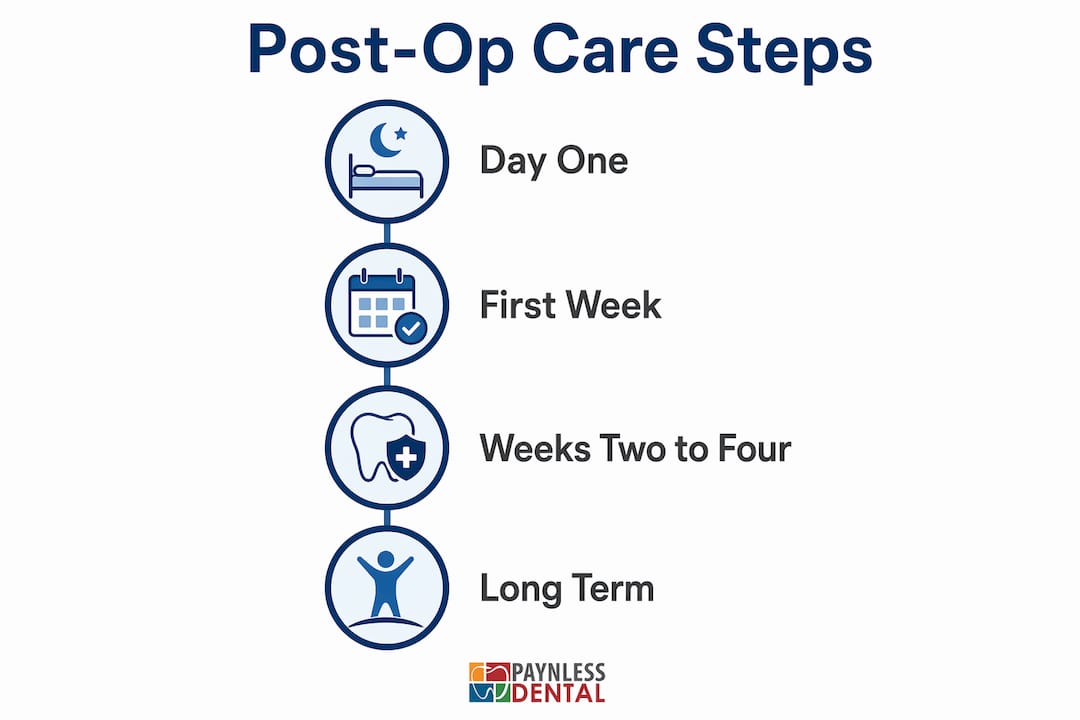
Swelling and bruising timeline
Swelling peaks around days 2–3 and then gradually subsides over about ten days. Bruising can spread and change colour as it resolves, which looks alarming but is normal. If swelling is still increasing after day three, that is a warning sign requiring a call to your clinician.
Diet progression
Maintain a soft-food diet for at least five days. Gradually reintroduce firmer textures as comfort allows, but avoid crunchy, hard, or chewy foods until your clinician clears you. Avoid chewing on the surgical side.
Activity and rest
Resume normal daily activities gradually. Avoid heavy exercise, lifting, and bending for at least one week, as elevated blood pressure can disturb the healing site. Most patients return to desk-based work within two to three days; physical work takes longer.
| Timeframe | What to expect | Key actions |
|---|---|---|
| Day 1 | Numbness, light bleeding, early swelling | Ice packs, rest, soft cool foods, no rinsing |
| Days 2–3 | Swelling and bruising peak | Saltwater rinses begin, pain relief as needed |
| Days 4–7 | Swelling reduces, pain eases | Gentle hygiene around site, soft diet continues |
| Week 2 | Surface healing mostly complete | Stitches removed, firmer foods reintroduced |
| Weeks 2–12 | Bone integration underway | Normal eating returns, maintain hygiene |
Attend your follow-up appointment at Paynless Dental at the 7–10 day mark for stitch removal and a healing check. Do not skip this appointment even if everything feels fine.
Understanding the healing phases and why osseointegration takes months
Healing after implant surgery happens in two distinct phases, and confusing them is where patients most often go wrong.
Soft tissue healing is what you can see and feel. Swelling fades, tenderness eases, and the gum closes over the site. This phase generally completes within one to two weeks. By week three, most patients feel back to normal and assume the hard work is done.
The second phase is osseointegration, the process by which your jawbone fuses to the titanium implant. This takes around 3–6 months and happens entirely beneath the surface. The lower jaw typically integrates faster than the upper jaw, where bone tends to be softer. Grafted sites take longer still. During this period, the implant must not be loaded prematurely. Your Paynless Dental clinician will conduct stability testing at follow-up appointments before placing the final crown, because fitting a crown on an implant that has not fully integrated risks failure.
Smoking and uncontrolled diabetes are the two factors most likely to impair osseointegration. Both reduce blood supply and immune response to the healing site in ways that cannot be compensated for by good hygiene alone.
Pro Tip: The gums looking healed at two weeks does not mean the implant is ready for a crown. Bone integration is invisible and takes months. Patients who understand this are far more likely to comply with the extended care period that protects their investment.
Recognising complications and when to contact your clinician urgently
Most implant recoveries are straightforward. Knowing what falls outside the normal range means you can act quickly when it matters.
Contact Paynless Dental promptly if you notice any of the following:
- Bleeding that does not slow with gauze pressure after 30 minutes
- Swelling that keeps increasing after day three rather than reducing
- Pain that worsens after initially improving, or that is not relieved by prescribed medication
- Fever, chills, or feeling generally unwell, which may signal infection
- Unusual discharge, a persistent bad taste, or an unpleasant smell from the surgical site
- A sensation that the implant is shifting or moving
- Severe or prolonged numbness beyond the expected 6–8 hours post-surgery
If any of these symptoms arise, do not wait for your next scheduled appointment. Early intervention is what prevents a manageable complication from becoming implant loss. Call your Paynless Dental clinician directly.
Peri-implantitis, a gum infection around the implant, can develop months or even years after surgery if oral hygiene lapses. It is one of the leading causes of late implant failure and is largely preventable with consistent care.
Oral hygiene techniques specific to implants during healing
Implants do not get cavities, but they absolutely can fail from infection. Plaque accumulation around the implant site is the direct cause of peri-implantitis, so hygiene during healing is not optional.
For the first 24 hours, leave the surgical site completely alone. No brushing, no rinsing, no probing with your tongue. From day two, begin saltwater rinses and brush all teeth except the surgical site. By the end of the first week, you can begin gently cleaning around the site with a soft-bristled toothbrush.
The healing abutment, the small silver component visible above the gumline, needs particular attention. Brush it lightly to keep it free of plaque and looking clean. Plaque buildup on the abutment can cause early infection before the final crown is even placed. Use a soft-bristle toothbrush and a low-abrasive toothpaste throughout the healing period.
Once healing is complete, clean between the implant and adjacent teeth using floss, interdental brushes, or a water flosser. The periodontal maintenance routine you establish during healing tends to be the one you keep long-term, so build good habits early. Avoid alcohol-based mouthwashes during the first week as they can irritate healing tissue.
Managing medications after dental implant surgery
Take all prescribed medications exactly as directed, without skipping doses or stopping early because you feel better.
Antibiotics
If antibiotics are prescribed, complete the entire course. Stopping early because discomfort has eased is one of the most common mistakes patients make, and it risks allowing a partial infection to take hold. Antibiotics after implant surgery are prescribed to prevent infection at the surgical site, not just to treat existing symptoms.
Pain relief
Paracetamol and ibuprofen alternated on a schedule generally provide adequate pain control after implant surgery. Take them on time rather than waiting until pain peaks, as staying ahead of discomfort is far more effective than catching up to it. Avoid aspirin, which thins the blood and increases bleeding risk. If prescribed stronger pain relief, follow the dosage instructions precisely and do not combine with alcohol.
Continuing regular medications
Continue all regular medications unless your clinician or GP has specifically advised otherwise. If you take blood thinners, do not adjust the dose without GP guidance, even if you notice more bleeding than expected. Your dental team will have factored your medication into the surgical plan.
Pre-medication
Some patients are prescribed antibiotics or anti-inflammatory medication to take before surgery. If this applies to you, take it exactly as specified on your consent form. Timing matters; taking it too late reduces its effectiveness.
What to do in an emergency: severe bleeding or implant failure
Knowing how to respond quickly can make the difference between saving and losing an implant.
Severe bleeding
Place a clean gauze pad firmly over the bleeding site and bite down with steady pressure for 30 minutes without checking. Keep your head elevated and rest quietly. Do not rinse, spit, or remove the gauze to inspect the site during this time. If bleeding has not slowed after 30 minutes of consistent pressure, call Paynless Dental immediately. If the practice is closed, go to your nearest hospital emergency department.
Suspected implant failure
If you feel the implant shifting, moving, or loose at any point, stop chewing on that side immediately. Do not press or wiggle it to test the sensation. Call your clinician as soon as possible. Early mobility sometimes indicates incomplete osseointegration rather than full failure, and prompt assessment gives the best chance of intervention. For broader guidance on your implant care options, Paynless Dental clinicians can walk you through next steps at your appointment.
Dental emergencies outside business hours
Save your Paynless Dental clinic number in your phone before surgery. For after-hours emergencies, Healthdirect Australia provides a 24-hour health advice line at 1800 022 222 where a registered nurse can advise on whether your situation requires immediate hospital care.
Key takeaways
Successful dental implant integration depends on following precise pre- and post-operative instructions, with osseointegration requiring 3–6 months of protected healing even after the gum appears fully recovered.
| Point | Details |
|---|---|
| Smoking cessation is non-negotiable | Stop at least two weeks before and after surgery; smoking is a primary cause of implant failure. |
| Osseointegration takes 3–6 months | Bone fusing to the implant happens invisibly; do not load the implant before your clinician confirms stability. |
| Ice packs in timed intervals | Apply 20 minutes on, 20 minutes off during the first 24–48 hours to manage swelling without skin injury. |
| Complete all antibiotics | Stopping a course early risks infection even when symptoms have eased. |
| Attend every follow-up | Paynless Dental clinicians confirm healing progress and implant stability before placing the final crown. |
Paynless Dental provides dental implant surgery at our Toongabbie and North Ryde clinics, serving patients across Western and Northern Sydney. If you have questions about your upcoming procedure or need to book a post-operative review, contact our team directly. For patients also considering related restorative care, our root canal treatment services are available at both locations.