
Keeping your teeth clean with braces can feel like an uphill battle and there are so many tiny spaces for food to hide. Brushing and flossing is suddenly more complicated, but that does not mean you have to resign yourself to cavities or stained teeth. The real shock is that using the right tools and routine can cut your risk of orthodontic complications dramatically and even reduce treatment time. Most people miss these simple steps, but a few easy changes can keep your smile healthy and your braces on track.
Table of Contents
- Step 1: Gather Essential Oral Hygiene Tools
- Step 2: Establish a Daily Cleaning Routine
- Step 3: Use Orthodontic-Friendly Products
- Step 4: Perform Regular Check-Ups With Your Dentist
- Step 5: Monitor and Adjust Your Oral Care Habits
Quick Summary
| Key Point | Explanation |
|---|---|
| 1. Gather essential oral hygiene tools. | Collect specific tools like orthodontic floss, interdental brushes, and soft-bristled toothbrushes to clean effectively around braces. |
| 2. Establish a consistent cleaning routine. | Dedicate at least four minutes daily for meticulous brushing and flossing to prevent plaque buildup around braces. |
| 3. Choose orthodontic-friendly products. | Use fluoride toothpaste, alcohol-free mouthwash, and non-abrasive cleaners designed for braces to maintain optimal oral health. |
| 4. Schedule regular dental check-ups. | Visit your dentist every three to four months for professional assessments to catch any issues early and ensure effective treatment. |
| 5. Monitor and adjust your oral care habits. | Regularly check your teeth and braces, tracking challenges or changes to improve your cleaning strategies over time. |
Step 1: Gather Essential Oral Hygiene Tools
Successful oral hygiene with braces requires strategic preparation and the right equipment. Your orthodontic journey demands a specialised toolkit that goes beyond standard dental care, ensuring thorough cleaning around brackets, wires, and tight spaces. Comprehensive preparation prevents potential dental complications and supports your overall orthodontic treatment goals.
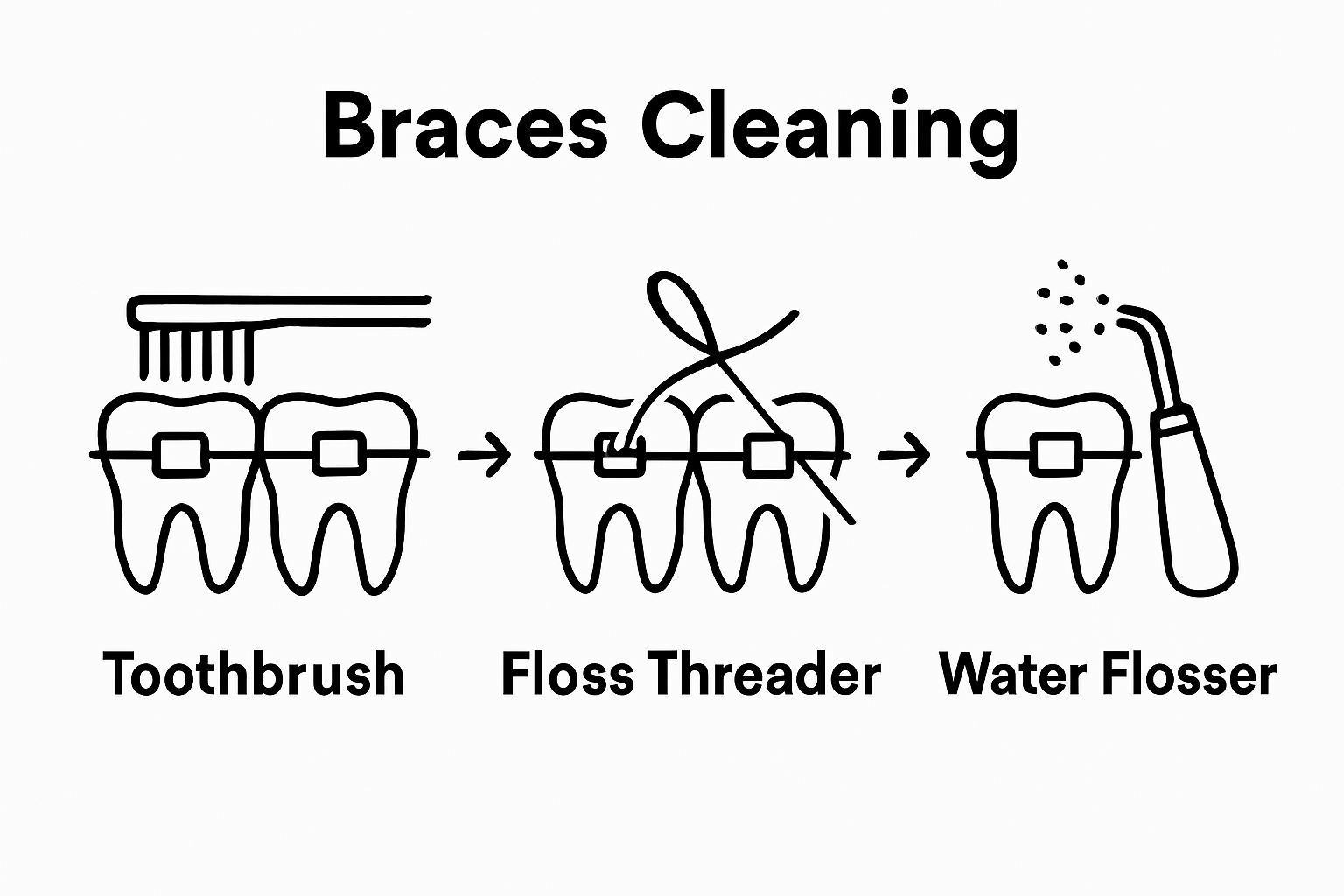
To begin your oral hygiene routine, you’ll need several specific tools designed to navigate the complex landscape of braces. A soft-bristled toothbrush becomes your primary weapon against plaque and food debris. Select a brush with compact bristle heads that can manoeuvre around brackets and wires without causing damage. Electric toothbrushes with orthodontic brush heads are particularly effective, providing consistent cleaning motion and reaching challenging areas more efficiently.
Flossing transforms from a simple task to a strategic mission when braces are involved. Traditional floss becomes challenging, so you’ll want to invest in floss threaders and orthodontic floss. These specialized tools allow you to navigate beneath wires and between teeth with precision. Interdental brushes are another critical addition to your toolkit, capable of cleaning those narrow spaces between brackets where standard brushing might miss.
read more about our orthodontic care recommendations and consult with our dental professionals about personalising your oral hygiene approach. Water flossers provide an additional cleaning method, using targeted water streams to dislodge food particles and massage gum tissue around orthodontic appliances.
Your essential oral hygiene toolkit should include:
- Soft-bristled toothbrush (manual or electric)
- Orthodontic floss threaders
- Interdental brushes
- Fluoride toothpaste
- Water flosser
- Orthodontic wax
By methodically gathering these tools, you’re establishing a strong foundation for maintaining excellent dental health throughout your orthodontic treatment. Remember, consistent and thorough cleaning prevents potential issues like tooth decay, gum inflammation, and prolonged treatment times.
Here is a detailed table summarising the essential oral hygiene tools for braces, outlining each item’s purpose and any key notes for effective usage.
| Tool | Purpose | Notes |
|---|---|---|
| Soft-bristled toothbrush | Cleans around brackets and wires | Electric brushes with orthodontic heads work well |
| Orthodontic floss threaders | Allows floss to reach under wires | Essential for accurate flossing |
| Interdental brushes | Cleans between brackets and tight spaces | Reaches spots missed by normal brushing |
| Fluoride toothpaste | Strengthens enamel, helps prevent decay | Choose non-abrasive, high-fluoride formula |
| Water flosser | Dislodges food and massages gums | Useful alternative to traditional flossing |
| Orthodontic wax | Protects cheeks and lips from irritation | Apply to brackets that feel rough |
Step 2: Establish a Daily Cleaning Routine
Establishing a consistent daily cleaning routine is the cornerstone of maintaining exceptional oral hygiene during orthodontic treatment. Your braces create numerous tiny spaces where food particles and bacteria can accumulate, making a structured approach critical to preventing dental complications. A well-designed routine transforms oral care from a mundane task into a systematic process that protects your teeth and supports your orthodontic investment.
Begin your daily routine by dedicating sufficient time to thorough cleaning. Allocate at least four minutes total for brushing – two minutes in the morning and two minutes in the evening. Position your toothbrush at a 45-degree angle to the gumline, ensuring you clean around each bracket and wire meticulously. Use gentle, circular motions that cover all tooth surfaces, including the areas directly surrounding your orthodontic hardware. Electric toothbrushes with orthodontic heads can provide additional precision, helping you navigate the complex terrain of braces more effectively.
After brushing, transition to interdental cleaning using floss threaders or orthodontic floss. This step is crucial because traditional flossing becomes challenging with braces. Carefully thread the floss under the main wire, moving it gently between each tooth. Use a sawing motion to remove trapped food particles and plaque, taking extra care not to apply excessive pressure that might damage your braces. Water flossers offer an alternative method, using targeted water streams to dislodge debris from hard-to-reach areas.
explore our comprehensive guide to orthodontic care to understand the nuances of maintaining oral health during treatment. Consider incorporating an antiseptic mouthwash into your routine, which can help reduce bacteria and provide additional protection against potential dental issues.
Your daily verification checklist should include:
- Brushed for 2 minutes in morning
- Brushed for 2 minutes in evening
- Cleaned between teeth using floss or water flosser
- Rinsed with antiseptic mouthwash
- Checked for any food particles around brackets
Consistency is key. By following this structured approach daily, you’ll safeguard your dental health and ensure your orthodontic treatment progresses smoothly.
The following checklist table provides a structured overview of daily oral hygiene tasks to help you easily track your braces cleaning routine.
| Task | Tick When Complete | Notes |
|---|---|---|
| Brushed for 2 minutes in morning | Use gentle circular motion | |
| Brushed for 2 minutes in evening | Focus around brackets/wires | |
| Cleaned between teeth with floss/flosser | Use threaders if needed | |
| Rinsed with antiseptic mouthwash | Alcohol-free preferred | |
| Checked for food particles around brackets | Use mirror and good lighting |
 Remember that each cleaning session is an investment in your long-term oral wellness.
Step 3: Use Orthodontic-Friendly Products
Selecting the right oral hygiene products becomes a strategic mission when you have braces. Your dental toolkit must be specifically designed to navigate the complex terrain of orthodontic hardware, protecting both your brackets and underlying tooth structure. Standard dental products often fall short, making specialised selections crucial for maintaining optimal oral health during treatment.
Fluoride toothpaste remains your primary defensive weapon, but not all formulations are created equal. Look for toothpastes with high fluoride concentrations that can help remineralise tooth enamel and provide additional protection against potential decay around brackets. Gel-based toothpastes with smooth consistencies work particularly well, allowing easier movement around wires and brackets without getting trapped. Avoid abrasive whitening toothpastes that might damage orthodontic hardware or create uneven cleaning around brackets.
When choosing mouthwash, prioritise alcohol-free formulations specifically designed for sensitive mouths. These products help combat bacteria and provide additional fluoride protection without causing irritation or drying out oral tissues. Some orthodontic-specific mouthwashes contain special ingredients that can help reduce plaque buildup and protect the areas around brackets where traditional cleaning methods might struggle to reach. Antimicrobial rinses can provide an extra layer of protection against potential dental complications during your orthodontic journey.
learn about our comprehensive orthodontic treatment approach to complement your product selection strategy. Consider consulting with your orthodontist about recommended brands and specific product characteristics tailored to your unique dental structure.
Your orthodontic-friendly product checklist should include:
- Fluoride toothpaste (non-abrasive)
- Soft-bristled toothbrush with compact head
- Orthodontic-specific mouthwash
- Interdental cleaning tools
- Orthodontic wax for bracket protection
Remember that product selection is not a one-size-fits-all approach. What works perfectly for one person might not be ideal for another. Pay attention to how your mouth responds to different products, and be prepared to make adjustments. Regularly check your products for signs of wear, and replace them promptly to maintain peak cleaning effectiveness throughout your orthodontic treatment.
Step 4: Perform Regular Check-ups with Your Dentist
Regular dental check-ups become exponentially more critical when you’re undergoing orthodontic treatment. These professional assessments are not mere routine appointments, but strategic interventions that protect your dental investment and ensure your braces are functioning optimally. Your dentist becomes a crucial partner in monitoring your oral health, detecting potential issues before they escalate into complex problems.
Schedule comprehensive dental check-ups every three to four months during your orthodontic treatment. These appointments are more intricate than standard dental visits, requiring specialized expertise to navigate the complexities of braces. Your dental professional will perform detailed examinations, checking not just for cavities, but assessing bracket integrity, wire alignment, and potential signs of tooth decay or gum inflammation that can be challenging to detect with braces. They will use professional tools to clean areas that are difficult to reach, removing calculus and plaque buildup that home cleaning might miss.
Prepare for each check-up by documenting any discomfort, unusual sensations, or changes you’ve noticed in your mouth. Bring a list of questions about your orthodontic progress and oral hygiene techniques. These conversations provide valuable insights into your treatment’s effectiveness and allow your dentist to offer personalised advice. Some dentists might recommend additional preventive treatments like fluoride applications or sealants to provide extra protection during your orthodontic journey.
explore our comprehensive dental care services to understand the full scope of professional dental support available. Professional cleanings during these check-ups help prevent potential complications like decalcification, where white spots can develop on teeth around bracket areas due to inadequate cleaning.
Your dental check-up preparation checklist should include:
- Current orthodontic treatment records
- List of any oral health concerns
- Questions about your treatment progress
- Insurance or payment information
- Recent X-rays or dental records
Remember that each check-up is an opportunity to fine-tune your oral health strategy. Your dentist can provide customised guidance, helping you navigate the complexities of maintaining excellent dental hygiene with braces. Approach these appointments as collaborative sessions where professional expertise meets your personal commitment to optimal oral health.
Step 5: Monitor and Adjust Your Oral Care Habits
Monitoring and adjusting your oral care habits is a dynamic process that requires consistent attention and self-reflection during orthodontic treatment. Your mouth becomes a complex ecosystem that demands ongoing strategic management, with braces introducing additional challenges to maintaining optimal dental health. This step is about developing a keen awareness of your oral condition and proactively responding to the unique demands of orthodontic hardware.
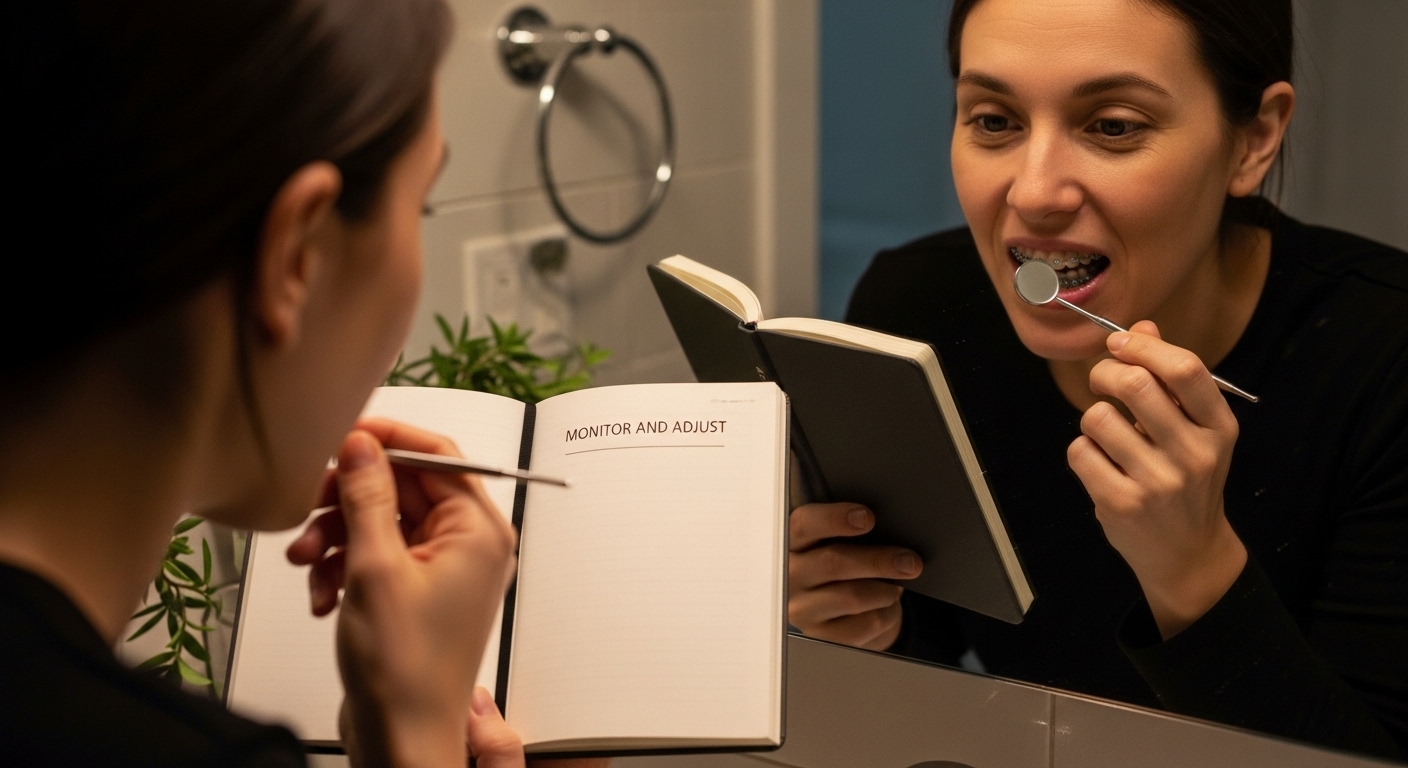
Begin by establishing a daily self-assessment routine. Each evening, spend a few minutes examining your teeth and braces in a well-lit mirror, looking for subtle changes or potential issues. Pay close attention to signs of plaque buildup, subtle discolorations around brackets, or any unusual sensations in your gums and teeth. Track your cleaning effectiveness by noting areas that consistently seem more challenging to clean, such as spaces near bracket edges or between specific teeth. This personal monitoring helps you refine your cleaning techniques and identify potential problem areas before they develop into more significant dental concerns.
Develop a flexible approach to your oral hygiene strategy, understanding that what works today might need modification tomorrow. Your mouth changes throughout orthodontic treatment, and your cleaning techniques must evolve correspondingly. Consider keeping a dental journal to document your observations, tracking challenges, improvements, and questions you might want to discuss with your dental professional. Some individuals find that rotating between different interdental cleaning tools or adjusting their brushing angles can dramatically improve their oral hygiene effectiveness.
discover more about comprehensive dental care approaches to support your ongoing oral health journey. Be prepared to experiment with different techniques, always maintaining gentle, thorough cleaning methods that protect both your braces and underlying tooth structure.
Your oral care habit monitoring checklist should include:
- Daily visual inspection of teeth and braces
- Tracking cleaning effectiveness
- Documenting any unusual sensations
- Recording questions for dental professionals
- Reviewing and adjusting cleaning techniques
Remember that monitoring is not about achieving perfection, but about continuous improvement. Your oral care habits will naturally become more refined as you gain experience managing braces. Stay patient, remain observant, and view each day as an opportunity to enhance your dental care approach.
 Approach this process with curiosity and commitment, understanding that your proactive efforts directly contribute to the success of your orthodontic treatment.
Take Your Braces Oral Hygiene to the Next Level with Support from Paynless Dental
Following a precise oral hygiene routine with braces can feel overwhelming. Struggling to clean around wires and brackets, keeping track of the right tools, and worrying about missed areas or potential dental issues can make the process stressful. At Paynless Dental, our experienced team understands these challenges and knows how critical proactive care is for successful orthodontic outcomes. We use advanced technology and provide personalised strategies, making oral health during braces easier and more effective.
If you want extra support or need help selecting the right products, our clinics in Toongabbie and North Ryde are ready to guide you through every step of your journey. Book a visit to get hands-on demonstrations and tailored recommendations from professionals who focus on comfort and long-term results. Ready to protect your smile and experience the difference? Visit Paynless Dental or learn more about our orthodontic care. Take charge of your braces care today and set yourself up for a confident, healthy future.
Frequently Asked Questions
How often should I brush my teeth while wearing braces?
You should brush your teeth at least twice a day, ideally in the morning and evening. Each session should last for about two minutes, ensuring thorough cleaning around brackets and wires.
What type of toothpaste is best for individuals with braces?
Fluoride toothpaste with a high fluoride concentration is recommended as it helps remineralise tooth enamel and prevent decay around brackets. Avoid abrasive whitening toothpaste as it may damage orthodontic hardware.
Can I use a water flosser instead of traditional floss with braces?
Yes, a water flosser can be an effective alternative to traditional floss, as it uses targeted streams of water to dislodge food particles and clean around braces, making it easier to maintain oral hygiene.
How often should I visit the dentist during my orthodontic treatment?
Schedule dental check-ups every three to four months during orthodontic treatment. These visits allow your dentist to monitor your oral health, check for cavities, and ensure your braces are functioning properly.
Recommended
- Understanding the Orthodontic Treatment Timeline – Paynless Dental Clinic
- How to Whiten Teeth Naturally and Effectively in 2025 – Paynless Dental Clinic
- The Ultimate Guide to Finding the Best Dentist in Blacktown for Your Oral Health Needs – Paynless Dental Clinic
- A Comprehensive Guide to Dental Implants: Types, Procedure, and Aftercare – Paynless Dental Clinic