
Every busy family in Western Sydney knows the challenge of keeping up with fresh breath, especially with packed schedules and shared routines. Good breath goes beyond boosting confidence; it reflects your oral health and even impacts your body’s wellbeing. Whether you want a smoother daily routine or relief from lingering odours, you’ll find straightforward, practical strategies for creating healthy breath habits that truly last—and make your visits to the dentist less stressful.
Table of Contents
- Step 1: Prepare By Cleaning Your Mouth Thoroughly
- Step 2: Adopt Breath-Freshening Daily Habits
- Step 3: Choose Foods And Drinks That Promote Freshness
- Step 4: Monitor Breath Quality And Adjust Routines
Quick Summary
| Key Point | Explanation |
|---|---|
| 1. Brush and floss daily | Brush teeth twice daily for two minutes and floss at least once to remove plaque and prevent bad breath. |
| 2. Hydrate for fresh breath | Drink at least eight glasses of water a day to keep your mouth moist and help saliva production. |
| 3. Choose breath-friendly foods | Eat fresh fruits and vegetables, and avoid sugary or processed snacks that contribute to bad breath. |
| 4. Monitor breath quality | Keep track of breath quality at different times and note any food or habits affecting it for better management. |
| 5. Schedule professional cleanings | Visit your dentist regularly for cleanings to remove tartar and address any underlying dental issues. |
Step 1: Prepare by cleaning your mouth thoroughly
A thorough mouth cleaning is your foundation for fresh breath. You cannot achieve lasting confidence in your breath without removing the bacterial buildup that causes odour, so let’s get this done right.
Start with your teeth. Brush twice daily using fluoride toothpaste, focusing on each tooth surface for a full two minutes. Most people rush through brushing in under a minute, which means they miss plaque deposits where bacteria hide.
Here’s what a complete cleaning routine includes:
- Brush the outer surfaces of your teeth at a 45-degree angle
- Brush the inner surfaces where plaque loves to accumulate
- Brush your chewing surfaces with gentle back-and-forth motions
- Clean your tongue thoroughly, as it harbours odour-causing bacteria
Don’t skip the spaces between your teeth. This is where many people fail. Use floss or interdental brushes at least once daily to remove plaque your toothbrush cannot reach. Cleanliness between teeth prevents plaque buildup that contributes to bad breath and gum disease.
Your toothbrush matters too. Replace it every three to four months, or sooner if the bristles look worn or frayed. A worn brush cannot clean effectively.
Consider using disclosing tablets occasionally to reveal which areas you’re missing. These tablets show plaque as a coloured film, turning your mouth into a visual guide for improvement. You’ll be surprised where the plaque hides.
Regular professional cleanings remove hard plaque deposits that brushing alone cannot eliminate, supporting both fresh breath and overall health.
If you haven’t had a professional cleaning recently, schedule one at your dental clinic. Professional cleanings remove tartar buildup that develops over time.
Pro tip: Brush your tongue with downward strokes from the back toward the tip—this direction removes more bacteria than scrubbing side-to-side, and it takes only an extra 15 seconds per day.
Step 2: Adopt breath-freshening daily habits
Building consistent daily habits is where lasting fresh breath actually happens. One-off cleaning sessions won’t cut it—you need routines that become automatic parts of your day.
Start by anchoring your habits to existing routines. Brush your teeth twice daily, ideally after breakfast and before bed. This timing catches food particles before they cause problems.
Hydration is your secret weapon. Drink water throughout the day to keep your mouth moist and stimulate saliva production, which naturally cleanses your mouth. Aim for at least eight glasses daily, especially if you live in Western Sydney’s warmer climate where dehydration happens faster.
Your daily routine should include:
- Floss at least once daily, preferably in the evening
- Drink water consistently between meals
- Avoid tobacco and limit alcohol, both major contributors to bad breath
- Eat fresh fruits and vegetables that naturally clean your mouth
- Stay consistent with timing—your mouth thrives on predictability
Establishing daily health habits supports fresh breath naturally, and the consistency matters more than perfection. You don’t need complicated routines; you need doable ones you’ll actually maintain.
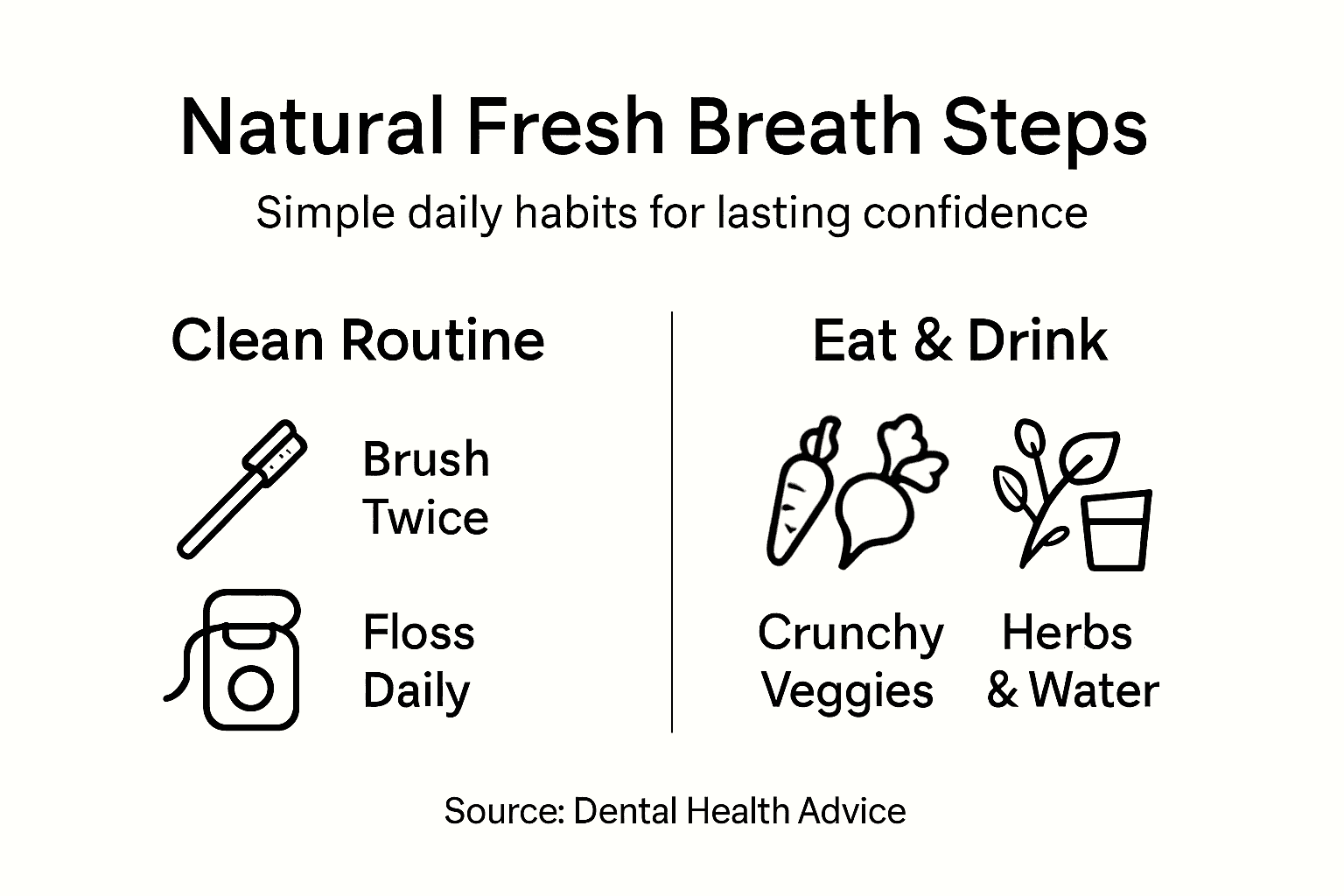
Plan your meals to include fresh foods rather than processed snacks that leave residue in your mouth. Crunchy vegetables like apples, carrots, and celery naturally help clean your teeth.
Track your progress for the first two weeks. Write down when you floss, brush, and drink water. This sounds simple, but it builds awareness and accountability.
Over time, these routines become manageable parts of your lifestyle rather than tasks you must remember to do.
The goal is automatic habits. When flossing becomes as natural as checking your phone, you’ve won.
Pro tip: Keep your floss and interdental brushes in the exact same spot each evening so you grab them without thinking, turning the habit into muscle memory rather than willpower.
Step 3: Choose foods and drinks that promote freshness
What you eat and drink directly affects your breath. The right choices actively fight odour-causing bacteria, whilst the wrong ones feed them.

Water is your foundation. Drink it consistently throughout the day to rinse your mouth and wash away food particles and bacteria. Water hydrates your body and supports saliva flow, which naturally cleanses your mouth. Most people in Western Sydney don’t drink enough water, especially in warmer months.
Choose these breath-friendly foods and drinks:
- Fresh fruits and vegetables, particularly crunchy ones like apples and carrots
- Herbs like parsley, which contain natural compounds that freshen breath
- Herbal teas and milk alternatives with added calcium
- Nuts and legumes rich in fibre
- Sugar-free gum for after meals when brushing isn’t possible
Avoid these breath offenders:
- Sugary soft drinks that feed bacteria and promote tooth decay
- Alcohol and excessive caffeine, which dry out your mouth
- Processed snacks that leave residue between your teeth
- Heavily spiced foods that linger on your breath
Following Australian Dietary Guidelines means eating nutritious whole foods that support both your breath and overall health. Crunchy vegetables naturally clean your teeth whilst you eat them.
Here’s how common foods and drinks influence breath quality:
| Item Type | Effect on Breath | Reason for Impact |
|---|---|---|
| Crunchy veggies | Freshens breath | Removes particles and bacteria |
| Parsley and herbs | Neutralises odours | Contains odour-fighting compounds |
| Sugary soft drinks | Worsens breath | Feeds bacteria; dries mouth |
| Alcohol/caffeine | Promotes bad breath | Reduces saliva production |
| Whole grains&nuts | Supports freshness | High fibre cleans teeth |
Dry mouth is a silent breath killer. If you notice your mouth feels sticky or parched, you’re at risk of bad breath. Combat this by sipping water regularly and limiting caffeinated drinks.
Choosing whole, fresh foods rich in fibre supports oral health and breath freshness naturally.
Your mouth’s pH balance matters too. Acidic foods like citrus and soft drinks weaken your tooth enamel, making it easier for bacteria to thrive. Eat these foods with meals rather than alone, and rinse with water afterwards.
Pro tip: Keep fresh parsley on hand after meals—chewing it for 30 seconds naturally freshens your breath and leaves your mouth feeling cleaner than most mouthwashes.
Step 4: Monitor breath quality and adjust routines
Fresh breath isn’t a destination you reach and forget about. It requires ongoing attention and willingness to adjust what isn’t working for your unique situation.
Start by becoming aware of your breath throughout the day. Notice when it feels freshest and when it becomes stale. Does your breath worsen after certain foods or drinks? Pay attention to these patterns.
Track your observations in a simple way:
- Note which foods trigger bad breath for you personally
- Record how your breath feels at different times of day
- Observe whether your routines are actually sustainable
- Monitor changes after adjusting your habits
Regular self-assessment helps you identify what’s working and what needs tweaking. You might discover that one particular habit makes a bigger difference than you expected, or that a certain food affects you more than others.
To help you track progress, here’s a sample breath quality monitoring table:
| Time of Day | Observed Breath Quality | Possible Triggers | Actions Taken |
|---|---|---|---|
| Morning | Slight odour | Overnight dry mouth | Brushed, drank water |
| Afternoon | Fresh | Ate apples and carrots | Snacked on crunchy veggies |
| Evening | Stale | Coffee, processed snack | Flossed, drank herbal tea |
Consider scheduling professional dental check-ups every six months. Your dentist can spot issues you might miss, like plaque buildup or gum problems that affect breath quality. Keeping written plans and tracking improvements helps maintain lasting breath freshness, just as with any health goal.
Adjust your routine based on what you discover. If flossing makes the biggest difference, prioritise it. If a particular mouthwash helps, incorporate it. If certain foods consistently cause problems, avoid them or eat them earlier in the day.
Breath quality naturally fluctuates. Some days it feels fresher than others, and that’s normal. What matters is the overall trend moving towards improvement.
Regular observation and willingness to adjust your approach ensures you maintain fresh breath long-term rather than giving up when initial efforts plateau.
Your confidence grows as you see consistent results. After two to three months of proper routines, you’ll notice people respond differently to you.
Pro tip: Ask a trusted friend or family member for honest feedback about your breath—their perspective is more reliable than your own perception, which can become desensitised to your normal scent.
Take Control of Your Fresh Breath with Expert Dental Care
Maintaining naturally fresh breath takes more than just good daily habits it requires a healthy mouth supported by professional dental care. If you struggle with persistent bad breath despite regular brushing and flossing it may be due to hidden issues like plaque buildup gum disease or tooth decay. At Paynless Dental we specialise in comprehensive dental solutions to help you achieve lasting confidence by targeting the root causes of bad breath.
Our advanced services such as professional cleanings implant treatments and restorative options are designed to support your oral health and ensure your breath stays fresh and inviting. Whether you need expert advice on improving your daily oral hygiene or require treatments like root canal therapy or dentures trust Paynless Dental across Toongabbie and North Ryde to provide care focused on comfort and cutting-edge technology.
Ready to experience the difference that premium dental care can make for your breath and overall health Visit Paynless Dental to book a consultation today Discover how tailored treatments and professional support can transform your confidence and keep your breath fresh long term Learn more about our Dental Implants and Root Canal Treatment services to find the best solution for you
Frequently Asked Questions
How can I clean my mouth thoroughly to keep my breath fresh?
To clean your mouth effectively, brush your teeth for two minutes twice a day using fluoride toothpaste, ensuring you reach all surfaces. Additionally, floss or use interdental brushes daily to remove plaque between your teeth, where bacteria can hide.
What daily habits should I adopt to maintain fresh breath?
Establish a routine that includes brushing your teeth twice a day, drinking at least eight glasses of water daily, and flossing each evening. Aim to make these habits automatic parts of your day to ensure lasting freshness without overthinking it.
What foods and drinks promote freshness in my breath?
Incorporate fresh fruits and vegetables, particularly crunchy options like apples and carrots, along with herbs such as parsley that can freshen your breath naturally. Avoid sugary drinks and heavily spiced foods that can contribute to bad breath and opt for water as your primary beverage.
How do I monitor and improve my breath quality?
To monitor your breath, keep track of when it feels fresh or stale throughout the day, noting any food triggers. Adjust your routines based on these observations to prioritise habits that yield the best results for breath quality over time.
How often should I schedule professional dental cleanings?
It’s recommended to schedule professional dental cleanings every six months to remove hard plaque and tartar buildup that regular brushing can miss. This check-up can help maintain your breath freshness and overall oral health effectively.
Recommended
- No Gaps Dental: Unlocking the Secrets to a Perfect Smile – Paynless Dental Clinic
- The Ultimate Guide to Finding the Best Dentist in Blacktown for Your Oral Health Needs – Paynless Dental Clinic
- The Ultimate Guide to Dental Veneers: Transform Your Smile with Veneers – Paynless Dental Clinic
- Halitosis Causes: Everything You Need to Know | Paynless
- Professionelle Zahnreinigung in Leipzig vom Experten