
TL;DR:
- Finding a paediatric dentist with specialised training and a gentle approach can alleviate children’s anxiety and promote lifelong oral health. Public and private options in Western Sydney offer varied access to modern, child-friendly, and well-equipped clinics that cater to individual needs. Early dental visits, positive preparation, and choosing a caring practitioner are key to establishing comfortable, healthy dental habits from a young age.
Finding a dentist your child actually likes walking into is harder than it sounds. Most parents in Western Sydney have experienced that sinking feeling when a child freezes at the door, tears threatening, arms crossed tight. The right paediatric dentist can completely change that story. With healthy dental care for kids starting earlier than most people realise, choosing a skilled, warm, and well-equipped provider sets your child up for confident oral health for life. This guide breaks down exactly what to look for, how to compare your options, and how to make that first visit genuinely enjoyable.
Table of Contents
- Why seeing a paediatric dentist matters for kids
- What to look for in a top paediatric dentist near you
- Understanding public and private paediatric dental options in Western Sydney
- How to prepare your child for their first dental visit
- A fresh perspective: Why your dentist’s approach is as important as their skills
- Ready to book with a trusted paediatric dentist?
- Frequently asked questions
Key Takeaways
| Point | Details |
|---|---|
| Paediatric expertise matters | A paediatric dentist offers training and techniques specifically for children’s comfort and needs. |
| Clinic features impact experience | Modern technology and a welcoming environment reduce anxiety for children and parents. |
| Public and private options | Both public and private clinics serve Western Sydney, each with unique pros and cons. |
| Preparation is key | Planning ahead with positive routines helps your child’s first visit go smoothly. |
Why seeing a paediatric dentist matters for kids
After understanding the importance of this decision, let’s dive into why seeing a paediatric dentist truly matters for your child’s care.
A paediatric dentist is not simply a general dentist who happens to see younger patients. They complete an additional two to three years of specialist training after their dental degree, focusing specifically on child development, behaviour management, and the unique anatomy of developing teeth and jaws. That extra training matters enormously when your four-year-old refuses to open their mouth or your eight-year-old has anxiety before appointments.
What makes a paediatric dentist different:
- They understand how children communicate fear and use techniques like “tell-show-do,” where they explain each tool, demonstrate it, and then gently use it
- Clinic design is intentional: bright colours, murals, toy areas, and smaller dental chairs reduce the clinical feeling that triggers fear in children
- They are trained to spot early developmental issues, from crossbites and crowding to early signs of tooth decay that a general dentist might not prioritise
- Their approach to healthy dental habits is age-specific, meaning the advice they give a toddler’s parents is completely different from what they tell a teenager
Worth knowing: Sydney Dental Hospital and Oral Health Services is a long-established public dental facility serving children who need public specialist care. It offers a vital safety net for families requiring escalated treatment.
The earlier you start, the better. Research consistently shows that children who begin dental visits in toddlerhood develop less anxiety, fewer cavities, and stronger oral hygiene habits by the time they reach school age.
Pro Tip: Schedule your child’s first dental visit before their second birthday, even if no problems are visible. Early visits normalise the experience and let your dentist catch small issues before they become painful ones.
What to look for in a top paediatric dentist near you
Now that you know why a paediatric dentist is crucial, you’ll want to know how to spot the best provider nearby.
Not all clinics are equal, and with so many options around Western Sydney, it pays to know exactly what distinguishes an exceptional practice from an ordinary one. Here are five non-negotiable qualities to evaluate before booking.
Five essential criteria when choosing a paediatric dentist:
- Relevant training and credentials: Look for postgraduate training in paediatric dentistry, not just experience with children
- A genuinely gentle approach: Watch how staff speak to children during your first call or visit. Tone, patience, and pace reveal everything
- Child-friendly clinic design: Waiting rooms that feel inviting, not sterile, make a real difference in how a child arrives mentally to their chair
- Strong reputation: Recent Google reviews from parents in your area give you an honest window into real experiences
- Modern technology: Digital X-rays, which use up to 90% less radiation than traditional film, and intraoral cameras that let children see their own teeth on a screen, make visits more engaging and safer
The right local paediatric dentist guide can help you shortlist clinics by suburb and understand what questions to ask before you even set foot in the door.
Early positive dental experiences have a measurable long-term effect. Children who associate dental visits with safety and even fun are significantly less likely to develop the chronic dental anxiety that affects roughly one in six Australian adults and leads many to avoid care altogether.
| Feature | Top paediatric clinic | Average general clinic |
|---|---|---|
| Specialist paediatric training | Yes | Rarely |
| Child-friendly waiting area | Always | Sometimes |
| Digital X-rays | Standard | Varies |
| Behaviour management techniques | Specific child protocols | General approach |
| Paediatric-sized instruments | Yes | Often not |
| Play areas and distraction tools | Yes | Uncommon |
| Same-day appointments available | Often | Depends on practice |
Sydney Dental Hospital and Oral Health Services has served the community since 1904, offering advanced and trusted care as both a reference point and an escalation pathway for complex cases. When comparing private options like paediatric dentist options in Parramatta, use this checklist to make a confident, informed comparison.
Remember: A clinic’s Instagram feed can look beautiful, but it’s the consistency of patient reviews and the warmth of reception staff that will tell you whether your child will feel safe there.
Understanding public and private paediatric dental options in Western Sydney
Once you’ve noted what makes a great clinic, it helps to understand your options: public services, private clinics, or a blend of both.
Western Sydney families are fortunate to have access to a range of dental care pathways. Understanding when to use each option saves you time, money, and unnecessary stress.
How to access public dental care for children:
- Check eligibility through Medicare’s Child Dental Benefits Schedule (CDBS), which offers up to $1,095 in benefits per child over a two-year period for children aged two to seventeen who meet income thresholds
- Contact your local Community Health Centre or ask your GP for a referral to public dental services
- For complex cases that community clinics cannot manage, ask for a referral to a specialist service
- Sydney Dental Hospital and Oral Health Services provides an escalation path for children needing public specialist dental care, handling cases that require hospital-grade facilities or specialist expertise
- Keep records of all referral letters and CDBS claims to avoid gaps in coverage
From a parent’s perspective: Many families use a blend of both systems. They handle routine check-ups at a private clinic for shorter waiting times and convenience, then access the public pathway for specialist referrals if a complex issue arises.
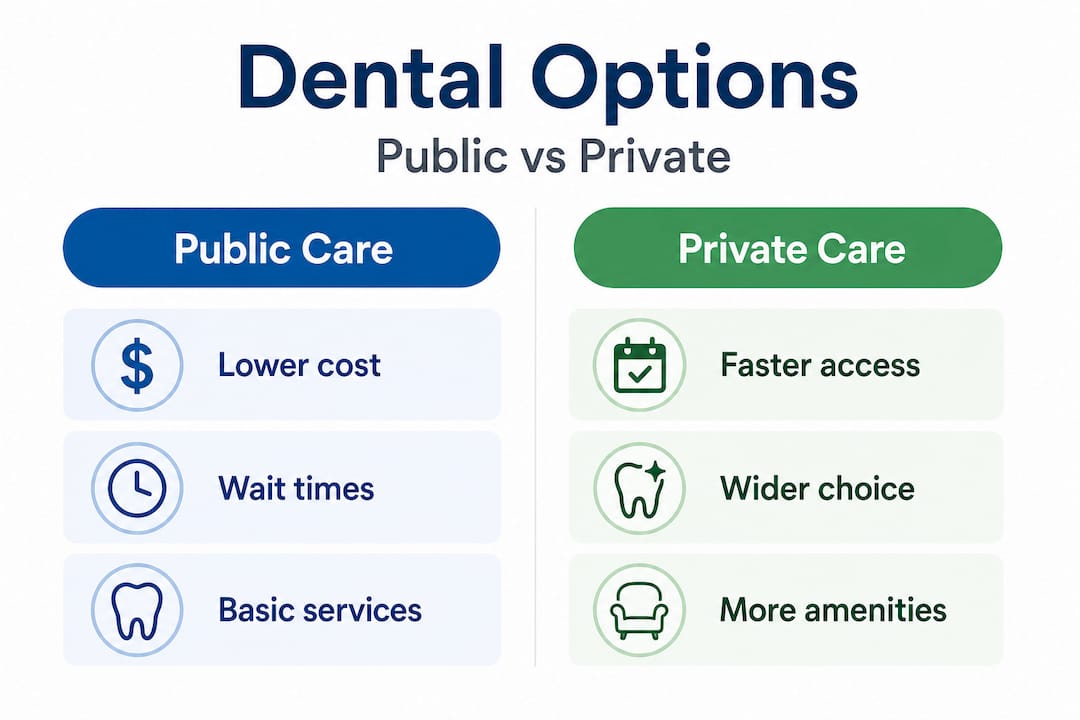
| Factor | Public dental | Private dental |
|---|---|---|
| Cost | Low or free for eligible children | Out-of-pocket or covered by private insurance |
| Waiting times | Can be lengthy for non-urgent care | Typically shorter, often same-week |
| Location access | Fixed locations | Multiple suburban clinics |
| Range of services | Broad but may limit to essentials | Wider, including cosmetic and orthodontic |
| Technology | Good at major facilities | Often more current at private clinics |
For affordable dental tips that help you get the most from both systems, understanding your Medicare entitlements upfront is the single most valuable thing you can do. Families who are unsure of their dental care options in Western Sydney often miss out on benefits they are fully entitled to claim.
One more important point: if your child ever has a dental emergency, such as a knocked-out tooth, severe pain, or a cracked tooth from a fall, knowing your local emergency dental care guide in advance means you act quickly rather than scrambling for information under pressure. Speed matters enormously in trauma situations.
How to prepare your child for their first dental visit
Having chosen a dentist, here’s how to make sure your child’s experience gets off to the best start possible.
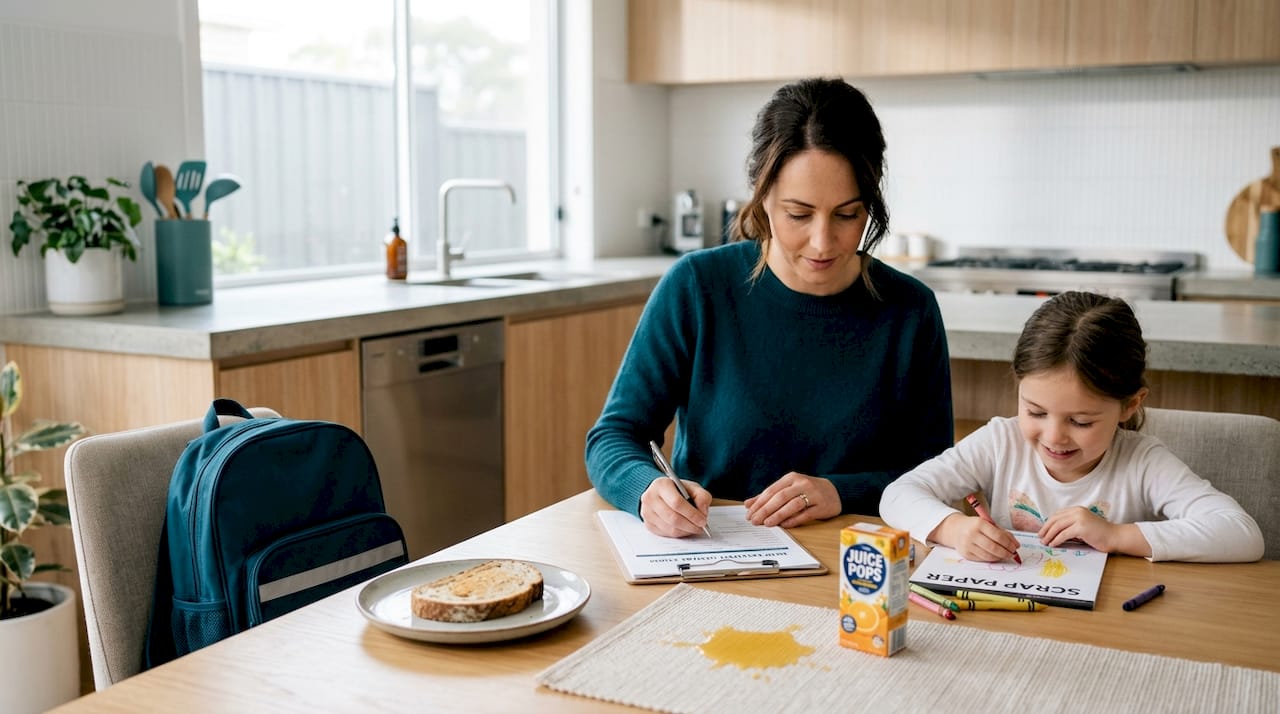
The appointment itself is only part of the equation. What happens in the days leading up to it shapes your child’s emotional readiness far more than most parents realise. Children pick up on anxiety from the adults around them, so your confidence and excitement directly influence how your child feels walking through that door.
Seven practical steps to prepare your child:
- Talk about it positively, but casually. Avoid phrases like “it won’t hurt” because this plants the idea that it might. Say something like “The dentist is going to count your teeth and give them a polish.”
- Read books or watch videos together. There are excellent children’s books about dental visits that normalise the process through familiar characters.
- Play dentist at home. Let your child practise by counting your teeth with a toothbrush handle, then swap roles. This removes the mystery from the examination.
- Visit the clinic beforehand if possible. Many paediatric clinics in Western Sydney welcome a short “meet and greet” visit so the environment feels familiar on the day.
- Pack a comfort item. A favourite small toy, a special book, or a familiar blanket gives your child a sense of control and security in a new space.
- Celebrate the visit, not just the result. Plan a positive activity afterwards, like a visit to a park, so the overall memory of the day feels good.
- Stay calm yourself. Your child reads your body language constantly. If you are relaxed, they are far more likely to follow your lead.
Pro Tip: Book your child’s appointment in the morning. Most children are better rested, more cooperative, and less emotionally overwhelmed earlier in the day. Afternoon appointments, especially after school, often catch children when they are already tired and overstimulated.
Sydney Dental Hospital has served the community for over a century with family-focused care, and their approach to patient preparation reflects decades of working with children of all ages and temperaments. The lessons from that experience are consistent: preparation, warmth, and patience make all the difference.
For families building healthy families dental habits from an early age, the first dental visit is a cornerstone moment. Get it right, and dental care becomes a normal, positive part of family life rather than a source of dread.
A fresh perspective: Why your dentist’s approach is as important as their skills
Before you lock in your choice, here’s a perspective few articles mention but many parents end up learning the hard way.
We talk a lot about qualifications and technology in dental care. Digital X-rays, CEREC same-day crowns, intraoral cameras. These are genuinely important. But after working with hundreds of families in Western Sydney, the feedback we hear most often has nothing to do with equipment. It is always about how the dentist made my child feel.
A highly credentialled dentist who moves too quickly, uses clinical language, or underestimates a nervous child’s emotional state can undo months of careful preparation in five minutes. Conversely, a warm, patient practitioner who gets down to eye level, narrates every step calmly, and lets a child hold the mirror can turn a fearful child into one who leaves asking when they can come back.
This matters even more for children who are neurodiverse, including those with autism, ADHD, or sensory processing differences. For these children, the standard dental experience can be genuinely distressing if the practitioner is not trained in adapted communication strategies. When you read our caring paediatric dentist guide, you’ll notice that the most recommended clinics consistently describe staff who adapt their pace and approach to each individual child.
Our honest advice: visit the clinic before booking. Observe how staff interact with children in the waiting area. Ask directly how the team handles anxious children or those with sensory needs. The answer tells you everything. Credentials open the door, but genuine patience and rapport are what keep your child coming back willingly for years.
Ready to book with a trusted paediatric dentist?
If you’re ready for a calm, positive dental visit for your child, here’s a helpful next step.
At Paynless Dental, we provide gentle, advanced dental care for children and families across Western Sydney. Our Toongabbie clinic serves families from Wentworthville, Pendle Hill, Seven Hills, Constitution Hill, and Westmead, while our North Ryde clinic is accessible for those in Macquarie Park, Ryde, Chatswood, Lane Cove, Marsfield, and Eastwood. Both clinics are equipped with modern technology and staffed by practitioners who genuinely love working with children. Whether your child needs their very first check-up or a more involved treatment, we make sure every step feels safe and manageable. Visit our Paediatric Dentist Parramatta page to learn more about our services and book an appointment that suits your family’s schedule.
Frequently asked questions
At what age should my child first see a paediatric dentist?
Children should have their first dental check by age one or within six months of their first tooth appearing. Sydney Dental Hospital provides care pathways for children of all ages, from infants through to teenagers.
Are public dental clinics a good option for children in Western Sydney?
Public clinics like Sydney Dental Hospital offer specialist care pathways for eligible children, and have been a trusted community resource since 1904, making them a genuine option for families who qualify.
How can I make my child less nervous about the dentist?
Choose a clinic with a child-friendly design, use positive and simple language at home, and consider a brief familiarisation visit before the actual appointment to reduce the unknown.
What signs indicate a top paediatric dentist?
Look for advanced postgraduate training, consistently positive reviews from local parents, gentle and patient staff interactions, and modern technology like digital X-rays and intraoral cameras.
What if my child needs specialist dental care?
Your dentist can refer you through public specialist pathways like Sydney Dental Hospital for more complex cases, where hospital-grade facilities and specialist expertise are available to eligible children.