
TL;DR:
- Most tongue bites are minor and heal within a week with home care.
- Prompt first aid and avoiding aggravating foods promote faster healing.
- Seek professional help if bleeding persists, wound is deep, or signs of infection appear.
Biting your tongue is one of those injuries that feels catastrophic in the moment. The pain is sharp, the bleeding can look alarming, and your first instinct is usually panic. But most tongue bites, while genuinely uncomfortable, are manageable at home with the right steps. This guide walks you through exactly what to do in the first few minutes, how to care for the wound over the following days, when you genuinely need to see a dentist or doctor, and what you can do to prevent it from happening again. Whether it happened during sport, while eating, or from a fall, you’re in the right place.
Table of Contents
- What you need before treating a bitten tongue
- Step-by-step first aid for a bitten tongue
- Caring for your healing tongue and preventing infection
- When to seek urgent medical or dental help
- How to prevent tongue injuries in the future
- Why most bitten tongues are less serious than they feel—and what you shouldn’t ignore
- Get support or professional dental care when you need it
- Frequently asked questions
Key Takeaways
| Point | Details |
|---|---|
| Stop bleeding fast | Apply firm pressure with clean gauze for 5-15 minutes to control bleeding. |
| Promote safe healing | Rinse with salt water, use ice, and eat soft foods while your tongue recovers. |
| Know when to get help | Seek professional care if bleeding persists, the wound is deep, or signs of infection develop. |
| Prevent future bites | Use mouthguards, address dental issues, and avoid risky habits to reduce your chance of another injury. |
What you need before treating a bitten tongue
With the importance of quick action established, let’s get organised before you start treatment. Having your materials within reach makes all the difference. Scrambling through cupboards while your tongue is bleeding is not ideal, and a few seconds of preparation can keep you calm and in control.
Here’s what you’ll need on hand:
- Clean cloth or sterile gauze pads
- Disposable gloves (if available)
- Salt and a cup of clean water
- Ice cubes or a cold pack wrapped in a cloth
- Mild over-the-counter (OTC) pain relief such as paracetamol or ibuprofen
- A torch or good lighting to inspect the wound
- A mirror
Apply firm pressure with a clean cloth or gauze for 5 to 15 minutes to control bleeding. This is the single most important step and it requires nothing more than patience and steady pressure.
| Supply | Type | Purpose |
|---|---|---|
| Sterile gauze or clean cloth | Essential | Applying direct pressure to stop bleeding |
| Disposable gloves | Essential | Preventing contamination of the wound |
| Salt water solution | Essential | Rinsing to reduce bacterial load |
| Ice or cold pack | Essential | Reducing swelling and numbing pain |
| Paracetamol or ibuprofen | Essential | Managing pain without worsening bleeding |
| Torch | Optional | Inspecting the wound clearly |
| Antiseptic mouthwash | Optional | Additional rinse after initial bleeding stops |
| Popsicle or ice block | Optional | Gentler alternative to ice for children |
Pro Tip: Put together a small dental emergency kit and keep it in your bathroom or kitchen. A zip-lock bag with gauze, gloves, pain relief, and a salt sachet takes up almost no space but saves you precious time when it matters most.
Step-by-step first aid for a bitten tongue
With your materials ready, let’s walk through exactly what to do right after biting your tongue. Speed matters here, but staying calm is just as important as acting quickly.
- Wash your hands thoroughly before touching your mouth or the wound.
- Check the bleeding by looking in a mirror with good lighting. Assess how deep and wide the bite appears.
- Apply firm pressure using a clean cloth or gauze. Hold it steadily for at least 5 minutes without lifting to check every 30 seconds.
- Rinse your mouth once bleeding has slowed. A saltwater rinse or diluted hydrogen peroxide solution helps reduce bacteria and keeps the area clean.
- Apply cold to reduce swelling. Ice applied externally or a popsicle held gently inside the mouth works well, particularly for children who find ice packs uncomfortable.
- Take OTC pain relief if needed. Paracetamol or ibuprofen are appropriate choices for managing discomfort. These also help with reducing swelling naturally when used as directed.
Important warning: Do not take aspirin if you are still bleeding. Aspirin thins the blood and can significantly worsen or prolong bleeding from an oral wound.
For children, the process is the same but requires extra reassurance and a gentle approach. A popsicle or frozen fruit block serves double duty as both distraction and cold therapy.
Pro Tip: If a child is distressed and won’t hold gauze still, have them bite gently on a damp cloth while you keep them calm. Keeping the environment calm directly affects how well the child cooperates with pressure application.
Caring for your healing tongue and preventing infection
After the immediate crisis is handled, continued care helps your tongue heal quickly and safely. The good news is that the tongue has one of the richest blood supplies in the body, which actually promotes faster healing than most other soft tissue injuries.
During recovery, stick to:
- Soft, cool foods such as yoghurt, mashed potato, smoothies, and ice cream
- Lukewarm or cool liquids rather than hot drinks
- Gentle oral hygiene, being careful around the wound when brushing
- Salt water rinses two to three times daily to keep the area clean
- Regular use of tongue cleaning tips to maintain hygiene without irritating the injury
Avoid spicy, acidic, or crunchy foods that can aggravate the wound and slow recovery. Hot drinks are also off the list until the area feels significantly better.
| Wound severity | Typical healing time | Signs to watch |
|---|---|---|
| Minor (small, surface bite) | 3 to 7 days | Normal soreness, mild swelling |
| Moderate (deeper or wider cut) | 7 to 14 days | Swelling, some bruising, tenderness |
| Deep or jagged laceration | 2 to 4 weeks or longer | Persistent bleeding, difficulty moving tongue |
Most minor bites heal within 3 to 7 days without requiring stitches. However, do not pick at any scabbing that forms, and avoid chewing on the injured side of your tongue. These habits seem harmless but can reopen the wound and dramatically extend healing time.

Infection is uncommon given the mouth’s natural antibacterial properties, but it remains possible. Signs of infection include increasing redness beyond the wound edge, pus, swelling that worsens after 48 hours, or a bad taste that doesn’t go away with rinsing.
When to seek urgent medical or dental help
While most bitten tongues heal on their own, some require urgent attention. Knowing the difference between a wound that’s just scary-looking and one that genuinely needs professional care is one of the most useful things you can learn.
Seek medical or dental attention promptly if you notice:
- Bleeding that won’t stop after 15 to 20 minutes of firm pressure
- A deep, wide, or jagged cut that appears to gape open rather than stay closed
- Difficulty speaking, swallowing, or breathing due to swelling
- Fever or increasing pain more than 48 hours after the injury
- Pus, unusual discharge, or a worsening smell from the wound
- The injury occurred during a seizure, which may mean the bite is more severe or complex
Seek care if bleeding persists, the wound is deep, you experience difficulty speaking, or infection signs appear. These are not situations where waiting and watching is appropriate.
Emergency contacts for Western Sydney: For health advice, call healthdirect on 1800 022 222 any time of day. For life-threatening emergencies, call 000 immediately. For urgent dental concerns, contact your local clinic directly.
For children or anyone with a known seizure condition, a tongue bite following an episode should always be assessed by a professional. These injuries can appear minor but may involve deeper tissue than they look. Quick access to emergency dental care consistently leads to better outcomes, particularly when stitches or infection management are needed.
How to prevent tongue injuries in the future
The best way to deal with a bitten tongue is to avoid another, so let’s focus on prevention. Many tongue injuries are preventable with a few sensible habits and the right protective gear.
Key prevention strategies include:
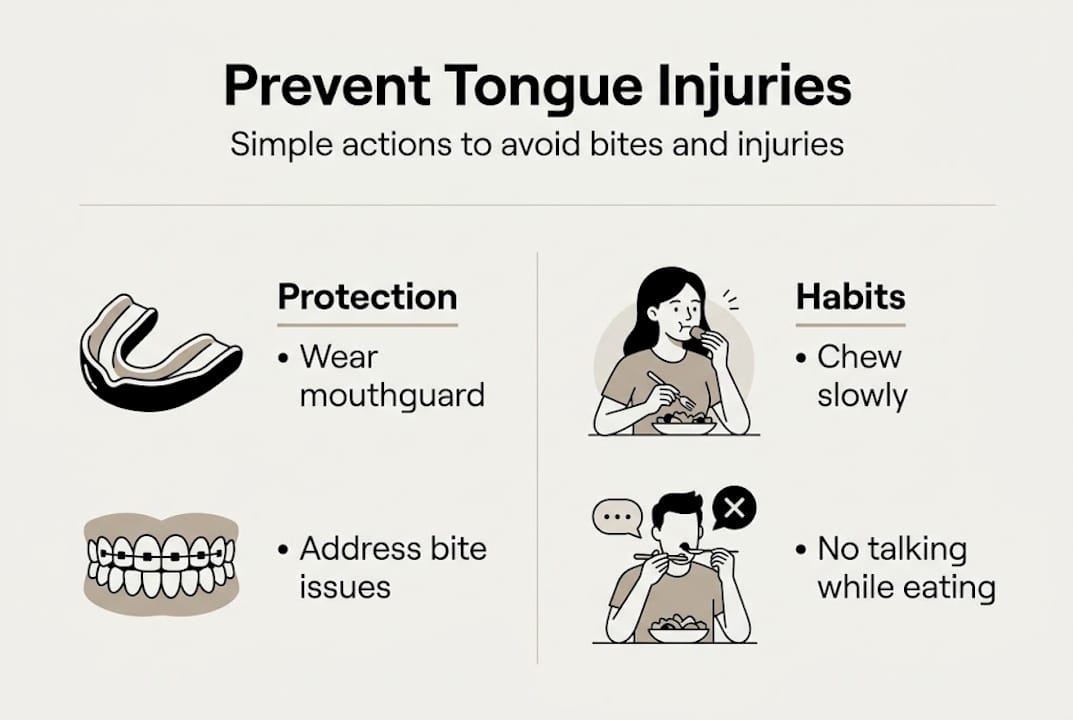
- Wearing a mouthguard during sport. This is especially relevant across Western Sydney, where community sport is hugely popular. Understanding mouthguard benefits can help families make better choices for their children and themselves.
- Choosing the right mouthguard for your sport. Different activities carry different risks, and mouthguards for sport in Sydney offers practical guidance on which type suits your activity.
- Chewing slowly and mindfully, particularly when tired or distracted
- Avoiding talking while eating, which is one of the most common causes of accidental bites
- Addressing tooth grinding (bruxism), as people who grind their teeth are significantly more likely to bite their tongue during sleep. Preventing tongue bites from tooth grinding is worth reading if this sounds familiar.
- Checking your bite alignment with a dentist, since a misaligned jaw or uneven bite increases the risk of habitual tongue biting
Use mouthguards, address bite issues, chew slowly, and avoid talking while eating to substantially reduce your risk.
Pro Tip: If you’re biting your tongue repeatedly, even without an obvious trigger, book a dental check-up. It often points to a bite alignment issue or bruxism that can be managed before it causes more significant damage.
Why most bitten tongues are less serious than they feel—and what you shouldn’t ignore
Here’s our honest take after working with many patients who’ve come in alarmed by a tongue injury: the shock of a bitten tongue almost always outpaces the actual clinical severity. The mouth bleeds dramatically because it has an exceptional blood supply, not because the injury is catastrophic. Most bites, even those that bleed heavily at first, will settle with firm pressure and sensible home care.
That said, there are genuine exceptions. Airway compromise from swelling is rare, but it does occur in specific circumstances, such as very deep lacerations or in individuals who are immunocompromised. Infection risk is low overall, but it is not zero. If you have diabetes, are on immunosuppressant medication, or have any condition affecting healing, a minor-looking wound deserves a professional set of eyes.
The real danger isn’t overreacting to a tongue bite. It’s dismissing symptoms that genuinely need attention because the wound looks like it’s “probably fine.” Trust the warning signs. If something doesn’t feel right after 48 hours, knowing when emergency dental care matters could prevent a much bigger problem.
Get support or professional dental care when you need it
If you ever want extra peace of mind or need expert support for tongue or oral injuries, Paynless Dental is here to help. We provide both urgent and routine oral care across our Toongabbie and North Ryde clinics, serving communities throughout Western Sydney including Wentworthville, Pendle Hill, Seven Hills, Westmead, Ryde, Chatswood, and surrounding areas.
Our team can assess oral injuries, advise on healing, fit custom mouthguards, and manage any follow-up care you need. If you’re unsure whether your injury needs professional attention, don’t wait and worry. Reach out for emergency dental care or browse our dental glossary to better understand any terms your healthcare provider uses. Booking is straightforward and our focus is always on making your experience as comfortable as possible.
Frequently asked questions
How long does a bitten tongue take to heal?
Most minor tongue bites heal within 3 to 7 days without stitches. Deeper or more jagged wounds may take two to four weeks depending on severity.
What should I avoid eating with a bitten tongue?
Avoid hot, spicy, acidic, or crunchy foods that irritate the wound. Soft, cool foods like yoghurt, smoothies, and mashed vegetables support healing without causing additional discomfort.
When should I see a doctor or dentist for a bitten tongue?
Seek care if bleeding won’t stop after 15 minutes, the wound is deep or gaping, you have trouble swallowing or speaking, or you notice signs of infection such as fever or pus.
Are infections common with tongue bites?
No, infection risk after a tongue bite is low due to the mouth’s natural antibacterial properties. However, increasing pain, pus, or fever beyond 48 hours should prompt a dental or medical consult.