
When your child chips a tooth, the moment can feel overwhelming. You’re juggling their tears, assessing the damage, and wondering whether this needs an emergency dentist visit or if it can wait until morning. For parents across Western Sydney, understanding how to respond quickly and effectively can make all the difference in protecting your child’s oral health and preventing long-term complications. This guide walks you through immediate care steps, professional treatment options, and practical prevention strategies so you can handle dental emergencies with confidence and ensure your child receives the best possible care when accidents happen.
Table of Contents
- Key takeaways
- What to prepare and understand before caring for a chipped tooth
- How to respond immediately after your child chips a tooth
- Understanding dental treatment options for chipped teeth in children
- Tips for preventing chipped teeth and ensuring long-term oral health
- Trusted dental care for children’s chipped teeth in Western Sydney
- Frequently asked questions
Key Takeaways
| Point | Details |
|---|---|
| Immediate care steps | Rinse the mouth gently with lukewarm water, apply a cold compress to the cheek, and monitor bleeding while preparing to seek professional help. |
| Preserve fragments | If fragments are present, rinse them gently and store in milk or your child’s saliva for the dentist. |
| Pain relief guidance | Administer age appropriate paracetamol or ibuprofen according to dosage guidelines and avoid applying pain relief directly to the gums. |
| Emergency access | Keep your dentist emergency contact details easily accessible and seek urgent dental care promptly in Western Sydney if bleeding continues beyond 15 minutes or there is severe pain. |
What to prepare and understand before caring for a chipped tooth
Before any dental emergency strikes, having the right knowledge and materials ready transforms a chaotic situation into a manageable one. Start by assembling a simple dental first aid kit that includes clean soft cloths, a cold pack or ice wrapped in a towel, and age-appropriate pain relief medication. Keep your child’s dental records accessible, including your dentist’s emergency care contact details, so you can reach professional help without scrambling through paperwork during a stressful moment.
Understanding basic tooth anatomy helps you assess injury severity. Teeth have three main layers: the hard outer enamel, the middle dentin layer, and the inner pulp containing nerves and blood vessels. A chip affecting only enamel appears minor, while damage exposing dentin or pulp requires urgent professional attention. Look for signs like visible pink tissue, bleeding, or your child reporting sharp sensitivity to temperature.
Your emotional response sets the tone for your child’s reaction. Stay calm and reassuring, even if the injury looks alarming. Children take cues from parents, and your steady demeanour helps them cooperate with care steps. Assess the situation methodically: check for bleeding, examine the chip size, and determine if any tooth fragments came loose. Parents should be prepared with first aid skills and appropriate dental emergency info to handle these situations confidently.
Pro Tip: Store your child’s dental clinic contact details in your phone under an easy-to-find name like “Dentist Emergency” so you can call immediately without searching through contacts during a stressful moment.
Once you understand what to look for and have materials ready, you can move confidently to immediate care steps.
How to respond immediately after your child chips a tooth
The first moments after a tooth chips determine how well you protect your child from complications. Follow these steps in order to provide effective immediate care:
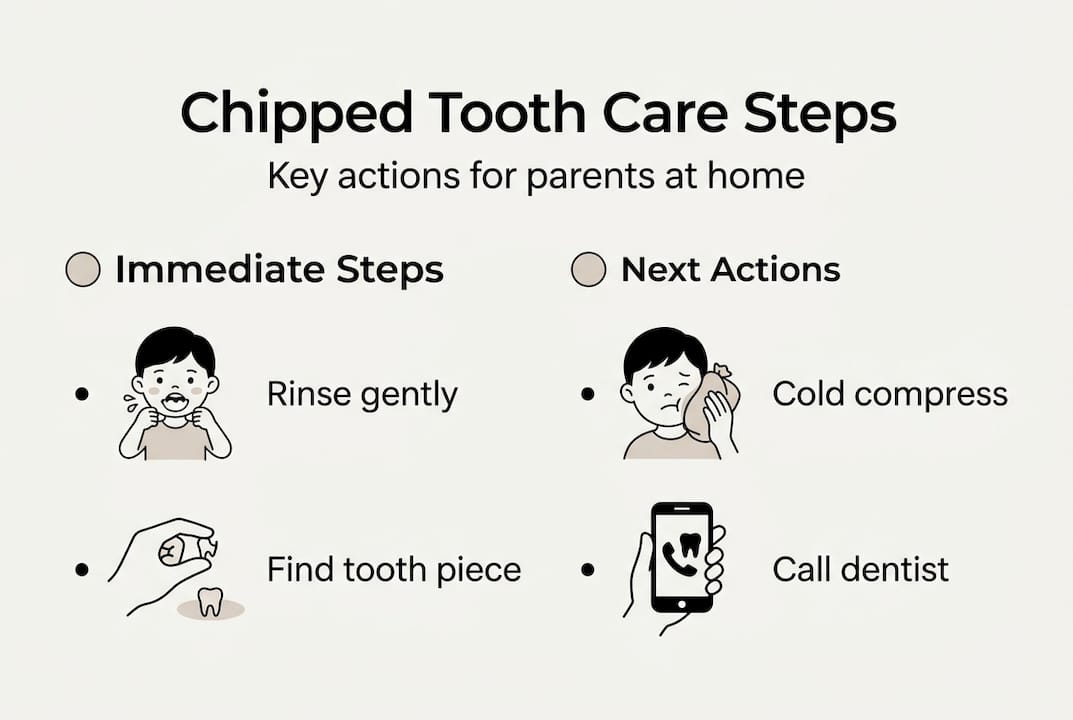
Rinse the mouth gently. Have your child rinse with lukewarm water to remove blood and debris. This cleans the area and lets you see the injury clearly. Avoid vigorous swishing that might dislodge fragments or cause more bleeding.
Control bleeding if present. Press a clean cloth or gauze against the affected area with gentle pressure. Most bleeding stops within 10 minutes. If it continues beyond 15 minutes, seek emergency dental care immediately.
Apply cold compress externally. Place a cold pack wrapped in a thin towel against your child’s cheek near the injury site. This reduces swelling and numbs pain. Apply for 10 minutes, remove for 10 minutes, and repeat as needed.
Administer appropriate pain relief. Give age-appropriate doses of paracetamol or ibuprofen following package instructions or your doctor’s guidance. Never apply pain medication directly to gums, as this can cause tissue damage.
Preserve any tooth fragments. If pieces broke off, rinse them gently and store in milk or your child’s saliva. These fragments sometimes help dentists with repairs.
Avoid problematic foods. Keep your child away from hard, crunchy, or chewy foods that could worsen the damage. Offer soft, cool foods if they’re hungry.
Contact your dentist promptly. Call for guidance even if the chip seems minor. Immediate care includes pain relief, rinsing the mouth, and protecting the injured area to prevent complications.
“Quick action after a dental injury can mean the difference between a simple repair and a complex restoration. Parents who respond calmly and follow proper first aid steps give their children the best chance for positive outcomes.”
Pro Tip: Keep a small container of milk in your fridge specifically for dental emergencies. Milk’s pH and nutrients preserve tooth fragments better than water, giving your dentist more options for repair.
After stabilising the immediate situation, understanding professional treatment options helps you make informed decisions about your child’s care.
Understanding dental treatment options for chipped teeth in children
Dental professionals offer several repair approaches depending on the chip’s severity, your child’s age, and which tooth sustained damage. Minor chips affecting only enamel often receive dental bonding, where a dentist applies tooth-coloured composite resin to rebuild the missing portion. This quick procedure typically requires no anaesthesia, making it ideal for anxious children. The resin bonds chemically to the tooth structure, restoring both function and appearance in a single visit.
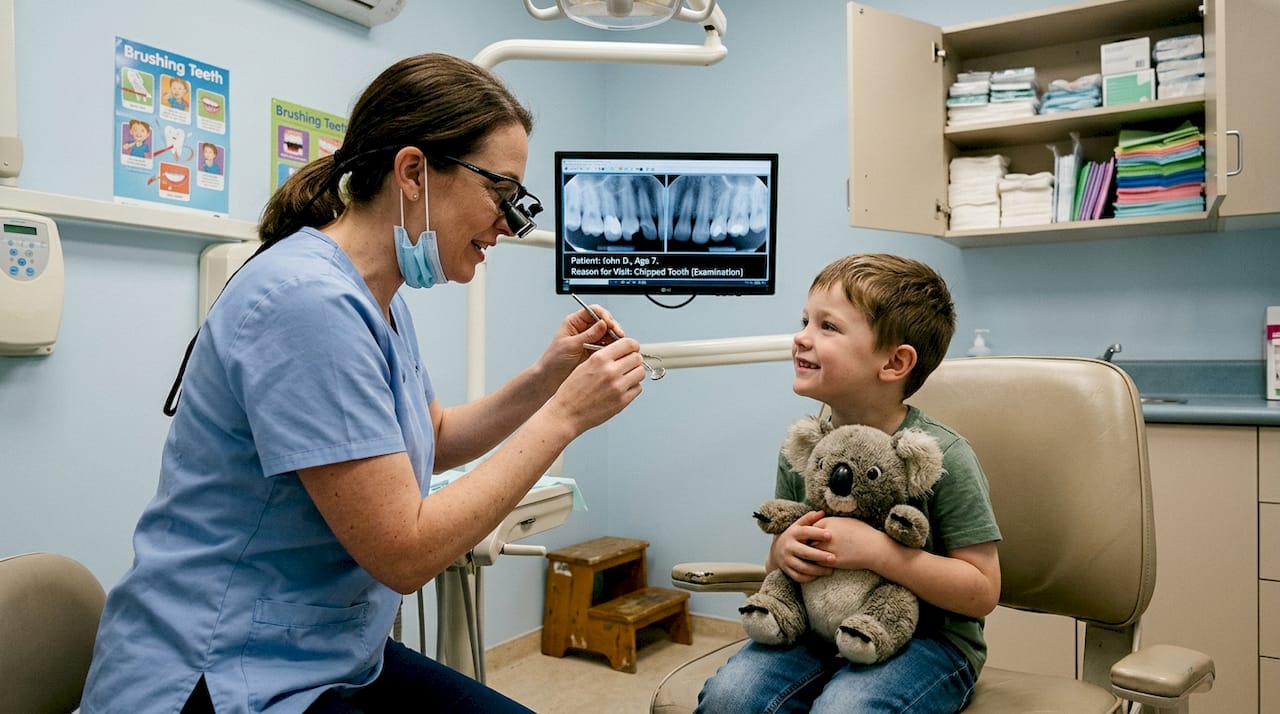
More extensive damage exposing dentin or pulp requires comprehensive treatment. Dental crowns cap the entire visible tooth portion, providing strength and protection when significant structure is lost. Crowns work particularly well for molars that endure heavy chewing forces. For front teeth where aesthetics matter most, porcelain veneers offer thin shells that cover chips while maintaining a natural appearance. Restorative dentistry procedures for children include bonding, crowns, or veneers depending on damage extent.
Treatment timing depends on whether the injury affects a baby tooth or permanent tooth. Baby teeth sometimes receive simpler repairs since they’ll eventually fall out naturally, though severe damage still needs attention to prevent infection or interference with adult tooth development. Permanent teeth warrant more comprehensive restoration to ensure decades of function. Your dentist considers your child’s age, the tooth’s role in their bite, and growth patterns when recommending treatment.
| Treatment option | Best for | Typical duration | Key benefits |
|---|---|---|---|
| Dental bonding | Minor enamel chips | Single visit | Quick, painless, affordable |
| Dental crowns | Extensive damage to molars | Two visits | Maximum strength and protection |
| Porcelain veneers | Front tooth chips | Two visits | Superior aesthetics |
| Root canal treatment | Pulp exposure | Multiple visits | Saves severely damaged teeth |
| Monitoring only | Tiny baby tooth chips | Ongoing check-ups | Avoids unnecessary intervention |
Early treatment prevents cascading problems. Untreated chips allow bacteria to penetrate deeper tooth layers, potentially causing infection that spreads to surrounding tissues. Sharp edges from chips can cut the tongue or cheeks, creating painful sores. Structural weakness may worsen over time, turning a simple repair into a complex restoration. Regular follow-up appointments let your dentist monitor healing and catch any developing issues before they become serious.
Understanding dental repair procedures helps you ask informed questions and participate actively in treatment decisions. Different approaches suit different situations, and your dentist will explain options specific to your child’s needs.
With treatment knowledge in hand, focusing on prevention helps protect your child from future injuries.
Tips for preventing chipped teeth and ensuring long-term oral health
Prevention strategies dramatically reduce your child’s risk of dental injuries while building habits that support lifelong oral health. Start with these practical approaches:
Require mouthguards for high-risk activities. Children playing contact sports like rugby, hockey, or basketball should wear properly fitted mouthguards every session. Custom-fitted guards from your dentist offer superior protection compared to generic store-bought versions. Studies show mouthguards for sports reduce dental injury risk by up to 60 times during contact activities.
Manage dietary risks thoughtfully. Hard foods like ice, hard lollies, and popcorn kernels cause many chips. Teach children to avoid chewing on non-food items like pencils or fingernails. Limiting sugary foods and drinks reduces decay that weakens teeth and makes them more susceptible to chipping.
Establish strong oral hygiene routines. Brushing twice daily with fluoride toothpaste and daily flossing removes plaque that causes decay. Strong, healthy teeth resist damage better than weakened ones. Make oral care fun for young children with colourful toothbrushes and reward charts.
Schedule regular dental check-ups. Six-monthly visits let dentists catch small problems before they become major issues. Professional cleanings remove tartar buildup that home brushing misses. Your dentist can also assess bite alignment and identify teeth at higher injury risk due to protrusion.
Consider protective dental treatments. Dental sealants create smooth plastic coatings over the chewing surfaces of back teeth, filling in grooves where decay often starts. This simple preventive treatment significantly reduces cavity risk in children’s molars.
Teach safe play habits. Educate children about avoiding rough play that could result in facial impacts. Supervise younger children during activities with injury potential. Install safety equipment like padded playground surfaces where possible.
Pro Tip: Have your child practice inserting and removing their mouthguard at home before their first game. Familiarity makes them more likely to wear it consistently during actual play.
Building these preventive habits creates a foundation for excellent oral health that extends well beyond childhood. When prevention and professional care work together, your child enjoys a healthy smile for life.
Trusted dental care for children’s chipped teeth in Western Sydney
When dental emergencies happen, having a trusted local clinic makes all the difference. Paynless Dental provides gentle, child-focused emergency dental care across Western Sydney, with experienced practitioners who understand how to calm anxious children while delivering effective treatment. Our restorative dentistry services include comprehensive solutions for chipped teeth, from simple bonding to advanced dental crown services that restore both function and appearance. With convenient locations in Toongabbie and North Ryde, we serve families throughout Wentworthville, Pendle Hill, Seven Hills, Constitution Hill, Westmead, Macquarie Park, Ryde, Chatswood, Lane Cove, Marsfield, and Eastwood. Our commitment to advanced technology and patient comfort means your child receives the highest quality care in a welcoming environment designed specifically for young patients.
Frequently asked questions
How quickly should I take my child to the dentist after chipping a tooth?
Seek dental care as soon as possible, ideally within 24 hours, to prevent complications like infection or further damage. If your child experiences severe pain, persistent bleeding, swelling, or visible pulp exposure, visit an emergency care provider immediately rather than waiting. Early professional assessment ensures the best possible outcome and may save the tooth from requiring more extensive treatment later.
What pain relief options are safe for children with a chipped tooth?
Use age-appropriate doses of paracetamol or ibuprofen as recommended by your pharmacist or doctor to manage pain effectively. Always follow dosing instructions carefully based on your child’s weight and age. Avoid giving aspirin to children under 16 due to the risk of Reye’s syndrome. Cold compresses applied externally also provide natural pain relief without medication.
Can a chipped baby tooth affect the development of adult teeth?
Severe trauma to baby teeth can potentially affect the development of adult teeth forming beneath the gums, particularly if infection develops or the injury impacts the tooth root. Early dental evaluation is important to assess damage extent and monitor for any signs of developmental interference. Your dentist will recommend appropriate follow-up care to protect emerging permanent teeth.
How can I prevent my child from chipping their teeth during sports?
Ensure your child wears a properly fitted mouthguard for sports every time they participate in contact or high-risk activities like football, basketball, or skateboarding. Custom-fitted mouthguards from your dentist offer superior protection compared to generic versions. Educate your child about safe play techniques and the importance of wearing protective equipment consistently to minimise accident risk.