
Dental crowns are one of the most versatile treatments in modern dentistry, yet many people assume they’re purely cosmetic. That’s a common misconception worth clearing up straight away. A crown can restore shape, strength, and appearance while actively protecting a tooth from further damage. Whether you’re dealing with a cracked molar, recovering from a root canal, or simply wanting a more natural-looking smile, this guide covers everything Western Sydney families need to know, from materials and costs to what actually happens in the chair.
Table of Contents
- What is a dental crown?
- When do you need a dental crown?
- Types of dental crowns: Materials explained
- The dental crown procedure: What to expect
- How long do dental crowns last? Durability and care
- Risks, challenges and common issues with dental crowns
- Dental crowns for families and Western Sydney: Special considerations
- Find expert dental crown solutions in Western Sydney
- Frequently asked questions
Key Takeaways
| Point | Details |
|---|---|
| Crowns restore function | Dental crowns save weak or damaged teeth while improving their appearance and strength. |
| Material matters | Choosing the right crown material depends on tooth location, appearance needs and budget. |
| Lasting investment | With good care, crowns can last well over a decade, protecting your natural teeth. |
| Children need crowns too | Crowns are used for children’s primary teeth when damage is too extensive for fillings. |
| Expert care recommended | Seeing an experienced dentist helps avoid issues and ensures the longest lifespan for your crown. |
What is a dental crown?
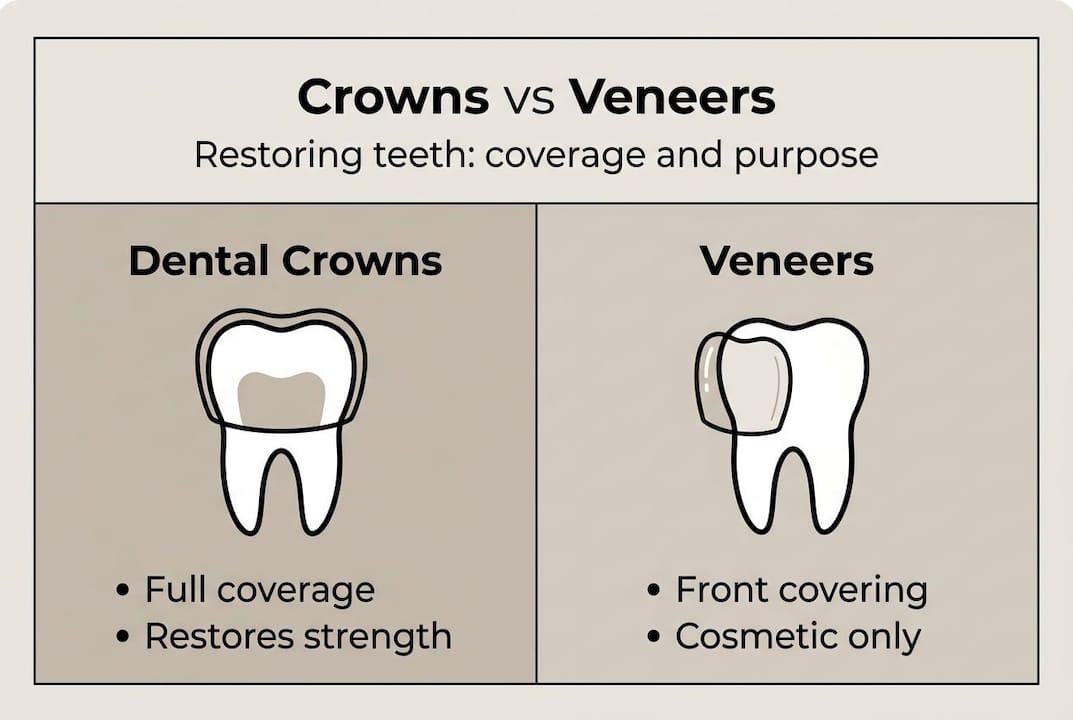
A dental crown is essentially a custom-made cap that fits over your existing tooth, covering everything above the gum line. It restores the tooth’s shape, size, strength, and appearance in one go. Think of it like a protective helmet for a tooth that’s been weakened or damaged.
Dental crowns are tooth-shaped caps covering damaged, decayed, or weakened teeth, and they’re used across a wide range of clinical situations:
- Severe tooth decay that a filling can’t adequately address
- Cracked or fractured teeth at risk of splitting further
- Teeth that have undergone root canal treatment
- Teeth attached to dental implants
- Cosmetic improvements for discoloured or misshapen teeth
“A dental crown is a tooth-shaped cap placed over a tooth to restore its shape, size, strength, and appearance.” — Cleveland Clinic
It’s worth knowing how crowns differ from similar treatments. Veneers only cover the front surface of a tooth and are mainly cosmetic. Fillings replace missing tooth structure from the inside. Crowns, by contrast, encase the entire visible portion of the tooth. If you’re unsure which option suits your situation, reading about veneers versus crowns can help clarify the distinction.
When do you need a dental crown?
Understanding what crowns do leads directly to why your dentist may recommend one. The situations are more varied than most people expect.
Crowns are used for cracks, large decay, weak or worn teeth, after root canals, implants, or to improve discolouration. For adults in Western Sydney, the most common triggers include:
- A tooth with decay so extensive that a filling would leave too little natural structure
- A molar that has cracked under years of grinding
- A front tooth that’s chipped or severely discoloured
- A tooth that’s been root canal treated and needs protection
- A dental implant that requires a crown to function as a natural tooth
Families with young children should also know that paediatric crowns exist for primary (baby) teeth with extensive decay. Protecting those teeth matters because they hold space for adult teeth to come through correctly.
Signs you might need a crown include pain when biting, a visible crack or fracture line, a large old filling that’s failing, or a tooth that looks noticeably shorter than its neighbours. You can get a clearer picture of what’s involved by reviewing a dental crown procedure overview before your consultation.
Pro Tip: Ask your dentist whether a crown now could prevent tooth loss later. In many cases, crowning a compromised tooth is far less costly than extracting it and replacing it with an implant down the track.
Types of dental crowns: Materials explained
Now that you know when a crown might be needed, the next question is choosing the best material for your situation. Types include metal, porcelain-fused-to-metal, all-ceramic, zirconia, and resin, and each has a distinct set of strengths.
| Material | Durability | Aesthetics | Best position | Typical lifespan |
|---|---|---|---|---|
| Metal (gold/alloy) | Excellent | Poor (visible metal) | Back teeth | 20+ years |
| Porcelain-fused-to-metal | Good | Moderate | Back or front | 10-15 years |
| All-ceramic/porcelain | Moderate | Excellent | Front teeth | 10-15 years |
| Zirconia | Excellent | Very good | Any position | 15-20+ years |
| Resin | Low | Moderate | Temporary use | 1-5 years |
Zirconia is strong and aesthetic for both visible and back teeth, making it a popular choice for Western Sydney patients who want durability without a metallic appearance. Gold and metal alloys remain the gold standard for heavy chewing surfaces, particularly for patients who grind their teeth at night. All-ceramic crowns deliver the most lifelike colour match and are ideal for front teeth where appearance is the priority.
For a deeper look at how these crowns material choices compare in real-world use, it’s worth discussing your specific bite and lifestyle with your dentist. Patients in areas like Blacktown dental crowns clinics often ask about zirconia for its balance of strength and natural appearance.
Pro Tip: For families with younger children, temporary resin crowns can be a practical short-term solution while waiting for a permanent option, especially on primary teeth that will eventually fall out naturally.
The dental crown procedure: What to expect
Once you’ve settled on a crown material, here’s what you can expect during the entire treatment.
- Initial examination: Your dentist assesses the tooth with X-rays and a clinical check to confirm a crown is the right approach.
- Tooth preparation: Local anaesthetic is applied, then the tooth is shaped to create room for the crown. Specific prep and cement types vary depending on the material chosen.
- Impression or digital scan: A mould or 3D scan captures the exact shape of your prepared tooth and surrounding teeth.
- Temporary crown: A short-term crown protects the prepared tooth while the permanent one is fabricated, usually in a dental laboratory.
- Fitting and cementation: At the second visit, the permanent crown is checked for fit, bite, and colour before being permanently cemented.
Enamel removal during preparation is permanent, but modern techniques minimise how much is taken, and local anaesthetic ensures the process is comfortable throughout.
The process usually takes two visits: preparation and cementation, typically one to two weeks apart. Some clinics now offer CAD/CAM technology (same-day crowns) where the crown is milled on-site in a single appointment.
| Stage | Visit 1 | Visit 2 |
|---|---|---|
| Duration | 60-90 minutes | 30-60 minutes |
| Key steps | Prep, scan/impression, temp crown | Fit check, adjustments, cement |
| CAD/CAM option | Scan and mill same day | Not required |
For a full breakdown of the Western Sydney dental crown process, including what to expect at each stage, your dentist can walk you through the specifics at your first appointment.
How long do dental crowns last? Durability and care
After your new crown is in place, it’s smart to know how long it should last and how to make the most out of your investment. Crowns last 5 to 15+ years depending on material and care, with zirconia and monolithic ceramics lasting longest.

The biggest factors affecting longevity are oral hygiene, whether you grind your teeth (bruxism), and the skill of the dentist placing the crown. A well-placed crown on a clean, healthy tooth can easily outlast the lower end of that range.
Do:
- Brush twice daily and floss around the crown carefully
- Attend regular check-ups so your dentist can monitor the crown’s fit
- Wear a night guard if you grind your teeth
- Report any sensitivity or changes in bite promptly
Don’t:
- Chew ice or hard lollies
- Use your teeth to open packaging
- Eat excessively sticky foods that can pull at the crown
- Skip dental check-ups
For more detail on how long do crowns last under different conditions, and practical advice on caring for crowns and veneers, both resources are worth bookmarking after your procedure.
Pro Tip: If your crown chips or feels slightly loose, don’t wait. Minor issues caught early can often be repaired without replacing the entire crown, saving you time and money.
Risks, challenges and common issues with dental crowns
Knowing the upsides is crucial, but being prepared for potential downsides means less stress if problems occur.
Challenges include fit issues, particularly with zirconia crowns where scan inaccuracies can create open margins or occlusal highs. There’s also a small risk of pulp injury if the tooth is over-prepared during shaping. These risks are minimised significantly when treatment is carried out by an experienced clinician.
Crowns are best for severely damaged teeth where fewer than two walls of natural tooth structure remain. If a tooth still has substantial healthy structure, a large filling or inlay may be a better option.
Signs your crown may need a dentist’s review:
- Persistent sensitivity to hot or cold that doesn’t settle
- Pain when biting down
- A visible crack or chip in the crown material
- The crown feels loose or moves slightly
- Gum recession or swelling around the crown
- A dark line visible at the gum margin (common with older porcelain-fused-to-metal crowns)
Patients who are not ideal candidates for crowns include those with severe untreated gum disease, very poor oral hygiene habits, or insufficient remaining tooth structure to support a crown. In those cases, other treatments may need to come first. If you’re in the Lane Cove area, the team at Lane Cove dental crowns can assess your suitability during a consultation.
Dental crowns for families and Western Sydney: Special considerations
Given the diversity of families across the region, let’s cover factors especially relevant to Western Sydney locals.
Good oral hygiene is key for long-term crown success, and options for aesthetics and durability vary for different age groups and tooth locations. For families managing multiple dental needs, it helps to think strategically about which teeth need crowns and when.
- Visible front teeth: All-ceramic or zirconia crowns offer the most natural appearance and are worth the investment for teeth that show when you smile.
- Back chewing teeth: Metal or zirconia crowns handle heavy bite forces better and tend to last longer in high-stress positions.
- Children’s primary teeth: Stainless steel crowns are commonly used for badly decayed baby teeth. They’re durable, cost-effective, and fall out naturally with the tooth.
- Managing costs: Check your private health insurance extras cover, as many funds contribute to crown costs. Staged treatment across financial years can also help spread expenses.
- Faster options: Ask your dentist about digital CAD/CAM technology, which can produce a crown in a single visit and suits busy family schedules.
For residents near Marsfield, exploring the Marsfield crowns benefits available locally is a practical starting point. It’s also worth reviewing your dental insurance for families to understand what rebates apply before committing to treatment.
Find expert dental crown solutions in Western Sydney
At Paynless Dental, we understand that every patient’s situation is different, whether you’re a parent managing your child’s first crown, an adult protecting a root-canal-treated tooth, or someone wanting a more confident smile. Our clinics in Toongabbie and North Ryde serve communities across Western Sydney and the North Shore, offering a full range of crown materials and the latest digital technology for precise, comfortable results. Our dental crown specialists work with patients of all ages to find the right solution for their budget and lifestyle. If you’re in the Lane Cove area, our dental crowns Lane Cove clinic is ready to help. We also offer affordable dental implants for patients who need a complete tooth replacement solution alongside or instead of a crown.
Frequently asked questions
Are dental crowns painful to get?
Numbing is used during the procedure to keep you comfortable, so most patients feel minimal discomfort during the appointment. Some mild sensitivity in the days following preparation is normal and usually settles quickly.
How do dental crowns compare to large fillings?
Crowns have higher survival rates for severely compromised teeth, offering better long-term protection than a large filling that leaves the remaining tooth walls vulnerable to fracture.
What’s the difference between zirconia and porcelain crowns?
Zirconia is stronger and more durable, making it ideal for back teeth under heavy chewing pressure, while porcelain crowns deliver the most natural colour match and are typically chosen for front teeth.
Can you eat normally with a dental crown?
Yes, most foods are completely fine once the crown is settled. Follow care advice to avoid extremely hard or sticky foods, which can stress the crown over time and shorten its lifespan.