
Families across Western Sydney face a daunting challenge: 42% delay or avoid dental care entirely due to cost concerns. Many assume comprehensive treatments like implants and orthodontics are financially out of reach, unaware that public schemes and private payment plans can make these services surprisingly accessible. This guide reveals how to navigate affordable dental care options in 2026, from government benefits to flexible instalment plans that fit tight family budgets.
Table of Contents
- Understanding Dental Payment Plan Options In Western Sydney
- How Public Dental Services Support Families And Children In Western Sydney
- Comparing Public And Private Dental Payment Plans For Comprehensive Services
- Tips For Managing Dental Costs With Affordable Payment Plans In Western Sydney
- Discover Affordable Dental Solutions At Paynless Dental
Key takeaways
| Point | Details |
|——-|———||
| Public dental services | Eligible adults can receive free dental care from NSW public dental clinics with Medicare and concession cards. |
| Child Dental Benefits Schedule | CDBS provides eligible children aged 0–17 years with a capped benefit for basic dental services, reducing family expenses. |
| Private payment plans | Interest-free instalments and flexible terms cover costly treatments like implants and orthodontics. |
| Early prevention saves money | Poor oral health early in life is the strongest predictor of further oral disease in adult life, making preventive care essential. |
| Compare options carefully | Understanding coverage limits, waiting times, and eligibility helps families choose the best payment solution. |
Understanding dental payment plan options in Western Sydney
Navigating dental costs becomes manageable when you understand the full spectrum of payment solutions available. Public and private plans serve different needs, and knowing which suits your family situation saves both money and stress.
Public dental services through NSW Health provide completely free care for eligible residents. Eligible adults can receive free dental care from NSW public dental clinics if they hold Medicare eligibility and a valid concession card such as Centrelink, Department of Veterans’ Affairs, or certain Australian Government cards. This covers general check-ups, fillings, extractions, and some emergency treatments, though waiting lists can extend several months for non-urgent cases.
Private payment plans offer faster access and broader treatment options. Most dental practices, including Paynless Dental, structure plans with weekly, fortnightly, or monthly instalments. Interest-free options typically span 6 to 24 months, whilst longer terms may carry competitive interest rates. These plans cover virtually any treatment, including dental implants, orthodontics, root canals, and cosmetic procedures that public services rarely provide.
A common misconception suggests payment plans only suit minor procedures. In reality, comprehensive treatments benefit most from instalments. A full dental implant costing $4,000 to $6,000 becomes $167 to $250 monthly over 24 months, transforming an overwhelming expense into a manageable household bill. Orthodontic treatments for teenagers, often $5,000 to $9,000, similarly split into affordable portions.
Key factors when evaluating payment plans:
- Approval requirements: Most private plans need minimal credit checks, making them accessible to families with varied financial histories.
- Treatment coverage: Confirm whether your specific needs (implants, braces, emergency care) qualify under the plan terms.
- Total cost transparency: Understand any fees, interest charges, or penalties for early payment or missed instalments.
- Flexibility: Look for plans allowing treatment adjustments if your family’s needs change mid-course.
For families exploring both public and private options, reviewing a dental pay plans comparison helps clarify which path delivers the best value for your circumstances.
How public dental services support families and children in Western Sydney
Public dental programmes specifically target families and children, recognising that early intervention prevents costly adult treatments later. Understanding eligibility and benefits maximises these valuable resources.
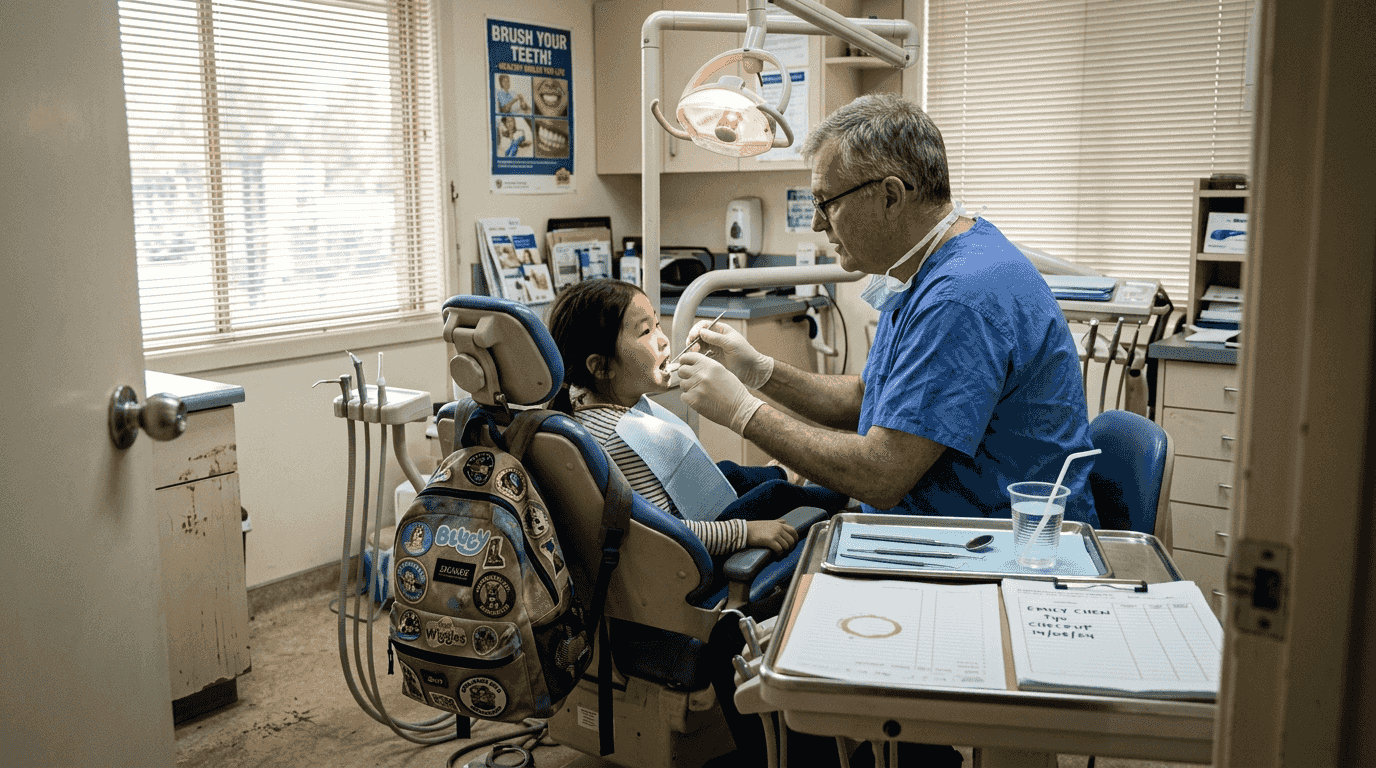
The Child Dental Benefits Schedule represents the federal government’s primary support mechanism. The Child Dental Benefits Schedule (CDBS) provides eligible children aged 0–17 years with a capped benefit for basic dental services, currently offering $1,052 over two calendar years. This covers examinations, x-rays, cleaning, fissure sealing, fillings, root canals, and extractions. Orthodontics and cosmetic treatments fall outside CDBS scope.
Eligibility depends on your family receiving certain government payments, including Family Tax Benefit Part A, Youth Allowance, or similar assistance programmes. The government automatically notifies eligible families via myGov, though you can verify status through Medicare online services or by calling the Department of Human Services.
If a child is not eligible for CDBS or has exhausted their CDBS benefit, children can receive free dental care from NSW public dental clinics, ensuring no child misses essential care due to financial constraints. Parents must provide consent and proof of NSW residency alongside their child’s Medicare details.
Accessing these benefits follows straightforward steps:
- Confirm your child’s CDBS eligibility through myGov or Medicare.
- Book with a CDBS-registered dental provider (most private and public clinics participate).
- Present your child’s Medicare card at the appointment.
- The clinic bulk-bills Medicare directly, leaving you with no out-of-pocket costs until the cap is reached.
- Track remaining benefits through your Medicare statements to plan future visits effectively.
Pro Tip: Schedule your child’s preventive visits (check-ups, cleaning, fluoride treatments) early in the calendar year to preserve CDBS funds for unexpected treatments later. This approach maximises the benefit’s protective value whilst maintaining flexibility for emergencies.
Early dental care delivers compound benefits beyond immediate cost savings. Establishing good oral hygiene habits, identifying development issues, and addressing cavities promptly prevents the cascade of problems that plague many adults. Regular childhood visits also reduce dental anxiety, making your child more likely to maintain consistent care throughout life. For detailed prevention strategies, explore fluoride benefits for teeth australia and understanding affordable family dental care.
Comparing public and private dental payment plans for comprehensive services
When your family needs extensive treatments like implants or orthodontics, understanding the trade-offs between public and private options shapes your financial strategy and treatment timeline.
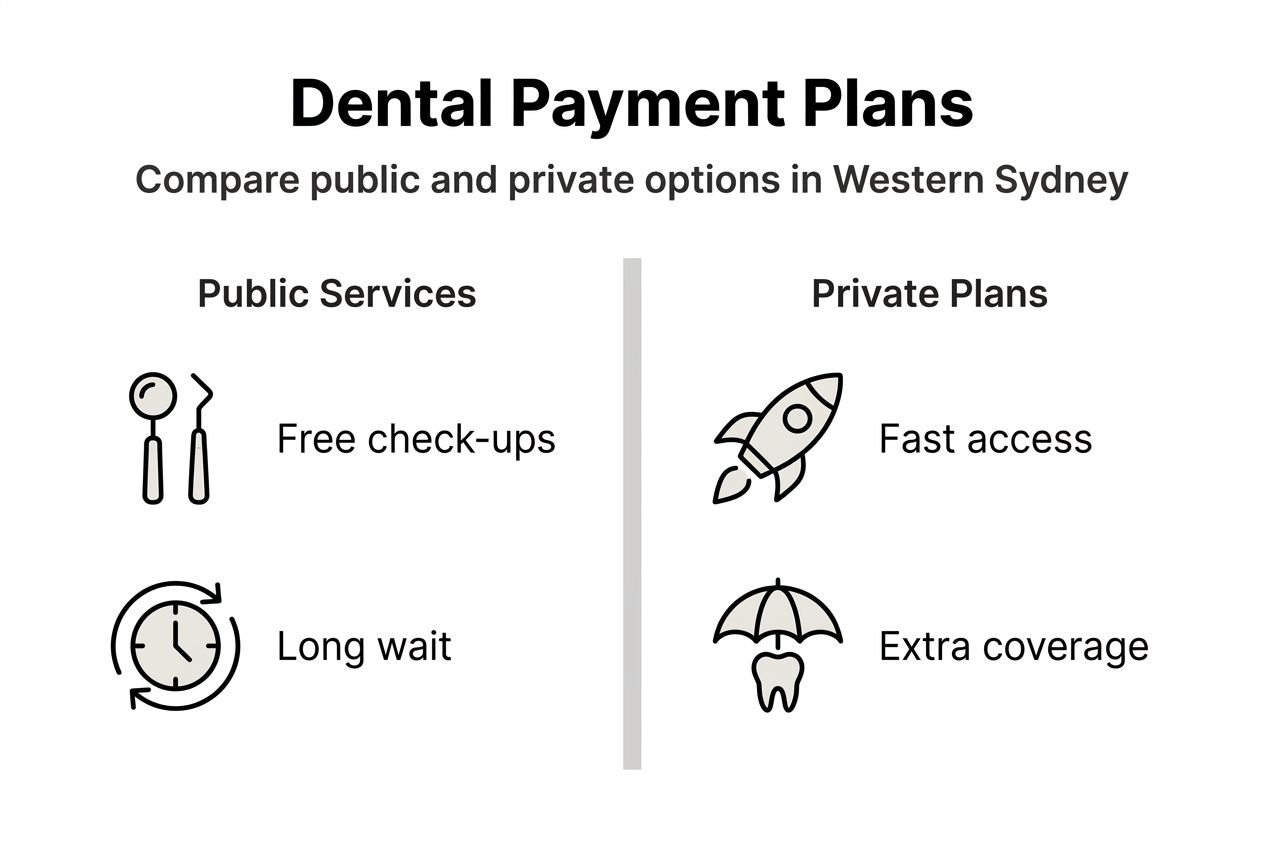
Public dental services excel at basic care but face limitations for complex treatments. Waiting times for non-urgent procedures often stretch 12 to 24 months, and services prioritise emergency relief, extractions, and essential restorations over aesthetic or elective work. Dental implants, cosmetic orthodontics, and advanced periodontal treatments rarely qualify for public coverage, directing families toward private solutions for these needs.
Private payment plans fill these gaps comprehensively. They eliminate waiting periods, provide access to latest technologies like same-day crowns and clear aligners, and allow you to select specialists for complex cases. The trade-off involves upfront or instalment costs, though competition among providers keeps prices increasingly reasonable.
| Factor | Public dental services | Private payment plans |
|---|---|---|
| Cost | Free for eligible patients | Instalment-based, typically $50-$500 monthly depending on treatment |
| Waiting time | 6-24 months for non-urgent care | Immediate to 2 weeks for appointments |
| Treatment scope | Basic care, emergency relief, essential restorations | Full range including implants, orthodontics, cosmetic work |
| Provider choice | Assigned to available public clinics | Choose your preferred dentist and specialist |
| Technology | Standard equipment and materials | Advanced options like CEREC, Invisalign, laser dentistry |
| Ongoing flexibility | Limited appointment availability | Flexible scheduling around family commitments |
Australia’s lower income households have a higher incidence of poor oral health, making affordable access to comprehensive care particularly crucial for Western Sydney families. Private plans democratise this access, allowing families to receive implant-supported dentures, orthodontic treatment for teens, or emergency root canals without exhausting savings or taking on high-interest credit card debt.
Dental insurance complements payment plans by covering portions of treatment costs, reducing instalment amounts. Typical extras policies contribute 60% to 80% toward major dental work after waiting periods, though annual limits usually cap at $1,000 to $2,500. Combining insurance benefits with a payment plan can halve your monthly commitment.
Factors to weigh when choosing between options:
- Urgency: Severe pain, infection, or functional impairment justifies immediate private care over prolonged public waiting lists.
- Treatment complexity: Advanced procedures benefit from specialist access and modern technology available privately.
- Long-term cost: Preventive private care often costs less than delayed treatment of worsened conditions.
- Family priorities: Balance immediate relief for one member against ongoing preventive care for all.
Families seeking cost-effective implant solutions can explore cheap dental implants for seniors comparison and importance of dental insurance for sydney families for strategic approaches to expensive treatments.
Tips for managing dental costs with affordable payment plans in Western Sydney
Strategic planning transforms dental expenses from budget-busting emergencies into predictable, manageable investments in your family’s health.
Budgeting starts with honest assessment of your family’s dental needs. Schedule comprehensive examinations for all members to identify issues early, when they are cheaper to address. Most practices offer gap-free or heavily discounted check-ups for health fund members, making this initial step affordable. Request itemised treatment plans with priorities ranked by urgency, allowing you to sequence procedures over months or years based on your financial capacity.
Scheduling treatments strategically maximises available benefits. If you hold private health insurance, time major work to avoid waiting periods and capture annual limits before they reset. For CDBS-eligible children, spread preventive visits across the two-year benefit period whilst reserving funds for unexpected needs. Some families synchronise treatments with tax refund arrivals or bonus payments, reducing reliance on credit.
Preventive care delivers the highest return on investment in oral health. Regular brushing, flossing, and six-monthly check-ups catch problems whilst they remain small and inexpensive. A $200 filling prevents a $2,000 root canal and crown. Poor oral health early in life is the strongest predictor of further oral disease in adult life, making prevention especially valuable for children. Teaching kids proper technique and providing fluoridated water access costs virtually nothing yet saves thousands later.
Pro Tip: Before committing to any payment plan, discuss your financial situation openly with your dental provider. Many practices offer hardship programmes, extended payment terms, or alternative treatment approaches that achieve similar outcomes at lower cost. Dentists prefer working with you to find sustainable solutions over watching you struggle or abandon needed care.
Common pitfalls to avoid:
- Delaying urgent treatment: What starts as a minor toothache can escalate to an abscess requiring emergency care and antibiotics, multiplying costs.
- Ignoring fine print: Understand whether your plan charges interest, penalties for early payoff, or fees for missed payments.
- Overlooking public options: Many families qualify for public dental services or CDBS without realising it, leaving valuable benefits unused.
- Choosing cheapest over best value: Rock-bottom prices sometimes signal outdated techniques or inferior materials that require costly repairs sooner.
For comprehensive guidance tailored to Western Sydney circumstances, review affordable dental care tips western sydney families and healthy habits for families dental care sydney.
Discover affordable dental solutions at Paynless Dental
Paynless Dental specialises in making comprehensive dental care accessible for Western Sydney families through flexible payment solutions tailored to your budget. Our Toongabbie and North Ryde clinics serve families across Wentworthville, Pendle Hill, Seven Hills, Macquarie Park, and surrounding communities with advanced treatments from dental implants to orthodontics.
We work closely with families to structure payment plans that accommodate your financial situation whilst delivering the quality care you deserve. Our team understands public dental eligibility requirements and helps you maximise CDBS benefits and concession entitlements before recommending private payment options. Whether you need emergency treatment, implant restoration, or orthodontic care for your teenager, we create solutions that fit.
Visit our dentist solutions for your family page to explore our comprehensive services and payment options. Review our dental pay plans comparison to understand your choices, or read more about understanding affordable family dental care to see how other Western Sydney families manage their dental health successfully.
FAQ
What are the eligibility criteria for public dental services in NSW?
Adults are eligible for NSW public dental services if they are a NSW resident, eligible for Medicare, and hold a valid Australian Government concession card. Acceptable cards include Centrelink Health Care Card, Pensioner Concession Card, Commonwealth Seniors Health Card, and Department of Veterans’ Affairs cards. Children face different criteria, with automatic eligibility for public clinics if they are NSW residents with Medicare, regardless of concession status.
How does the Child Dental Benefits Schedule help families?
CDBS provides eligible children with capped benefits for basic dental services to improve access, currently offering $1,052 over two calendar years. This covers preventive services, fillings, root canals, and extractions at bulk-billing providers with no out-of-pocket costs until the cap is reached. Families receiving Family Tax Benefit Part A or similar government assistance automatically qualify, making essential dental care financially accessible for thousands of Western Sydney children.
What should families consider when choosing a private dental payment plan?
Evaluate interest rates (interest-free terms typically last 6 to 24 months), total treatment coverage, monthly payment amounts fitting your budget, and provider flexibility for adjusting plans if circumstances change. Compare multiple plans through resources like dental pay plans comparison to ensure you receive fair terms. Request written agreements detailing all fees, penalties, and conditions before committing to any plan.
Can dental implants and orthodontic treatments be covered by payment plans?
Private payment plans frequently cover implants and orthodontics, breaking $4,000 to $9,000 treatments into manageable monthly instalments. Public dental coverage prioritises emergency and basic care, rarely funding these elective procedures except in extreme medical necessity cases. For cost-effective approaches to expensive treatments, explore cheap dental implants for seniors comparison and importance of dental insurance for sydney families to combine payment plans with insurance benefits strategically.
Recommended
- 7 Affordable Dental Care Tips for Western Sydney Families | Paynless
- Best 6 Dental Pay Plans – Expert Comparison 2025 | Paynless
- Free dental implants for seniors in Western Sydney 2026 | Paynless
- Best cheap dental implants for seniors – Expert Comparison 2025 | Paynless
- Servicii stomatologice cu plata in rate – Dr. Nassar