
Did you know that one in three Australian adults has untreated tooth decay, often linked to hidden dental problems like impacted teeth? Many people assume impacted teeth always cause pain or demand immediate removal, but the truth is more complicated. Understanding how these trapped teeth develop and the subtle signs they create could protect you from serious dental issues and long-term discomfort.
Key Takeaways
| Point | Details |
|---|---|
| Impacted Tooth Definition | An impacted tooth is one that cannot fully emerge through the gum line and may remain asymptomatic for years. Common misconceptions include the belief that they always cause pain or require extraction. |
| Common Types and Symptoms | Wisdom teeth are the most frequently impacted, but canines and premolars can also be affected. Symptoms include persistent jaw pain, swelling, and difficulty opening the mouth. |
| Diagnosis and Management | Diagnostic imaging, including x-rays, is vital for identifying impactions. Early professional evaluation is crucial to avoid long-term complications. |
| Treatment Options | Treatment ranges from monitoring asymptomatic teeth to surgical extraction for those causing complications. Preventive strategies such as regular check-ups can mitigate risks. |
Table of Contents
- Impacted Teeth Defined And Common Misconceptions
- Types Of Impacted Teeth And Their Causes
- Symptoms And Potential Complications Explained
- Diagnosis And When To Seek Dental Help
- Treatment Options And Preventive Strategies
Impacted Teeth Defined and Common Misconceptions
An impacted tooth occurs when a tooth cannot fully emerge through the gum line, becoming trapped or partially blocked within the jawbone or soft tissue. According to research from UT Dentistry UT Health San Antonio, these dental anomalies are more complex than simple overcrowding and can lead to significant oral health complications.
Common misconceptions about impacted teeth often mislead patients. Many people believe that impacted teeth always cause immediate pain or require extraction, which isn’t always true. In reality, some impacted teeth remain asymptomatic for years. Wisdom teeth are the most frequently impacted, but other teeth like canines can also become trapped beneath the gum line.
A national oral health study by the University of Adelaide highlights the significant prevalence of dental complications related to impaction. Key indicators that might suggest an impacted tooth include:
- Persistent jaw pain or discomfort
- Swelling around the gum area
- Difficulty opening your mouth completely
- Unexplained headaches
- Occasional bad breath or unpleasant taste
Professional dental assessment remains the most reliable method for diagnosing and managing impacted teeth, ensuring timely intervention and preventing potential long-term oral health issues.
Types of Impacted Teeth and Their Causes
Tooth impaction encompasses multiple classifications depending on the specific tooth’s position and developmental challenges. According to research from UNSW’s oral histology and embryology resource, developmental timing mismatches can significantly contribute to impaction, potentially causing complex dental complications.
The most common types of impacted teeth include:
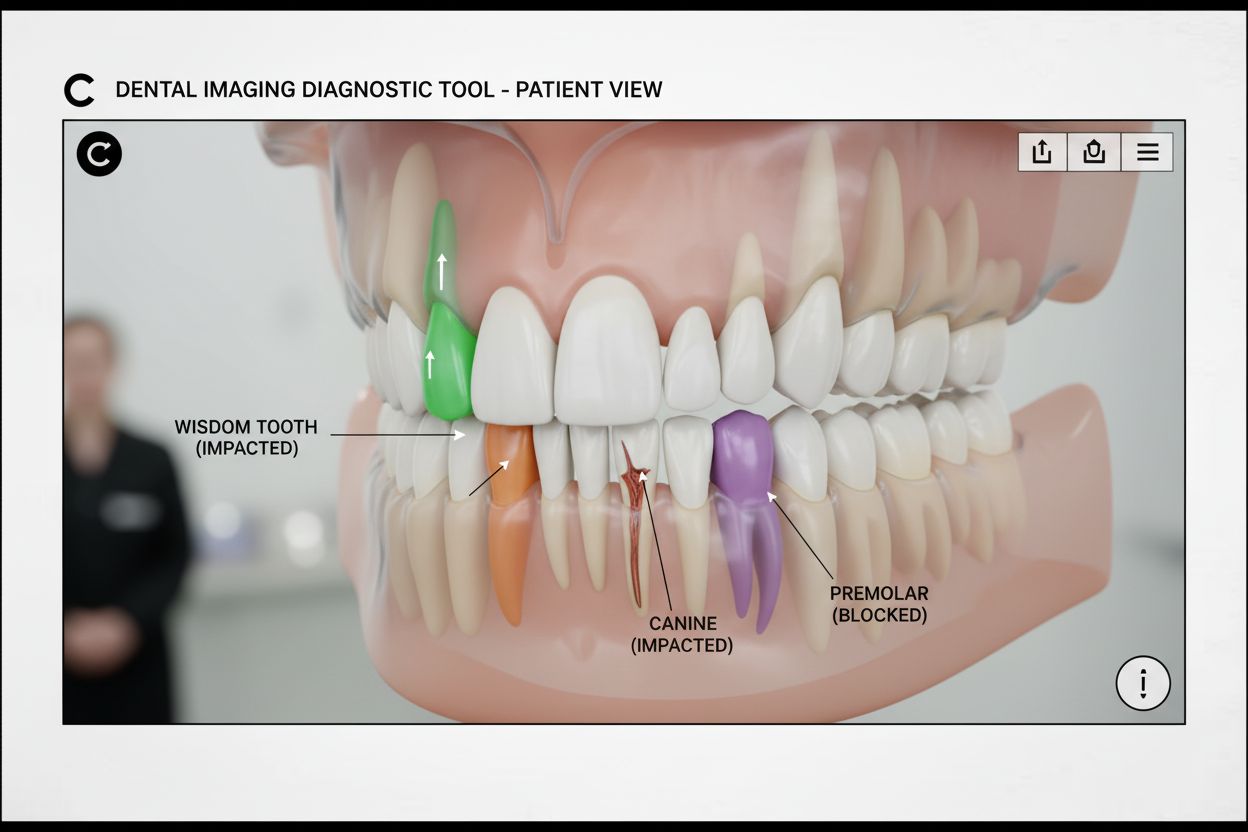
- Wisdom Teeth (Third Molars): Most frequently impacted, often due to limited jaw space
- Canine Teeth: Can become trapped in unusual positions, requiring specialized intervention
- Premolars: Sometimes blocked by other teeth during normal eruption process
- Upper Incisors: Rare but possible impaction scenarios
Here’s a comparison of common types of impacted teeth and their main causes:
| Tooth Type | Frequency | Common Causes (Summary) |
|---|---|---|
| Wisdom Teeth | Most frequent | Limited jaw space Late eruption Overcrowding |
| Canine Teeth | Common | Abnormal position Genetic factors Overcrowding |
| Premolars | Occasional | Blocked eruption Jaw space issues |
| Upper Incisors | Rare | Timing mismatches Soft tissue blockages |
Research from the University of Adelaide indicates that specific causal factors for tooth impaction involve complex interactions between genetic predisposition and developmental processes. Key developmental causes include:
- Insufficient jaw bone growth
- Genetic inheritance patterns
- Overcrowding of existing teeth
- Abnormal tooth angle during formation
- Unusual soft tissue blockages
Clinical management requires precise diagnostic approaches, with our comprehensive dental implants guide offering additional insights into potential treatment strategies for impacted teeth.
Symptoms and Potential Complications Explained
Impacted teeth can present a range of symptoms that vary from mild discomfort to severe inflammatory conditions. According to research from Deakin University, untreated impacted teeth are a significant cause of preventable dental hospital admissions in Australia, highlighting the critical importance of early recognition and management.
The most common symptoms that signal a potential impacted tooth include:
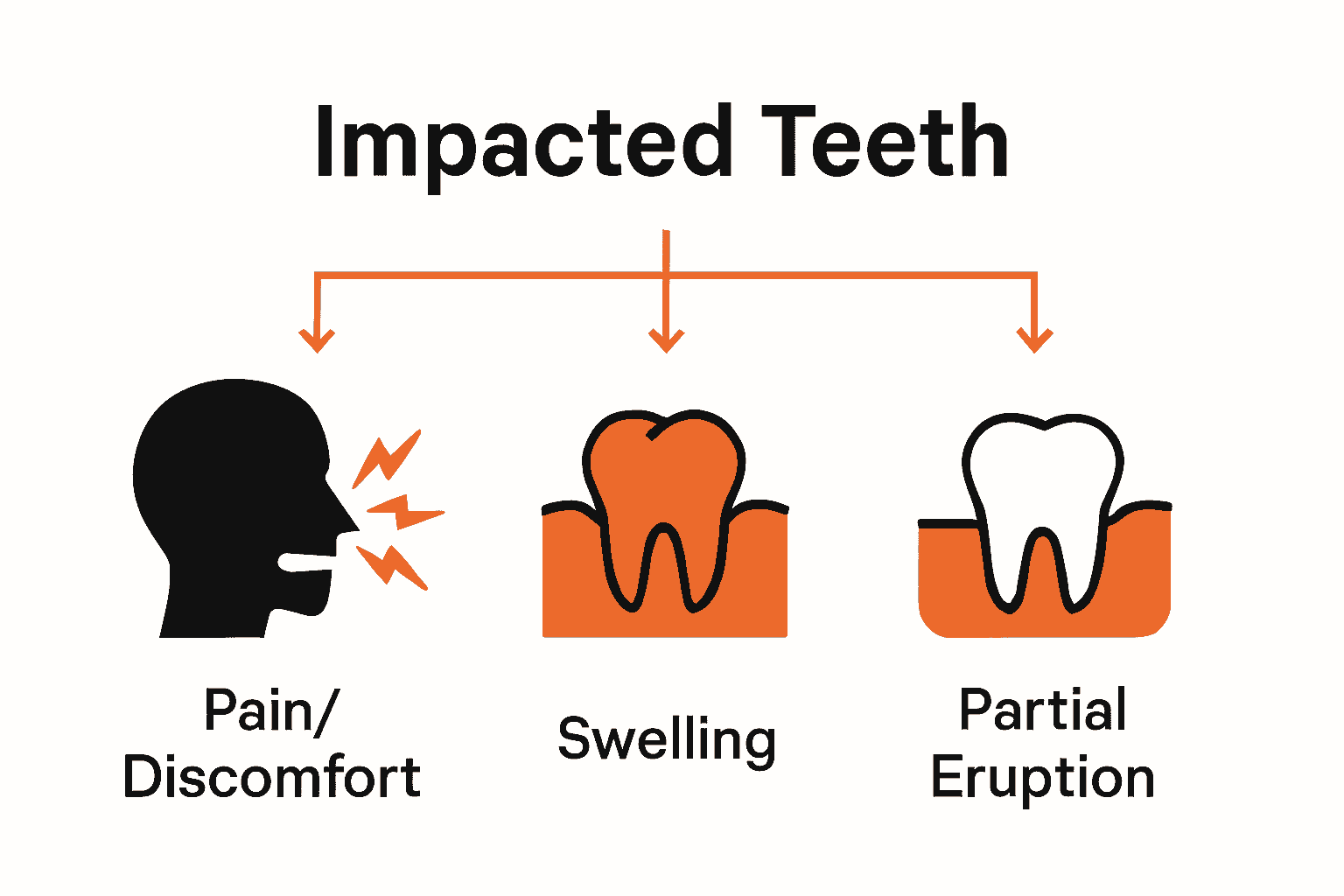
- Persistent jaw pain or discomfort
- Swelling around the gum area
- Difficulty opening the mouth fully
- Recurring headaches
- Unusual taste or bad breath
- Visible partial tooth emergence
One of the most serious potential complications is pericoronitis, an inflammatory condition described in medical literature as a bacterial infection around a partially erupted tooth.
 This condition can lead to significant risks such as:
- Facial swelling
- Potential airway compromise
- Severe pain and infection spread
- Risk of systemic bacterial infection
Professional dental intervention is crucial. If left untreated, impacted teeth can cause long-term complications including tooth misalignment, chronic pain, and potential damage to adjacent teeth. Our comprehensive dental care guide provides further insights into managing these complex dental scenarios.
Diagnosis and When to Seek Dental Help
Diagnostic imaging plays a critical role in identifying impacted teeth, with modern dental technology providing precise insights into tooth positioning and potential complications. According to American Association of Orthodontists, x-rays are the primary method for determining whether wisdom teeth are impacted, typically recommended when patients experience specific symptoms like persistent rear mouth pain or jaw mobility challenges.
The diagnostic process for impacted teeth typically involves several key steps:
- Comprehensive oral examination
- Detailed medical history review
- Digital x-ray or panoramic radiography
- 3D cone beam computed tomography (CBCT) for complex cases
- Evaluation of tooth positioning and potential risk factors
Research from the University of Adelaide emphasizes that many Australians delay seeking dental care due to cost concerns. However, prompt professional evaluation becomes crucial when experiencing:
- Consistent jaw or mouth pain
- Swelling around gum areas
- Difficulty opening mouth fully
- Recurring headaches
- Noticeable changes in tooth alignment
Our trusted Toongabbie dental services offer comprehensive diagnostic assessments to help patients understand and address potential impacted tooth issues effectively, ensuring timely intervention and optimal oral health management.
Treatment Options and Preventive Strategies
Dental interventions for impacted teeth range from conservative monitoring to surgical procedures, depending on the specific tooth’s position and potential complications. Research from the Mayo Clinic highlights that early intervention can prevent extended treatment durations and reduce surgical risks, particularly for impacted canines.
The primary treatment options for impacted teeth include:
- Surgical Extraction: Recommended for wisdom teeth causing significant complications
- Orthodontic Alignment: Precise repositioning of partially impacted teeth
- Coronectomy: Partial tooth removal to minimize nerve damage
- Guided Eruption: Encouraging natural tooth emergence through specialized techniques
- Monitoring: Regular assessment for asymptomatic impacted teeth
Preventive strategies are crucial in managing potential dental complications. Key approaches recommended by dental professionals include:
- Regular dental check-ups every 6 months
- Early orthodontic assessments during adolescence
- Comprehensive x-ray screenings
- Maintaining excellent oral hygiene
- Addressing crowding issues promptly
Our comprehensive dental implants guide provides additional insights into advanced treatment options for complex dental scenarios, ensuring patients understand their potential management strategies for impacted teeth.
Don’t Let Impacted Teeth Complicate Your Life – Discover Premium Tailored Solutions
Struggling with pain, swelling, or headaches from an impacted tooth can make everyday life much harder. You read how impacted teeth can lead to serious issues like infection, jaw discomfort, or even affect nearby teeth. Feeling unsure how to address these symptoms can be unsettling, especially if you are worried about the need for complicated treatments. Our team at Paynless Dental understands the uncertainty and discomfort that comes from delayed care or misdiagnosis.
Put your oral health first and regain confidence with advanced care you can trust. Paynless Dental offers experienced assessment and solutions such as dental implants, surgical extractions, and orthodontic support – all driven by the latest technology and a gentle touch in our Toongabbie and North Ryde clinics. Unsure what your next steps should be? Visit our main website to book a personalised impacted tooth assessment, or contact us for friendly advice. Don’t wait until pain or complications take over. Let us help you protect your smile and wellbeing starting today.
Frequently Asked Questions
What is an impacted tooth?
An impacted tooth is one that cannot fully emerge through the gum line due to blockage or being trapped within the jawbone or soft tissue. This often happens with wisdom teeth but can also occur with other types of teeth like canines.
What are the symptoms of an impacted tooth?
Common symptoms include persistent jaw pain or discomfort, swelling around the gum area, difficulty opening the mouth fully, recurring headaches, bad breath, and visible partial tooth emergence.
What are the potential complications of untreated impacted teeth?
Untreated impacted teeth can lead to serious complications such as pericoronitis (infection around a tooth), facial swelling, chronic pain, tooth misalignment, and damage to adjacent teeth. In severe cases, systemic infections may occur.
How are impacted teeth diagnosed?
Diagnosis typically involves a comprehensive oral examination, medical history review, and imaging techniques such as digital x-rays, panoramic radiography, or 3D cone beam computed tomography (CBCT) to assess the position and potential complications of the impacted tooth.
Recommended
- A Comprehensive Guide to Dental Implants: Types, Procedure, and Aftercare – Paynless Dental Clinic
- Pain-Free Tooth Extraction Services in Toongabbie by Experts – Paynless Dental Clinic
- The Ultimate Guide to Finding the Best Dentist in Blacktown for Your Oral Health Needs – Paynless Dental Clinic
- The Ultimate Guide to Dental Veneers: Transform Your Smile with Veneers – Paynless Dental Clinic