
Stress can quietly erode both your confidence and your smile, especially for australian adults in Western Sydney. Chronic stress is linked to a surge in dental problems from gum inflammation to increased implant failure risk. This matters because overlooked stress-related oral health decline can turn simple issues into serious complications, making restorative treatments more complex and urgent. Discover how understanding these challenges leads to smarter choices and lasting results at Paynless Dental.
Table of Contents
- What Is Stress-Related Oral Health Decline?
- Common Signs Stress Affects Your Teeth and Gums
- How Stress Impacts Dental Implants and Recovery
- Risks of Delayed Treatment and Implant Failure
- Prevention, Management, and Care Options
Key Takeaways
| Point | Details |
|---|---|
| Stress Impacts Oral Health | Prolonged psychological stress can lead to significant oral health decline, including increased tooth decay and gum inflammation due to reduced saliva production and compromised immune function. |
| Bruxism as a Sign | Stress often results in bruxism, which can erode tooth enamel and cause sensitivity, highlighting the need for protective measures like personalised mouthguards. |
| Importance of Regular Check-ups | Neglecting dental care under stress exacerbates oral health issues; regular check-ups are crucial for early detection and management of potential complications. |
| Holistic Management Strategies | Integrating stress reduction techniques with dental care can improve oral health outcomes; practices such as counselling and tailored stress management plans are beneficial. |
What Is Stress-Related Oral Health Decline?
Stress-related oral health decline is a complex phenomenon where psychological tension and prolonged emotional strain directly impact an individual’s dental wellbeing. Bidirectional associations between chronic stress and oral health reveal intricate biological mechanisms that compromise dental and periodontal conditions.
At its core, stress triggers physiological responses that can dramatically undermine oral health. When individuals experience sustained psychological pressure, their bodies produce elevated cortisol levels, which suppress immune function and reduce saliva production. This biochemical cascade creates an environment where harmful oral bacteria proliferate more easily, increasing risks of tooth decay, gum inflammation, and potential periodontal disease.
The impact extends beyond biological mechanisms. Mental health disorders contribute significantly to oral health outcomes, manifesting through reduced oral hygiene practices, changes in lifestyle habits, and potential medication side effects. People under chronic stress often neglect regular dental care routines, skip professional check-ups, and might engage in health-compromising behaviours like excessive sugar consumption or irregular brushing patterns.
Pro tip: Schedule regular stress management sessions and dental check-ups to create a proactive approach towards maintaining both mental and oral health.
Common Signs Stress Affects Your Teeth and Gums
Stress can wreak havoc on your oral health in ways most people never anticipate. Chronic psychological stress significantly impacts dental wellbeing, manifesting through multiple physical and behavioural indicators that compromise overall dental integrity.
Physiological signs of stress-induced oral health decline are both subtle and profound. Bruxism emerges as a primary symptom, where individuals unconsciously grind or clench their teeth, particularly during sleep or high-tension periods. This repetitive motion causes tooth enamel erosion, increased tooth sensitivity, and potential jaw joint disorders. Additionally, stress triggers reduced saliva production, creating an environment prone to bacterial growth and tooth decay. The diminished saliva flow compromises the mouth’s natural defence mechanisms, making teeth more vulnerable to cavities and gum inflammation.

Psychological stress precipitates several behavioural changes that further compromise oral health. Individuals under chronic stress often neglect dental hygiene routines, skip regular check-ups, and may increase consumption of sugary foods or engage in harmful habits like smoking. These behaviours compound existing dental risks, leading to accelerated tooth decay, gum disease, and potential long-term oral health complications.
Pro tip: Incorporate stress management techniques like meditation, regular exercise, and consistent oral hygiene routines to mitigate stress-related dental health risks.
Here’s a comparison of how stress affects different aspects of oral health:
| Aspect Affected | Impact of Stress | Potential Long-term Consequence |
|---|---|---|
| Tooth enamel | Increased wear | Heightened sensitivity, decay risk |
| Gum tissue | Heightened inflammation | Gum disease, tissue recession |
| Saliva production | Reduced flow | Greater cavity risk, dry mouth |
| Implant recovery | Slower healing | Higher implant failure risk |
| Dental hygiene routines | More neglect | Accelerated tooth and gum decline |
How Stress Impacts Dental Implants and Recovery
Dental implant success is intricately linked to an individual’s overall health, with stress playing a critical role in the treatment’s long-term outcomes. Psychological stress significantly influences implant recovery, creating complex biological challenges that can compromise the entire dental restoration process.
At a physiological level, chronic stress triggers a cascade of hormonal responses that directly undermine dental implant integration. Cortisol, the primary stress hormone, suppresses immune function and impedes wound healing mechanisms. This hormonal disruption compromises the body’s ability to regenerate tissues and support bone remodelling, which are crucial processes for successful implant osseointegration. Elevated stress levels can increase inflammation, reduce blood circulation to the surgical site, and potentially delay the critical bonding between the implant and surrounding bone tissue.
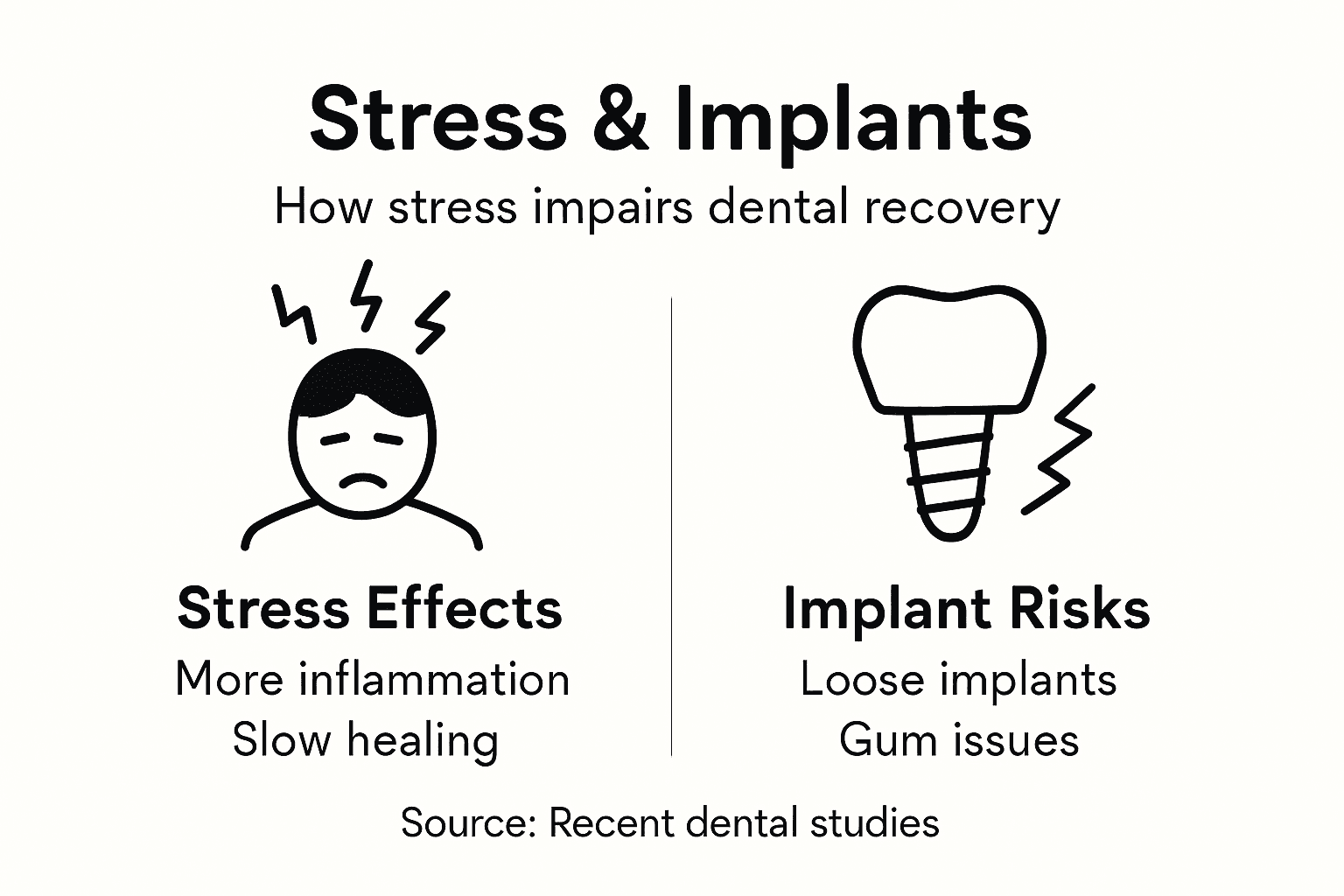
Chronic stress disrupts periodontal tissue healing, presenting significant risks for dental implant patients. The inflammatory pathways triggered by prolonged psychological tension can increase susceptibility to infections, slow down recovery times, and potentially lead to implant complications. Patients experiencing high stress levels may face heightened risks of peri-implantitis, reduced bone density around the implant site, and overall compromised treatment success. This underscores the importance of comprehensive stress management strategies throughout the dental implant journey.
Pro tip: Develop a holistic stress management plan with your healthcare providers, focusing on relaxation techniques, nutritional support, and consistent follow-up care to optimise dental implant recovery.
Risks of Delayed Treatment and Implant Failure
Delayed dental treatment significantly escalates risks of implant complications, creating a cascade of potential health challenges that extend far beyond initial oral health concerns. Psychological distress and stress-related avoidance behaviours can transform what might have been a straightforward dental intervention into a complex, potentially irreversible medical scenario.
The biological consequences of treatment delay are profound and multifaceted. Tissue deterioration begins almost immediately when dental issues are left unaddressed, with bone loss and periodontal degradation accelerating rapidly. Chronic stress compounds these challenges by suppressing immune responses, reducing the body’s natural healing capabilities, and creating an inflammatory environment that makes successful implant integration progressively more difficult. Each month of delayed treatment potentially reduces implant success probability, transforming a routine dental procedure into a high-risk intervention.
Psychosocial factors dramatically influence dental treatment access, introducing additional layers of complexity to implant failure risks. Financial barriers, anxiety, and mental health challenges can create a vicious cycle where patients postpone critical dental care, leading to more extensive and expensive treatments. This delay not only increases medical complexity but also heightens the psychological burden, creating a self-perpetuating pattern of oral health decline that becomes increasingly challenging to interrupt.
Pro tip: Schedule regular dental consultations and develop a proactive stress management strategy to mitigate potential implant complications and maintain optimal oral health.
Prevention, Management, and Care Options
Integrative strategies for managing stress-related oral health challenges require a comprehensive approach that addresses both psychological and physiological dimensions. Effective prevention moves beyond traditional dental care, encompassing holistic interventions that target the root causes of stress-induced oral health decline.
Multidisciplinary care represents a critical framework for managing stress-related dental complications. Preventative protocols should include targeted stress reduction techniques, customised dental protective devices, and collaborative healthcare approaches. Patients benefit from interventions like personalised mouthguards to prevent bruxism, regular periodontal screenings, and specialised counselling that addresses the psychological barriers potentially hindering optimal oral health management. Professional strategies might involve developing personalised stress management plans, implementing relaxation techniques, and creating supportive environments that encourage consistent dental care.
Comprehensive oral health prevention requires coordinated care models, emphasising early identification and intervention. This approach involves systematic screening for psychological distress, implementing rigorous oral hygiene protocols, and establishing transparent communication channels between dental and mental health professionals. Key management strategies include regular dental check-ups, targeted stress management interventions, and patient education programs designed to empower individuals with practical tools for maintaining both mental and oral wellbeing.
Pro tip: Develop a personalised stress management and oral health strategy with professionals who can provide integrated, holistic care addressing both psychological and dental health needs.
The following table summarises key strategies for preventing stress-related oral health decline:
| Strategy | Purpose | Benefit to Oral Health |
|---|---|---|
| Personalised mouthguards | Protect teeth during bruxism | Minimise enamel and jaw damage |
| Regular screenings | Early detection of issues | Prevent severe dental complications |
| Stress reduction therapy | Lower overall stress levels | Improved immunity and healing |
| Professional counselling | Address psychological barriers | Maintain consistent oral hygiene |
Protect Your Smile and Dental Implants from Stress-Related Damage
Stress can quietly undermine your oral health and even jeopardise the success of your dental implants as explained in the article. Elevated cortisol levels and neglected dental hygiene due to prolonged stress increase risks of implant failure, gum disease and slow healing. At Paynless Dental, we understand these challenges and prioritise comprehensive care including advanced dental implants and personalised strategies to support your recovery and long-term oral health.
Experience expert care with solutions such as:
- Single and multiple tooth implants tailored for your needs
- Full mouth reconstruction and All-on-4 implant options
- Bone grafting to enhance implant success
You do not need to face the risks of stress-induced implant complications alone. Visit Paynless Dental to explore our premium implant services at our Toongabbie or North Ryde clinics. Learn more about how our Dental Implants solutions can restore your confidence and oral function. Take control of your oral health today with expert care designed to defend against the effects of stress. Book your consultation now and safeguard your smile with professional support tailored for you.
Frequently Asked Questions
How does stress impact dental implants?
Stress can hinder the healing process for dental implants by suppressing immune function and leading to increased inflammation, which can affect the integration of the implant with the bone.
What are the signs that stress is affecting my oral health?
Common signs include teeth grinding (bruxism), reduced saliva production, gum inflammation, increased tooth sensitivity, and neglect of oral hygiene practices.
Why is timely dental treatment important for implant success?
Delaying dental treatment can accelerate tissue deterioration and make it more difficult for implants to integrate, increasing the risk of complications and decreasing the likelihood of success.
What strategies can help manage stress to protect oral health?
Implementing stress reduction techniques such as meditation, regular exercise, and personalised counselling, along with maintaining regular dental check-ups, can significantly improve both mental and oral health.
Recommended
- A Comprehensive Guide to Dental Implants: Types, Procedure, and Aftercare – Paynless Dental Clinic
- What Are Dental Implants? – Paynless Dental Clinic
- Affordable Dental Implants at Paynless Dental Clinic
- The Ultimate Guide to Finding the Best Dentist in Blacktown for Your Oral Health Needs – Paynless Dental Clinic
- Chronic Stress Symptoms: Complete Guide and Warning Signs – Mastering Conflict
- Bone Health And Collagen: Complete Guide