
Over 20 distinct steps unfold as teeth begin to form inside the womb, shaping everything from early smiles to lifelong oral health. These stages of tooth development involve precise timing and intricate changes at the cellular level, influencing both the appearance and strength of every tooth. Understanding how teeth take shape can help you spot potential concerns early, support your child’s development, and lay the groundwork for a healthy, confident smile.
Table of Contents
- What Are the Stages of Tooth Development
- Primary vs. Permanent Tooth Growth
- Timeline of Tooth Eruption and Shedding
- Common Issues in Tooth Development Stages
- Care Strategies for Healthy Tooth Development
Key Takeaways
| Point | Details |
|---|---|
| Stages of Tooth Development | Tooth development progresses through distinct stages, from the bud stage to the root phase, each essential for proper tooth formation. |
| Primary vs. Permanent Teeth | Humans have two sets of teeth: 20 primary teeth and 32 permanent teeth, differing in size, structure, and function. |
| Tooth Eruption Timeline | Primary teeth typically begin to erupt between 6 and 12 months, while permanent teeth emerge around age 6, following a specific sequence. |
| Impact of Nutrition | Maternal nutrition is crucial for healthy tooth development; essential nutrients like calcium and vitamin D support this process. |
What Are the Stages of Tooth Development
Tooth development is a fascinating biological process that transforms simple cellular structures into complex dental units. According to research from NCBI, tooth formation begins remarkably early in human development, initiating around the eighth week of intrauterine life with the emergence of enamel organs.
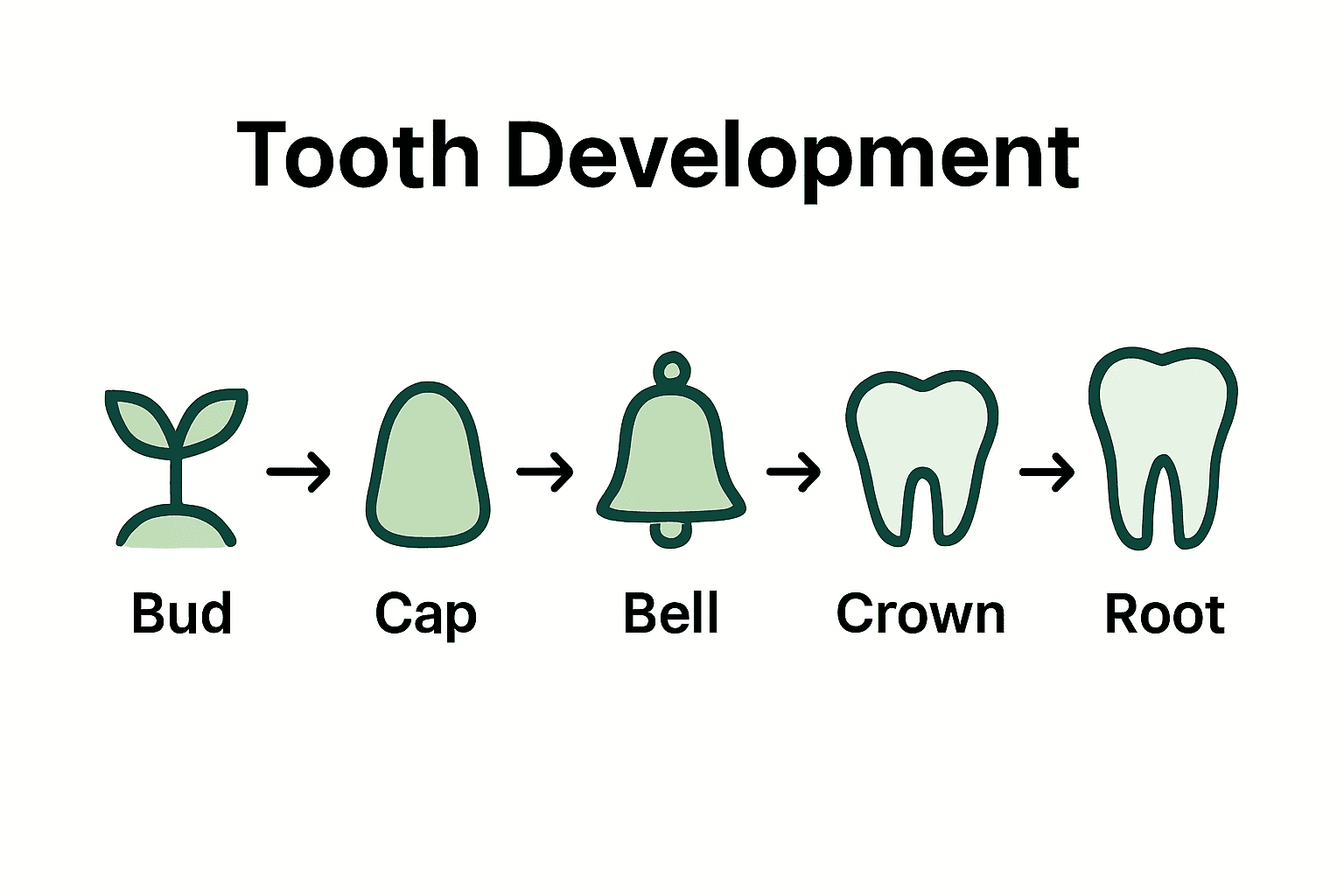
The developmental journey of teeth progresses through several critical stages, each marked by unique transformations. As outlined by Digital Histology, these stages include:
- Bud Stage: Initial formation of tooth structures
- Cap Stage: Expansion and growth of enamel organs
- Bell Stage: Preparation for dental hard tissue formation
- Crown Stage: Development of tooth crown
- Root Phase: Establishment of root structure and anchoring
During these stages, complex cellular interactions occur that gradually shape and define tooth morphology. The bell stage, for instance, involves the critical process of dental lamina disintegration, which sets the foundation for subsequent hard tissue development. By understanding these intricate developmental phases, dental professionals can better comprehend potential variations or developmental challenges in tooth formation.
The root phase represents the final developmental stage, where the tooth becomes fully integrated into the jaw’s alveolar bone. This phase ensures that teeth are securely anchored, enabling proper function for biting, chewing, and maintaining overall oral structure. Each stage builds upon the previous one, demonstrating the remarkable precision of human biological development.
Primary vs. Permanent Tooth Growth
Human dental development is a remarkable journey that involves two distinct sets of teeth throughout our lifetime. According to NCBI, humans have two sequential tooth sets: the deciduous (primary) teeth and the permanent (secondary) teeth. These tooth sets differ significantly in number, structure, and function.
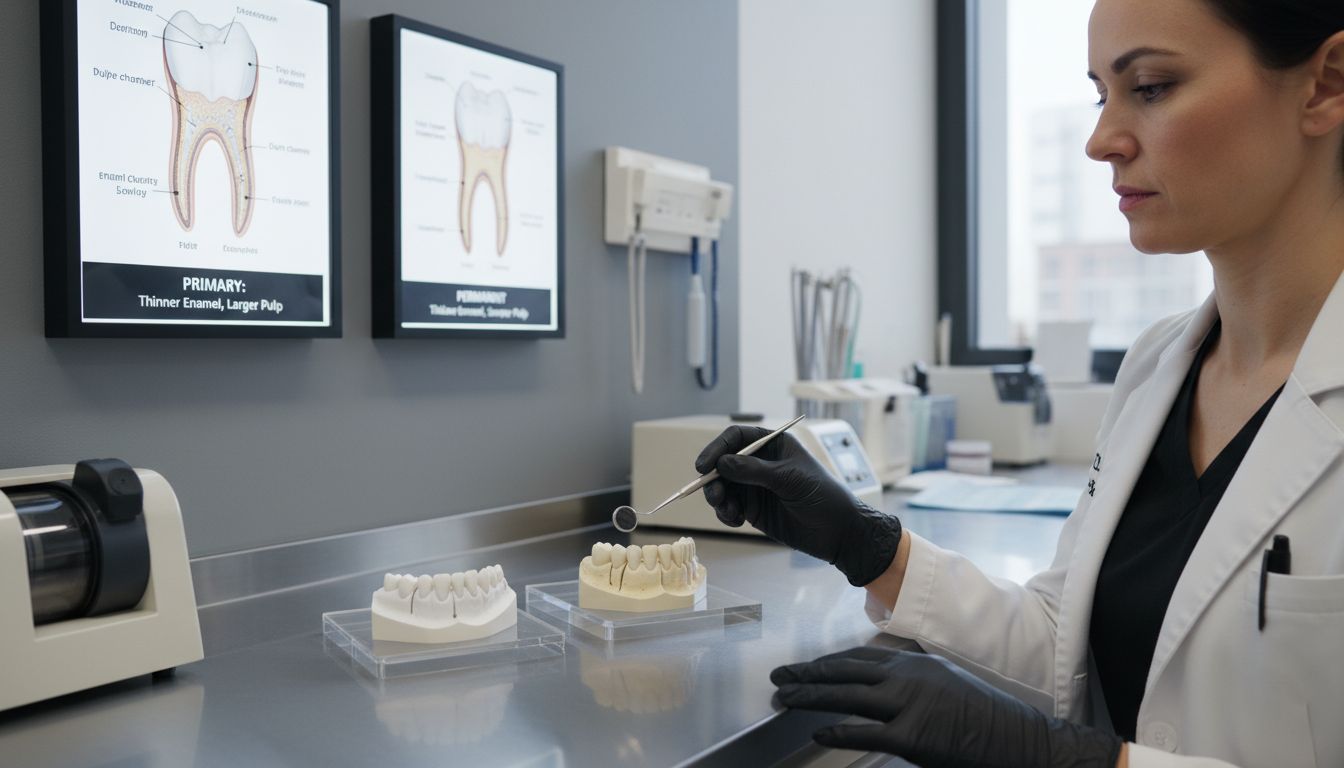
Primary teeth, often called baby teeth, are the first set of teeth that emerge during childhood. Research shows these teeth are distinctive in their characteristics:
- Smaller and whiter in appearance
- Thinner enamel layer
- Larger pulp chambers
- Flatter contact surfaces
- More bulbous crowns
As outlined by PubMed Central, the primary dentition consists of 20 teeth, evenly distributed across the upper and lower jaw. These teeth eventually exfoliate and make way for the permanent teeth, which are more numerous and structurally complex.
Permanent teeth represent the adult dentition and are more robust in design. They include 32 teeth divided equally between the maxilla and mandible, comprising incisors, canines, premolars, and molars. Unlike primary teeth, permanent teeth feature thicker, less permeable enamel, which contributes to their increased durability and longevity.
 For those seeking detailed information about dental development, our comprehensive guide to dental implants provides additional insights into dental structures and care.
Timeline of Tooth Eruption and Shedding
Tooth development follows a fascinating and predictable sequence that varies slightly for each child. According to Hopkins Medicine, the journey of primary teeth eruption is a complex process that typically begins between 6 and 12 months of age.
The eruption timeline generally proceeds in the following sequence:
- First Tooth: Lower middle front tooth (central incisor)
- Second Tooth: Opposite lower central incisor
- Third to Sixth Teeth: Upper four incisors
- Seventh to Tenth Teeth: First four molars
- Eleventh and Twelfth Teeth: Remaining lower lateral incisors
- Thirteenth to Sixteenth Teeth: First molars
- Seventeenth to Twentieth Teeth: Cuspids (pointed teeth)
Interestingly, as highlighted by Nationwide Children’s Hospital, girls tend to experience tooth eruption slightly earlier than boys. Most children will have their complete set of 20 primary teeth by around 33 months of age.
The process of tooth shedding and permanent tooth emergence typically begins around age 6, with the first permanent molars and lower central incisors appearing. This gradual replacement continues until approximately age 12-13, when most permanent teeth have emerged. For parents seeking comprehensive guidance on dental development, our comprehensive guide to dental implants offers additional insights into oral health and tooth development.
Common Issues in Tooth Development Stages
Tooth development is a complex biological process susceptible to various developmental challenges. According to PubMed, odontogenesis involves intricate molecular and cellular regulatory networks that can be disrupted, potentially leading to developmental abnormalities.
Some of the most common issues in tooth development include:
- Developmental Hypoplasia: Incomplete or inadequate tooth formation
- Enamel Defects: Structural imperfections in tooth surface
- Delayed Eruption: Teeth emerging later than typical developmental timelines
- Supernumerary Teeth: Additional teeth beyond the standard dental configuration
- Tooth Agenesis: Complete absence of one or more teeth
Radiological studies have revealed fascinating insights into tooth development complications. Research indicates that approximal surface changes in permanent teeth differ significantly from those in primary teeth, with younger permanent teeth showing more pronounced developmental variations PubMed. These variations can be attributed to the ongoing process of posteruptive enamel maturation.
Genetic factors play a crucial role in potential developmental issues, with specific signaling pathways like Wnt, BMP, and FGF critically influencing tooth formation. For individuals experiencing dental developmental concerns, our Toongabbie dentist extraction experts can provide comprehensive evaluation and guidance on managing these complex dental development challenges.
Care Strategies for Healthy Tooth Development
Healthy tooth development begins long before the first tooth emerges, with critical foundations laid during pregnancy. According to Hopkins Medicine, maternal nutrition plays a pivotal role in supporting optimal dental development for the unborn child.
Key nutritional strategies for supporting tooth development include:
- Calcium Intake: Essential for tooth and bone formation
- Phosphorus: Critical for enamel and tooth structure
- Vitamin C: Supports gum health and tooth development
- Vitamin D: Facilitates calcium absorption and mineralization
- Avoiding Harmful Medications: Preventing developmental complications
Pregnant mothers should be particularly cautious about medication choices. Certain antibiotics like tetracycline can cause permanent tooth discoloration in developing embryos, highlighting the importance of consulting healthcare professionals before taking any medications during pregnancy.
Beyond prenatal care, ongoing dental hygiene is crucial for healthy tooth development. Parents can support their children’s dental health through regular dental check-ups, proper oral hygiene techniques, and balanced nutrition. For families seeking comprehensive dental care and guidance, our Medicare CDBS Kids Free Dental Treatment program offers expert support for children’s dental development.
Support Your Child’s Healthy Tooth Development with Expert Dental Care
Understanding the intricate stages of tooth development reveals how crucial early intervention and specialised dental care are for addressing challenges like delayed eruption, enamel defects, or tooth agenesis. At Paynless Dental, we recognise these concerns and provide comprehensive solutions designed to nurture both primary and permanent teeth throughout every development phase. From preventive assessments to advanced treatments such as root canal therapy and orthodontic options, we ensure your smile thrives at every stage.
Don’t wait to safeguard your family’s dental health or address emerging tooth development issues. Explore our trusted Toongabbie dentist extraction experts for personalised care, learn more about our Medicare CDBS Kids Free Dental Treatment that supports children’s oral health, and discover our full range of services at Paynless Dental. Take the next step today toward confident, healthy teeth that last a lifetime.
Frequently Asked Questions
What are the main stages of tooth development?
Tooth development progresses through several primary stages: the Bud Stage, Cap Stage, Bell Stage, Crown Stage, and Root Phase. Each stage involves unique transformations that shape the tooth structure.
When do primary teeth typically start to erupt?
Primary teeth usually begin to erupt between 6 and 12 months of age, with the lower central incisors typically emerging first.
What are some common developmental issues in tooth formation?
Common issues during tooth development include developmental hypoplasia, enamel defects, delayed eruption, supernumerary teeth, and tooth agenesis, which can all affect the normal formation and appearance of teeth.
How can parents support healthy tooth development in children?
Parents can support healthy tooth development by ensuring proper maternal nutrition during pregnancy, maintaining regular dental check-ups, teaching proper oral hygiene techniques, and providing a balanced diet rich in essential nutrients like calcium and vitamin D.
Recommended
- A Comprehensive Guide to Dental Implants: Types, Procedure, and Aftercare – Paynless Dental Clinic
- The Ultimate Guide to Finding the Best Dentist in Blacktown for Your Oral Health Needs – Paynless Dental Clinic
- The Ultimate Guide to Dental Veneers: Transform Your Smile with Veneers – Paynless Dental Clinic
- Pain-Free Tooth Extraction Services in Toongabbie by Experts – Paynless Dental Clinic
- The Essential Guide to igiene orale bambini – dentalnetcare.it