
Gum disease silently affects more than half of australian adults, often developing unnoticed until serious problems arise. For Western Sydney residents in their thirties to fifties, paying attention to gum health is crucial to protecting your teeth and overall wellbeing. This guide highlights how gum disease begins, the warning signs you might miss, and practical steps you can take right now to keep your mouth healthy and avoid expensive treatments down the track.
Table of Contents
- What Is Gum Disease And How Does It Start?
- Key Stages: Gingivitis To Advanced Periodontitis
- Symptoms To Watch For At Each Stage
- Risks, Complications And Long-Term Effects
- Modern Treatment Options And Prevention Strategies
Key Takeaways
| Point | Details |
|---|---|
| Gum Disease Initiation | Gum disease begins with plaque accumulation leading to gingivitis, which may result in inflammation and subtle symptoms such as redness and bleeding. |
| Progression Through Stages | Recognising the stages from gingivitis to advanced periodontitis is crucial for prevention, as untreated conditions can lead to tooth loss and severe damage. |
| Health Risks | Untreated gum disease can lead to various systemic health risks, including cardiovascular disease and diabetes complications, affecting overall well-being. |
| Preventive Measures | Regular dental check-ups, effective oral hygiene, and healthy lifestyle choices are essential strategies to prevent gum disease progression and maintain oral health. |
What Is Gum Disease And How Does It Start?
Gum disease represents a serious oral health challenge that silently develops in many Western Sydney residents. Periodontal diseases encompass a range of inflammatory conditions affecting the soft and hard structures supporting your teeth, with bacterial infection being the primary culprit.
The journey of gum disease typically begins with plaque accumulation along the gumline. When oral bacteria build up due to inconsistent brushing and flossing, they form a sticky biofilm that triggers an inflammatory response. Your body’s immune system recognises these bacterial invaders and initiates a defensive reaction, causing the initial signs of gum inflammation.
In its earliest stage, known as gingivitis, gum disease presents subtle symptoms many people overlook. These include slight gum redness, occasional bleeding during brushing, and minor swelling. Oral mucosal diseases like gum inflammation can stem from multiple factors including poor hygiene, systemic health conditions, and individual immune responses. Without proper intervention, this initial stage can progressively damage the supportive structures around your teeth, potentially leading to tooth loss.
Quick tip: Check your toothbrush for blood after brushing as an early warning sign of potential gum problems.
Key Stages: Gingivitis To Advanced Periodontitis
Gum disease progresses through distinct stages, each representing an escalating threat to your oral health. Gingivitis, the initial stage, is characterised by mild inflammation and subtle warning signs that many Western Sydney residents might unknowingly overlook.
During the early gingivitis stage, you might notice slight gum redness, occasional bleeding while brushing, and minor swelling. These symptoms indicate bacterial plaque is triggering an inflammatory response. If left untreated, gingivitis advances to periodontitis, a more serious condition where bacterial infection begins to compromise the supportive structures around your teeth.

As periodontitis develops, the damage becomes increasingly severe. The inflammation causes your gums to pull away from teeth, creating small pockets where bacteria can thrive. These pockets deepen over time, leading to potential bone loss and eventual tooth destabilisation. In advanced periodontitis, significant tissue and bone destruction occurs, which can result in tooth mobility and potentially permanent tooth loss.
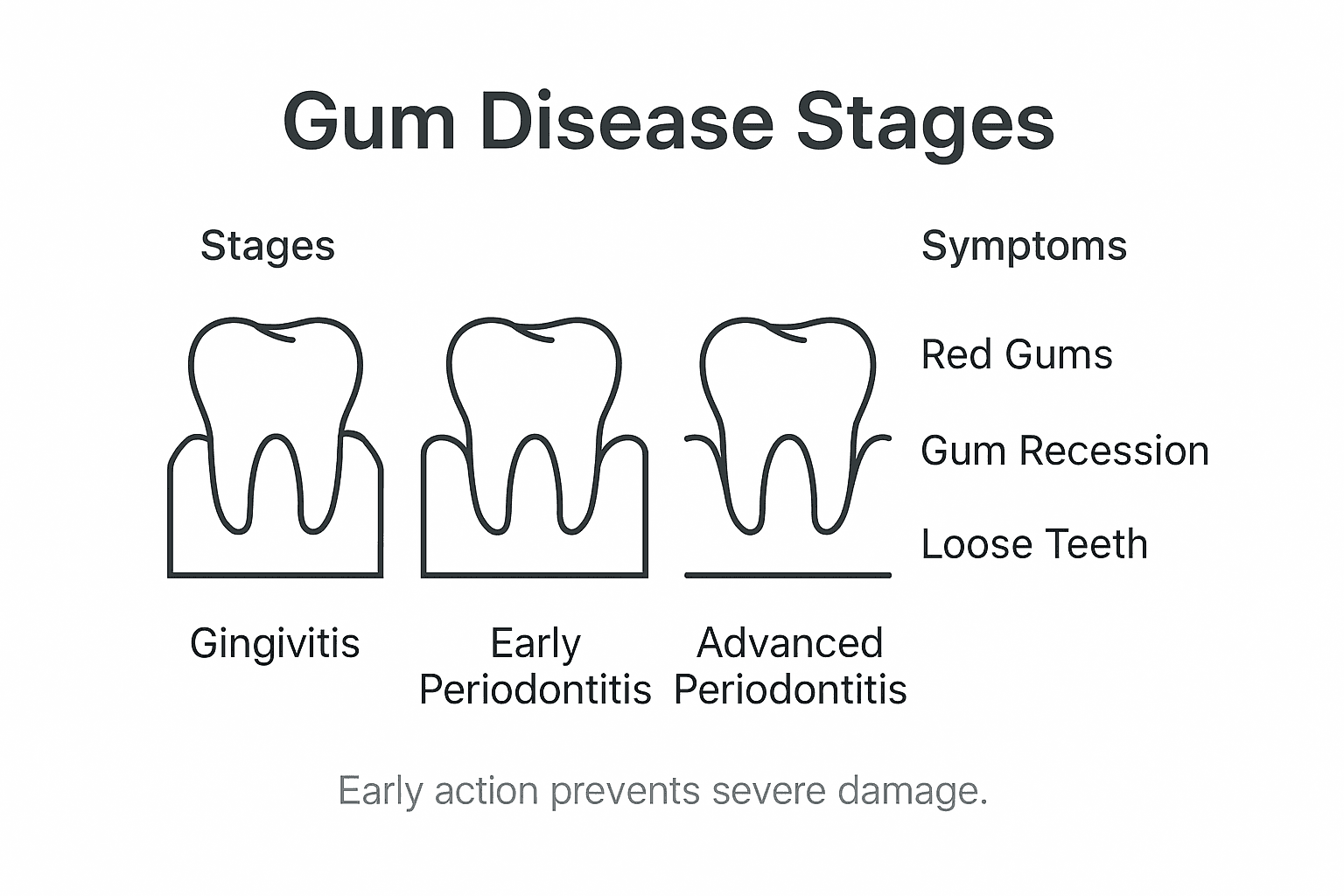
The progression from gingivitis to advanced periodontitis isn’t inevitable. Regular dental check-ups, thorough oral hygiene, and early intervention can halt or significantly slow this destructive process. Understanding these stages empowers you to recognise early warning signs and take proactive measures to protect your dental health.
Quick tip: Book a professional dental assessment every six months to catch and address potential gum disease early.
Symptoms To Watch For At Each Stage
Recognising the symptoms of gum disease at different stages is crucial for Western Sydney residents seeking to maintain optimal oral health. Gum disease symptoms can be deceptively subtle, often developing gradually and becoming noticeable only when significant damage has occurred.
During the early gingivitis stage, key warning signs include:
- Slight gum redness and puffiness
- Bleeding while brushing or flossing
- Increased sensitivity around the gumline
- Occasional bad breath
Oral mucosal pathology progression reveals that as gingivitis advances to periodontitis, symptoms become more pronounced. The intermediate stage typically presents with more severe indicators such as gum recession, deeper pocket formation between teeth and gums, and increased tooth sensitivity. You might notice your gums starting to pull away from teeth, creating small spaces where harmful bacteria can accumulate and multiply.
In advanced periodontitis, the most critical and potentially irreversible symptoms emerge. These include significant gum recession, loose or shifting teeth, persistent bad breath, pronounced pain when chewing, and visible changes in bite alignment. The supporting bone structure begins to deteriorate, potentially leading to tooth loss if left untreated.
Quick tip: Conduct a monthly self-examination of your gums using a well-lit mirror to track any changes in colour, texture, or bleeding.
Here’s a concise summary of gum disease progression to help you detect issues early:
| Stage | Main Indicators | Effect on Oral Health |
|---|---|---|
| Gingivitis | Mild redness, affected gum margins | Initial inflammation |
| Early Periodontitis | Gum recession, deepening pockets | Structure damage starts |
| Advanced Periodontitis | Loose teeth, bone loss, pronounced pain | Risk of tooth loss, severe damage |
Risks, Complications And Long-Term Effects
Untreated gum disease presents significant health risks that extend far beyond simple oral discomfort. The progression from mild inflammation to chronic condition can trigger a cascade of complex health complications affecting multiple body systems.
The oral health implications are substantial. Advanced periodontitis can lead to irreversible damage including:
- Permanent tooth loss
- Severe bone deterioration
- Significant gum recession
- Compromised bite alignment
- Chronic oral pain
Systemic health complications from chronic periodontitis reveal profound interconnections between oral health and broader physiological well-being. Research indicates increased risks of:
- Cardiovascular disease
- Diabetes management challenges
- Higher risk of respiratory infections
- Potential pregnancy complications
- Compromised immune system functioning
Beyond physical health, untreated gum disease can significantly impact personal confidence and quality of life. Aesthetic changes, persistent bad breath, and functional limitations in eating and speaking can create substantial psychological stress. The cumulative effect of these complications underscores the critical importance of early detection and proactive management.
Quick tip: Schedule comprehensive dental check-ups twice annually to monitor and prevent potential gum disease progression.
Modern Treatment Options And Prevention Strategies
Contemporary gum disease management has evolved into a sophisticated, multi-staged approach designed to address oral health comprehensively. Western Sydney residents now have access to advanced treatment strategies that focus on both intervention and prevention.
Non-surgical treatments form the initial line of defence, which typically include:
- Professional deep cleaning (scaling and root planing)
- Targeted antibiotic treatments
- Personalised oral hygiene instruction
- Advanced plaque removal techniques
Evidence-based prevention guidelines recommend a holistic strategy encompassing multiple protective measures. Key prevention approaches include:
- Twice-daily brushing with fluoride toothpaste
- Regular interdental cleaning
- Using antiseptic mouthwashes
- Maintaining a balanced, nutrient-rich diet
- Quitting smoking
- Managing underlying health conditions
For advanced cases requiring surgical intervention, modern periodontal treatments offer precise, minimally invasive options. These may include regenerative procedures, tissue grafting, and laser therapies designed to restore gum health and prevent further deterioration. The goal is always comprehensive rehabilitation, focusing on stopping disease progression and rebuilding damaged oral structures.
Reviewing common gum disease treatments and their role in prevention:
| Treatment Type | Example Intervention | Prevention Impact |
|---|---|---|
| Non-surgical | Scaling, targeted antibiotics | Reduces plaque, halts spread |
| Surgical | Tissue grafting, laser therapy | Restores gum, prevents loss |
| Daily Care | Electric brushing, mouthwash | Maintains oral environment |
Quick tip: Invest in an electric toothbrush with pressure sensors to ensure thorough yet gentle cleaning and protect your gum health.
Take Control of Gum Disease Early for Lasting Smile Health
Gum disease begins quietly but can escalate into serious oral health challenges as described in “Stages of Gum Disease – Why Early Action Matters”. If you notice symptoms like gum redness, bleeding, or loose teeth it is essential to act fast. Ignoring early signs can lead to advanced periodontitis, causing irreversible damage and even tooth loss. Our expert team at Paynless Dental understands the importance of early intervention and offers tailored treatments including professional cleanings and advanced restorative options like Dental Implants to rebuild your smile.
Don’t wait until gum disease affects your confidence and well-being. At our Toongabbie and North Ryde clinics we combine comfort with cutting-edge technology to stop disease progression and restore oral health. Protect your gums and teeth with personalised care from root canal therapy to Crowns & Bridges designed to stabilise damaged teeth. Book your consultation today through our website Paynless Dental and take the first step to preserving your smile’s foundation.
Act now before gum disease worsens and discover how early professional care can make a lasting difference.
Frequently Asked Questions
What are the main stages of gum disease?
Gum disease progresses through several stages: gingivitis, early periodontitis, and advanced periodontitis. Gingivitis is the initial stage characterised by mild inflammation, while periodontitis indicates more severe issues with gum recession and potential tooth loss.
How can I recognise early signs of gum disease?
Early signs of gum disease include slight gum redness, occasional bleeding while brushing, increased sensitivity around the gumline, and occasional bad breath. Noticing these symptoms early can help prevent more serious complications.
Why is it important to address gum disease early?
Addressing gum disease early is crucial to prevent irreversible damage such as tooth loss, severe bone deterioration, and chronic oral pain. Early intervention can halt the progression of the disease and maintain overall oral health.
What preventive measures can I take against gum disease?
Preventive measures include brushing twice daily with fluoride toothpaste, regular interdental cleaning, using antiseptic mouthwashes, maintaining a balanced diet, and scheduling regular dental check-ups. Managing underlying health conditions also plays a significant role in gum health.
Recommended
- Early Release Of Super For Dental Work
- The Ultimate Guide to Finding the Best Dentist in Blacktown for Your Oral Health Needs – Paynless Dental Clinic
- Toongabbie Dentist Clinic – Paynless Dental Clinic
- Essential Steps for Preventing Gum Disease Effectively | Paynless
- When is it too late to fix receding gums? – Albania Dental Implants