
Over half of adults use mouthwash regularly, yet many are unsure if they are getting real benefits or simply masking bad breath. Oral health goes beyond brushing and flossing, and knowing how to choose and use mouthwash can make a real difference for your teeth and gums. Whether you want fresher breath or stronger enamel, understanding mouthwash helps you make informed choices for a healthier smile.
Table of Contents
- What Is Mouthwash and How Is It Used
- Types of Mouthwash and Their Differences
- Key Benefits of Using Mouthwash Daily
- Risks, Limitations, and Safe Usage Guidelines
- Alternatives to Mouthwash for Oral Hygiene
Key Takeaways
| Point | Details |
|---|---|
| Purpose of Mouthwash | Mouthwash serves to reduce oral bacteria, freshen breath, and enhance overall mouth health as a supplemental oral care tool. |
| Types of Mouthwash | Main categories include antiseptic, fluoride, and cosmetic mouthwashes, each targeting specific dental health needs. |
| Daily Benefits | Regular use of mouthwash can significantly reduce plaque, strengthen enamel, and improve breath freshness. |
| Safety Precautions | It’s crucial to avoid swallowing mouthwash, limit alcohol content, and consult a dentist for personal recommendations and proper use. |
What Is Mouthwash and How Is It Used
A mouthwash is a liquid oral care solution designed to improve your dental hygiene and overall mouth health. According to Healthline, mouthwash (also called oral rinse) is a specialized liquid used to reduce oral bacteria, freshen breath, and provide targeted oral health benefits.
At its core, mouthwash is a therapeutic liquid containing various active ingredients that work to enhance your oral cleaning routine. Dermnet NZ explains that these solutions can include antimicrobial agents, anti-inflammatory compounds, fluoride, and alkalinisers. Each ingredient serves a specific purpose:
- Antimicrobials: Reduce harmful oral bacteria
- Anti-inflammatory agents: Help manage gum inflammation
- Fluoride: Strengthens tooth enamel
- Alkalinisers: Neutralise acidic environments in the mouth
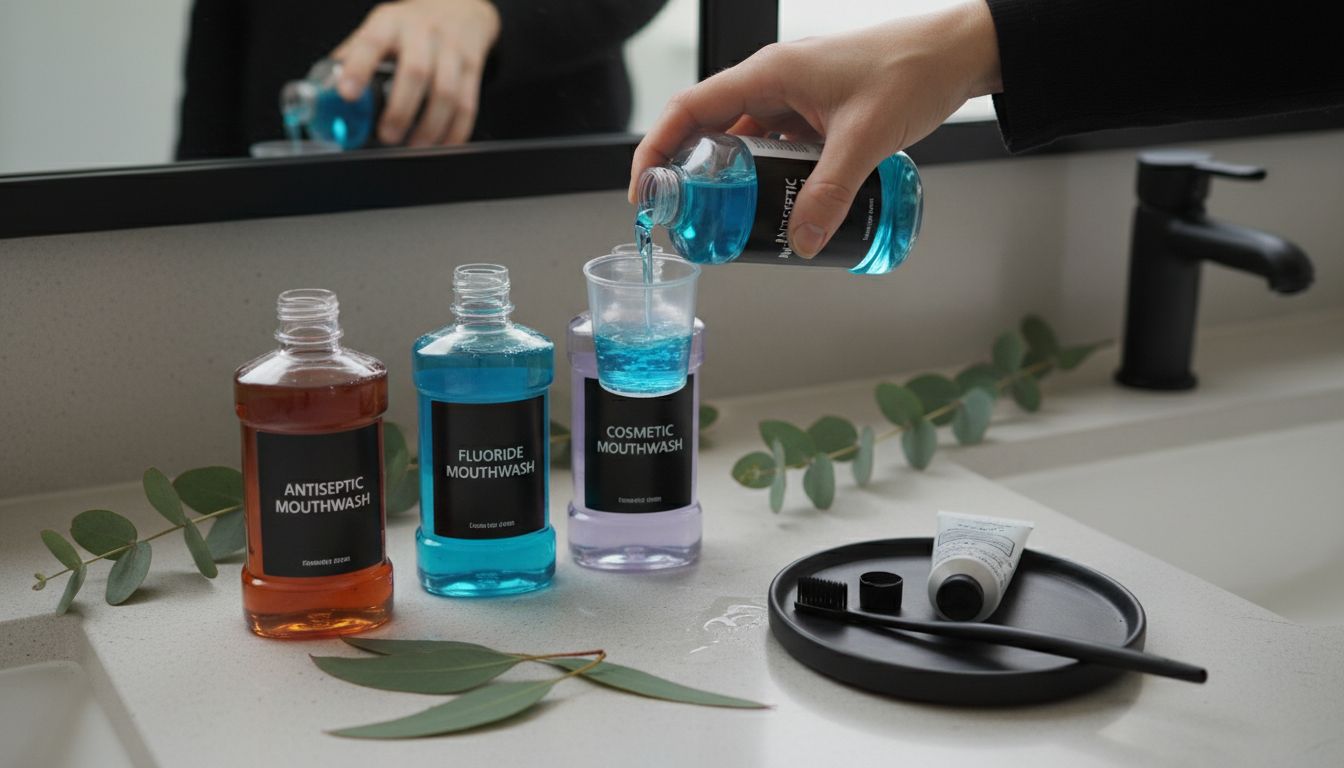
To use mouthwash effectively, follow these simple steps:
- Brush and floss your teeth first
- Pour the recommended amount into a cup
- Swish the liquid around your mouth for 30 seconds
- Spit out completely (do not swallow)
Warning: Mouthwash contains ingredients not meant for ingestion, so always ensure you spit it out entirely after use.
Mouthwash is not a replacement for brushing and flossing but rather a complementary tool in your oral hygiene arsenal. By incorporating it into your daily routine, you can achieve a more comprehensive clean and maintain better overall mouth health.
Types of Mouthwash and Their Differences
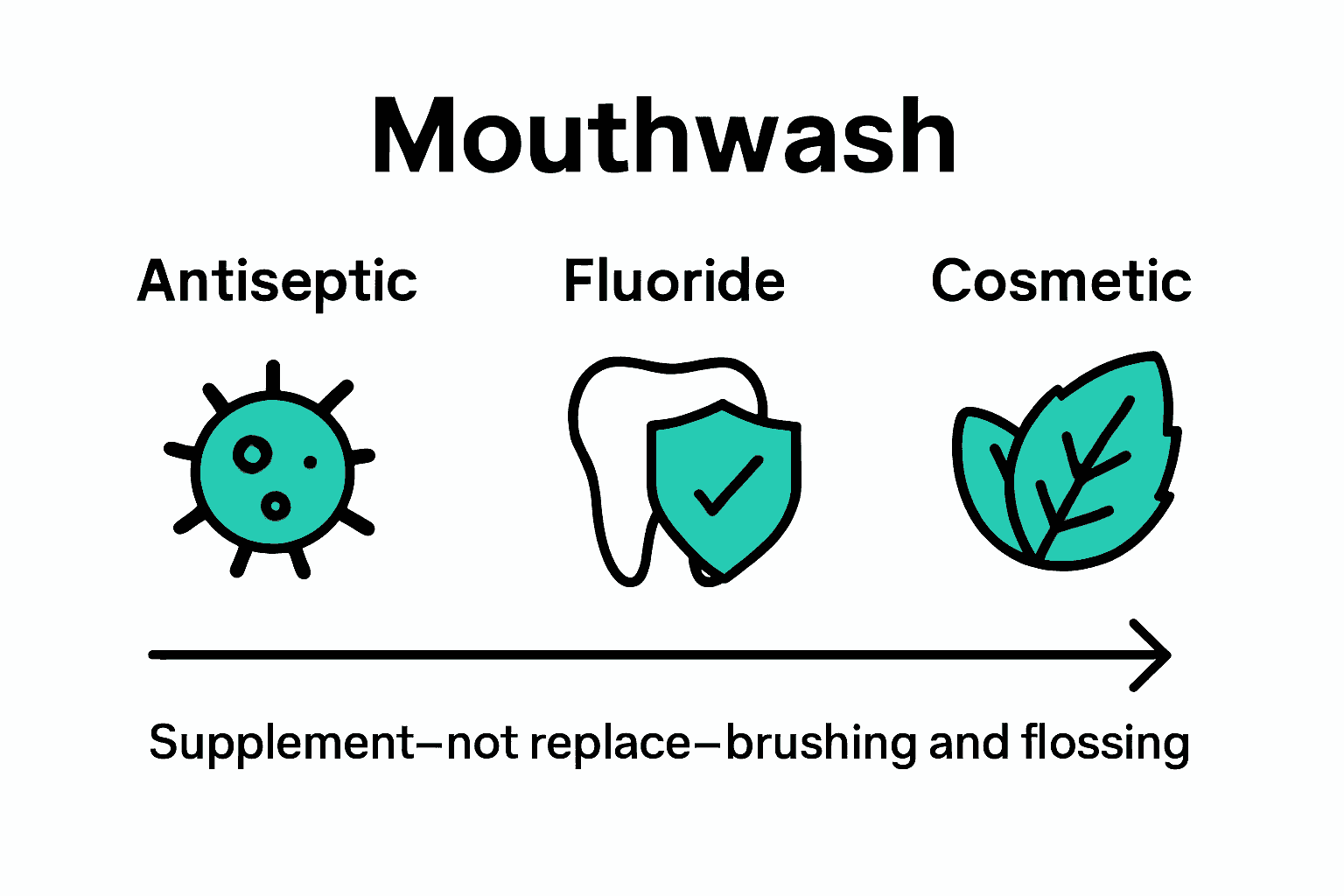
Mouthwash isn’t a one-size-fits-all solution. Wikipedia highlights that these oral rinses come in distinct categories, each targeting specific dental health needs. Understanding the different types can help you choose the most suitable option for your personal oral care routine.
Primary Mouthwash Categories
According to Listerine, mouthwashes can be broadly classified into several key types:
Antiseptic Mouthwashes
- Target harmful bacteria
- Reduce plaque and gingivitis
- Often contain chlorhexidine or alcohol
Fluoride Mouthwashes
- Strengthen tooth enamel
- Help prevent tooth decay
- Ideal for cavity prevention
Cosmetic Mouthwashes
- Temporarily control bad breath
- Provide a fresh mouth feeling
- Limited therapeutic benefits
Specialized Mouthwash Options
Beyond these primary categories, specialised mouthwashes cater to unique dental requirements. Alcohol-free variants are perfect for individuals with sensitivity, while natural ingredient formulations offer gentler alternatives. Some mouthwashes also address specific concerns like dry mouth, sensitive teeth, or post-surgical oral care.
Pro Tip: Always consult your dentist at Paynless Dental to determine the most appropriate mouthwash for your individual oral health needs.
Remember that mouthwash is a supplementary tool. It cannot replace regular brushing and flossing but can significantly enhance your overall oral hygiene when used correctly.
Key Benefits of Using Mouthwash Daily
Adding mouthwash to your daily oral hygiene routine can significantly enhance your dental health. Listerine highlights that consistent mouthwash use offers multiple advantages, including reducing plaque buildup, preventing tartar formation, protecting gums, and maintaining fresh breath.
Primary Daily Benefits
According to Healthline, daily mouthwash use provides several key oral health advantages:
- Bacteria Reduction: Eliminates harmful microorganisms
- Breath Freshening: Provides long-lasting oral freshness
- Hard-to-Reach Protection: Cleans areas brushing might miss
- Enamel Strengthening: Helps prevent tooth decay
Advanced Oral Health Protection
Mouthwash acts as an additional defensive layer in your oral care strategy. While it cannot replace brushing and flossing, it complements these practices by providing comprehensive mouth cleaning. Fluoride-containing mouthwashes offer extra protection by strengthening tooth enamel and creating a protective barrier against potential cavities.
Pro Tip: For optimal results, use mouthwash after brushing and flossing to maximize its effectiveness.
For personalised advice on selecting the right mouthwash for your specific dental needs, consider consulting our experts at Paynless Dental’s guide to finding the best dentist in Blacktown. A professional consultation can help you develop a comprehensive oral hygiene strategy tailored to your unique requirements.
Risks, Limitations, and Safe Usage Guidelines
Using mouthwash requires careful consideration and understanding of potential risks. Healthline warns that improper use can lead to significant health concerns, particularly when basic safety guidelines are overlooked.
Key Safety Precautions
According to Dermnet NZ, mouthwash should be approached with caution:
- Do Not Swallow: Mouthwash contains ingredients not meant for ingestion
- Limit Alcohol-Based Formulations: Can cause oral irritation
- Age Restrictions: Not recommended for children under six
- Frequency Matters: Overuse can disrupt oral microbiome
Specific Usage Limitations
While mouthwash offers numerous benefits, it cannot replace fundamental oral hygiene practices. Brushing and flossing remain the cornerstone of dental care. Some mouthwashes, particularly those with high alcohol content, may cause temporary burning sensations or dry mouth. People with sensitive oral tissues or specific medical conditions should consult their dentist before incorporating mouthwash into their routine.
Warning: Always read product instructions carefully and use as directed.
For personalised advice on selecting the right mouthwash and understanding its safe usage, consider consulting our experts at Paynless Dental’s guide to finding the best dentist in Blacktown. A professional can provide tailored recommendations based on your unique oral health needs.
Alternatives to Mouthwash for Oral Hygiene
Not everyone finds commercial mouthwash suitable for their oral care routine. Wikipedia explores several natural alternatives that can support dental hygiene without relying on traditional mouthwash products.
Natural Oral Rinse Options
According to Dermnet NZ, there are several effective alternatives to commercial mouthwashes:
Saltwater Rinses
- Reduce oral bacteria
- Soothe inflamed tissues
- Easy to prepare at home
- Cost-effective solution
Herbal Rinses
- Use chamomile or sage
- Provide anti-inflammatory benefits
- Natural ingredients
- Gentle on oral tissues
Traditional and Holistic Approaches
One intriguing alternative is oil pulling, an ancient practice involving swishing edible oils in the mouth. While scientific evidence remains limited, some individuals report benefits in reducing oral bacteria and improving overall mouth health. Popular oils include coconut, sunflower, and sesame oil. The technique involves swishing a tablespoon of oil for 15-20 minutes before spitting it out.
Caution: These alternatives should complement, not replace, regular brushing and flossing.
For personalised advice on selecting the best oral hygiene approach for your specific needs, consider consulting our experts at Paynless Dental’s guide to finding the best dentist in Blacktown. A professional can provide tailored recommendations based on your unique oral health requirements.
Elevate Your Oral Health with Expert Care at Paynless Dental
If you are wondering whether you should use mouthwash and how to choose the best one for your needs you are not alone. Many Australians face the challenge of balancing effective oral hygiene with safe and tailored care. The article highlights concerns like reducing harmful bacteria, managing gum health, and protecting enamel while avoiding risks related to improper mouthwash use. These concerns call for a personalised approach that puts your comfort and long-term oral wellness first.
At Paynless Dental we understand how crucial it is to complement your daily routine with professional advice and advanced solutions. Whether you need help with sensitive gums, persistent inflammation or want to protect your teeth with fluoride treatments our team is here to guide you. We offer comprehensive dental services including root canal treatment, oral surgery, and restorative options that work hand in hand with good oral hygiene practices like mouthwash use.
Take control of your oral health today and avoid common pitfalls by consulting the experts at Paynless Dental. Visit our main website to book your appointment or learn more about how our premium care can make your smile healthier and more confident. Your mouth deserves specialised care that fits your lifestyle and needs. Don t wait until minor issues become major problems act now and experience the difference of personalised dental health support.
Frequently Asked Questions
What is mouthwash and how is it used?
Mouthwash is a liquid oral care solution designed to reduce oral bacteria, freshen breath, and provide other oral health benefits. To use it effectively, brush and floss your teeth, pour the recommended amount into a cup, swish it around your mouth for 30 seconds, and then spit it out.
What are the different types of mouthwash available?
Mouthwash comes in several types, including antiseptic mouthwashes that target harmful bacteria, fluoride mouthwashes that strengthen tooth enamel, and cosmetic mouthwashes that temporarily control bad breath. There are also specialized options for sensitivity and dry mouth.
Are there any risks associated with using mouthwash?
Yes, using mouthwash requires caution. You should never swallow it, limit use of alcohol-based formulations, and be aware that some mouthwashes may cause oral irritation. It’s also not recommended for children under six. Always follow usage instructions.
Can I replace brushing and flossing with mouthwash?
No, mouthwash should not replace brushing and flossing but rather be used as a complementary tool. Regular brushing and flossing remain the cornerstone of dental care for good oral hygiene.
Recommended
- The Ultimate Guide to Finding the Best Dentist in Blacktown for Your Oral Health Needs – Paynless Dental Clinic
- Trusted Toongabbie Dentist for All Your Dental Care Needs – Paynless Dental Clinic
- 7 Essential Tips for Healthy Gums | Paynless
- Top Dental Care in Toongabbie: Routine, Cosmetic & Emergency Services
- Chewing Gum and Dental Health: What Edmonton Families Should Know – Unity Square Dental
- What’s Behind Bad Breath? | The Dental Atelier