
Claiming dental insurance seems simple enough and plenty of Aussies think it is just a matter of filling in a quick form. But nearly half of all insurance claims get delayed or rejected due to missing details or paperwork errors. Turns out the smoothest claims actually start long before your dentist visit and depend on how well you prepare beforehand.
Table of Contents
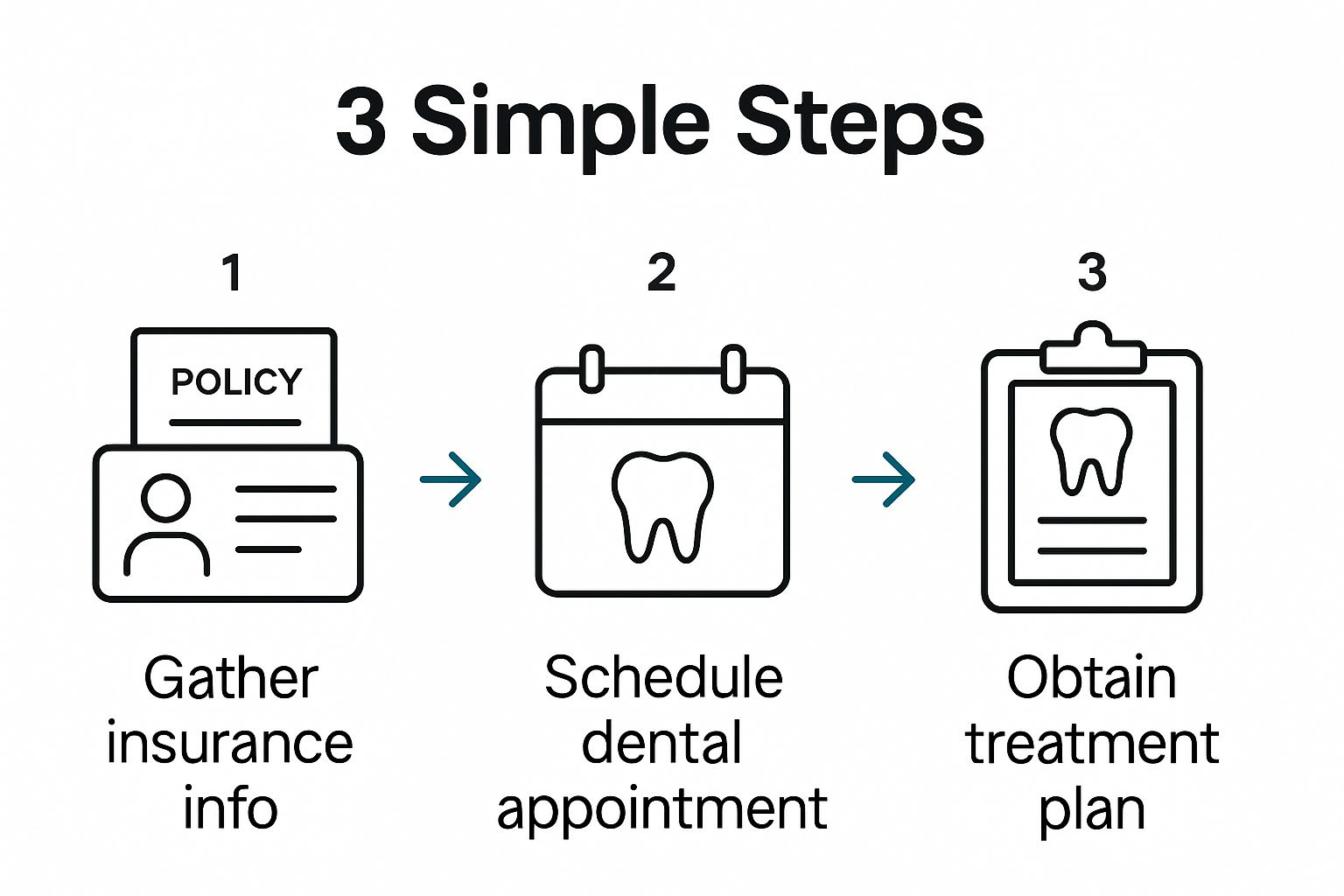
- Step 1: Gather Your Dental Insurance Information
- Step 2: Schedule Your Dental Appointment
- Step 3: Obtain A Detailed Treatment Plan
- Step 4: Fill Out Your Claim Form Properly
- Step 5: Submit Your Claim To The Insurance Provider
- Step 6: Verify Your Claim Status And Follow Up
Quick Summary
| Key Point | Explanation |
|---|---|
| 1. Gather insurance details first | Collect your policy documents and review coverage limits, waiting periods, and treatment specifics before submitting claims. |
| 2. Schedule with in-network dentists | Choose clinics within your insurance network to simplify claims and minimize out-of-pocket costs. |
| 3. Request a detailed treatment plan | Obtain a written plan from your dentist with procedure codes and cost breakdown to support your claim. |
| 4. Fill out claim forms accurately | Ensure all information is precise and matches your treatment plan; errors can lead to claim rejection. |
| 5. Follow up on claim status | Check your claim status within 10 days and maintain comprehensive records for effective communication with your insurer. |
Step 1: Gather your dental insurance information
Claiming dental insurance begins with thorough preparation and understanding your specific policy details. Before you start the claims process, collecting comprehensive information about your insurance coverage will streamline your experience and help prevent potential complications.
Your first task involves locating your current health insurance policy documents. These critical papers typically contain essential details about your dental coverage, including annual limits, waiting periods, and specific treatment inclusions. Check both digital and physical copies of your insurance policy, focusing on sections dedicated to dental or ancillary health services. Insurance companies often provide digital portals or mobile applications where you can quickly access your current policy information.
Carefully review the specifics of your dental coverage, paying close attention to key elements such as percentage reimbursements, annual spending caps, and any pre-existing condition clauses. Some policies have specific requirements for claiming dental procedures, including mandatory waiting periods for certain treatments or restrictions on frequency of claims. Make sure you understand these nuanced details before proceeding with any insurance claim.
To ensure you have all necessary documentation, compile a checklist of items you’ll need for your dental insurance claim. Essential documents typically include:
- Current health insurance membership card
- Recent dental treatment invoice or detailed treatment plan
- Patient treatment record from your dental clinic
- Medicare card (if applicable)
If you find yourself struggling to understand your policy’s complex language, don’t hesitate to contact your insurance provider directly. Most customer service representatives can clarify coverage details and help you navigate potential claim challenges. Learn more about managing your dental insurance coverage.
By thoroughly preparing and understanding your insurance policy upfront, you’ll set the stage for a smoother, more efficient dental insurance claim process. Taking time to gather and review your information now can save significant time and potential frustration later.
Use the following table as a quick checklist to ensure you have gathered all needed documents and details before starting your dental insurance claim process.
| Item | Description | Why It Matters |
|---|---|---|
| Health insurance membership card | Official card from your insurer | Proves insurance status and identity |
| Dental treatment invoice/plan | Itemised statement or written treatment plan | Documents services and costs |
| Patient treatment record | Record from dental clinic | Supports medical necessity |
| Medicare card (if applicable) | National health identification | Sometimes required for rebates |
| Referral letter (if needed) | From GP or specialist, if policy requires | Enables particular treatment claims |
| List of current medications | Medications in use | May affect treatment eligibility |
| Recent dental records/x-rays | Prior dental history and diagnostics | Supports insurance assessment |
Step 2: Schedule your dental appointment
Scheduling your dental appointment is a critical step in the insurance claim process that requires strategic planning and clear communication. Your goal is to select a dental clinic that not only meets your treatment needs but also works seamlessly with your insurance provider’s requirements.
Begin by identifying dental clinics within your insurance network. Most insurance providers maintain a list of preferred or in-network dental practitioners who have pre-established billing arrangements. These clinics can significantly simplify your claims process and potentially reduce out-of-pocket expenses. Contact your insurance company or check their online directory to confirm which local dental clinics fall within your coverage network.
When booking your appointment, be transparent about your intention to claim through insurance. Request a detailed treatment plan that includes specific procedure codes, which are essential for accurate insurance documentation. These alphanumeric codes help insurers understand precisely what treatments were performed and determine appropriate reimbursement levels. During your initial call, ask the dental clinic’s administrative staff about their experience processing insurance claims and whether they can provide direct billing services.
Consider scheduling your appointment during a time when you can provide all necessary documentation. Bring your insurance card, identification, and any pre-authorization documents from your insurance provider. Some clinics offer preliminary insurance verification services, which can help you understand potential out-of-pocket costs before your treatment.
Key preparation items for your dental appointment include:
- Current health insurance membership details
- Medicare card
- Referral letter (if required by your insurance)
- List of current medications
- Recent dental records or x-rays
Learn more about managing dental treatment costs to understand additional financial options. By methodically preparing for your dental appointment, you’ll create a smooth pathway for both your treatment and subsequent insurance claim process.
Step 3: Obtain a detailed treatment plan
Obtaining a comprehensive and detailed treatment plan is a pivotal step in successfully navigating your dental insurance claim. This document serves as the critical bridge between your dental treatment and insurance reimbursement, providing the essential information insurers require to process your claim efficiently.
A robust treatment plan functions like a financial and medical roadmap, outlining every procedure, associated procedure code, and anticipated cost. When meeting with your dentist, request a thorough written document that includes specific details such as diagnostic codes, individual treatment descriptions, and precise cost breakdowns. These granular details are crucial for insurance providers to understand the medical necessity and scope of your proposed dental work.
During your consultation, engage actively with your dental professional to ensure the treatment plan comprehensively addresses both your clinical needs and insurance requirements. Ask your dentist to explain each recommended procedure and its corresponding medical billing code. Procedure codes are alphanumeric identifiers that insurance companies use to standardize medical billing, so their accuracy is paramount. Request that these codes be explicitly listed on your treatment plan, as they directly impact your potential reimbursement.
Pay special attention to any procedures that might require pre-authorization from your insurance provider. Some complex treatments or expensive interventions necessitate prior approval to ensure coverage. Your detailed treatment plan should clearly indicate which procedures fall into this category, helping you proactively manage potential administrative hurdles.
Key elements to verify in your treatment plan include:
- Comprehensive list of all proposed dental procedures
- Specific procedure codes for each treatment
- Estimated costs for individual and total treatments
- Indication of any procedures requiring pre-authorization
- Dentist’s professional assessment and recommendation
Explore additional financial options for dental care to supplement your insurance coverage. By meticulously documenting your treatment plan, you create a solid foundation for a smooth insurance claim process, minimizing potential delays or complications.

Step 4: Fill out your claim form properly
Filling out your dental insurance claim form accurately is a critical step that determines the success of your reimbursement process. This stage requires meticulous attention to detail and a systematic approach to ensure every section of the form is completed precisely and comprehensively.
Precision is paramount when completing insurance claim documentation. Begin by carefully reading through the entire claim form before filling in any information. Insurance providers have specific requirements, and even minor errors can result in claim rejection or significant processing delays. Use black or blue ink if completing a paper form, and print clearly in block letters to avoid any potential misinterpretation of your details.
Carefully cross-reference the information on your claim form with the detailed treatment plan you obtained earlier. Ensure that all procedure codes, treatment dates, and cost details match exactly between your dental clinic’s documentation and the insurance claim form. Pay special attention to patient identification information, including your full legal name, policy number, date of birth, and contact details. Double-check that these critical identifiers are recorded exactly as they appear on your insurance membership card.
Many insurance companies now offer digital claim submission options, which can streamline the process and reduce potential errors. If using an online platform, take your time navigating through each section, saving your progress periodically. For paper forms, consider making a photocopy of the blank form first, allowing you to practice or reference the correct way to complete each section.
Essential items to verify before submission include:
- Accurate personal identification details
- Precise procedure codes matching treatment plan
- Correct insurance policy numbers
- Signed and dated form
- Attached supporting documentation
Learn more about managing dental treatment costs to understand additional financial strategies. By approaching your claim form with methodical care and attention, you significantly increase the likelihood of a smooth and successful insurance reimbursement process.
Step 5: Submit your claim to the insurance provider
Submitting your dental insurance claim marks the culmination of your careful preparation and represents a pivotal moment in securing your potential reimbursement. This step requires strategic execution and an understanding of the various submission channels available through your insurance provider.
Modern insurance companies offer multiple claim submission methods, each with its unique advantages and considerations. Online portals have become increasingly popular, providing secure, rapid transmission of your documentation. If your provider offers digital submission, take advantage of this option. These platforms typically allow you to upload scanned copies of your treatment plan, receipts, and claim form directly, creating an immediate electronic record of your submission.
This table provides an at-a-glance summary of the main ways to submit your dental insurance claim with a comparison of convenience and requirements.
| Submission Method | How It Works | Pros | Cons |
|---|---|---|---|
| Online portal | Upload documents and forms digitally | Fast, trackable, secure | Requires account access |
| Mobile app | Submit claim via insurer’s mobile app | Convenient and mobile | App compatibility needed |
| Postal mail | Post physical claim package to insurer | Accepts original documents | Slower, postal delays |
| In-person at clinic | Some dental clinics offer direct claim service | Immediate processing possible | Not offered everywhere |
For those preferring traditional methods, postal submission remains a viable alternative. When mailing your claim, use registered post or a tracked delivery service to ensure your documentation reaches the insurance provider and can be verified if needed. Create a comprehensive claim package that includes your fully completed claim form, original itemized receipts from your dental clinic, and a copy of your detailed treatment plan. Retain copies of every document you submit, creating a personal archive that can serve as a reference if any questions arise during processing.
Timing is crucial in the claims submission process. Most insurance providers have specific timeframes within which claims must be lodged after treatment. Check your policy’s guidelines to ensure you’re submitting within the acceptable window. Some policies require claims to be submitted within 30 to 90 days of the dental procedure, and missing these deadlines could result in claim rejection.
Essential items to include in your claim submission:
- Completed and signed claim form
- Original itemized dental treatment receipts
- Detailed treatment plan with procedure codes
- Copy of dental clinic invoice
- Your insurance membership identification
Explore additional financial options for dental care to complement your insurance coverage. By approaching your claim submission methodically and comprehensively, you maximize your chances of a successful reimbursement process.
Step 6: Verify your claim status and follow up
Verifying your dental insurance claim status is a crucial final step that ensures you receive the reimbursement you’re entitled to. This stage requires patience, proactive communication, and strategic tracking of your claim’s progress through the insurance system.
Most insurance providers offer multiple channels for claim status tracking, including online portals, mobile applications, and customer service phone lines. Familiarise yourself with these platforms immediately after submitting your claim. Many digital platforms provide real-time updates, allowing you to monitor your claim’s journey from submission to processing and final resolution. Set aside dedicated time within 7-10 business days after submission to initiate your first status check.
When tracking your claim, maintain a systematic approach to documentation. Create a dedicated file or digital folder where you store copies of all submitted materials, including the original claim form, treatment receipts, and any correspondence with your insurance provider. This comprehensive record becomes invaluable if you need to challenge a decision or provide additional information. Pay close attention to any communication from your insurance company, as they might request supplementary documentation or clarification about your dental treatment.
Should you encounter any delays or discrepancies in your claim processing, approach the situation methodically. Contact your insurance provider’s customer service department with specific details, referencing your claim number and the date of submission. Be prepared to provide additional context or documentation if requested. Remain professional and persistent, documenting each interaction and the name of the representative you speak with.
Key actions for effective claim follow-up include:
- Check claim status within 10 business days of submission
- Maintain a comprehensive documentation file
- Note all communication dates and representative names
- Be prepared to provide additional information promptly
- Understand your policy’s specific claims processing timeline
Learn more about managing dental treatment costs to complement your insurance strategy. By approaching claim verification with diligence and organisation, you maximise your chances of a successful reimbursement experience.
Claim Dental Insurance With Confidence and Get the Care You Deserve
Navigating dental insurance can be confusing and stressful, especially when you are worried about missing paperwork, insurance codes or long wait times for reimbursement. If you are concerned about gathering documents, understanding procedure codes or making sure your claim is processed smoothly, you are not alone. Many people postpone important treatments like dental implants or root canals because they are unsure how to manage their insurance. Missing out on the benefits you are entitled to can lead to bigger dental problems down the track, affecting your health and your confidence.
At Paynless Dental, our experienced team takes the stress out of claiming dental insurance. We work closely with your insurer and provide all the necessary treatment plans, itemised invoices and support to make your dental insurance claim simple and efficient. Whether you are looking for dental implants or other advanced treatments, you can trust our North Ryde and Toongabbie clinics to guide you every step of the way. Do not wait until a small issue becomes a big problem. Book your consultation now and let us help you get the full benefit of your dental insurance for the care you truly deserve.
Frequently Asked Questions
How do I gather my dental insurance information for a claim?
Begin by locating your current health insurance policy documents, focusing on sections related to dental coverage. Compile a checklist of necessary items, such as your insurance card, treatment invoice, and patient records, to ensure a smooth claims process.
What should I do before scheduling my dental appointment for insurance claims?
Identify dental clinics within your insurance network to minimise out-of-pocket costs. Be transparent when booking your appointment and request a comprehensive treatment plan that includes specific procedure codes needed for your claim.
How can I ensure my treatment plan meets insurance requirements?
Request a detailed treatment plan from your dentist that outlines all proposed procedures, corresponding procedure codes, and costs. Make sure to also confirm if any procedures require pre-authorization from your insurance provider to cover potential costs.
What steps should I take to fill out my dental insurance claim form correctly?
Carefully read the entire claim form and cross-reference it with your treatment plan to ensure accuracy in procedure codes and financial details. Double-check all personal information to match your insurance membership card, as minor errors can lead to claim rejections.
How do I submit my dental insurance claim?
You can submit your claim either digitally or via postal mail, depending on your insurer’s options. If mailing, create a claim package that includes all required documents and consider using registered post for tracking purposes.
How can I verify the status of my dental insurance claim?
Check your claim status within 7-10 business days after submission through your insurance provider’s online portal or customer service. Maintain a comprehensive record of all documents and communication in case you need to follow up for further information.