
TL;DR:
- A rotten tooth can cause systemic illness when bacteria enter the bloodstream and trigger widespread inflammation. Untreated dental infections may lead to serious complications like abscess spread, sepsis, and heart or gut problems. Prompt dental treatment, such as root canal therapy or extraction, effectively prevents these health risks.
A rotten tooth can make you sick. Clinically, this condition is known as a dental abscess or advanced tooth decay, and when left untreated, the bacterial infection it harbours can spread well beyond your mouth. The bacteria responsible for tooth decay can enter your bloodstream, trigger systemic inflammation, and affect organs far removed from the original site. Healthdirect Australia recognises dental infections as conditions requiring prompt medical attention, not just dental care. Understanding how a bad tooth affects your health is the first step toward protecting yourself from serious complications.
Can a rotten tooth cause illness beyond the mouth?
Yes. A rotten tooth causes illness beyond the mouth through a process called bacteraemia, where oral bacteria enter the bloodstream directly through damaged tooth pulp or surrounding gum tissue. Once in the blood, these bacteria can trigger an immune response that affects the entire body. Untreated abscesses can spread infection to the jawbone, surrounding soft tissues, and the bloodstream, potentially resulting in life-threatening complications.
The local spread of infection follows a predictable path. Bacteria move from the tooth pulp into the surrounding bone, then into the soft tissues of the jaw and neck. From there, the infection can track downward into the chest cavity or upward toward the base of the skull. This is not a slow process. Facial swelling that appears overnight, difficulty swallowing, or a neck that feels tight and rigid are all signs that infection is spreading and requires urgent care.
Certain people face a significantly higher risk of rapid spread. Patients with diabetes heal more slowly and face greater risk from dental infections, making preventive dental care particularly critical for this group. People with compromised immune systems, whether from medication, illness, or age, are similarly vulnerable. The oral health and diabetes connection is well established, and managing both conditions together produces better outcomes than treating them separately.
- Bacteria invade the tooth pulp through a cavity or crack, killing the nerve and creating an anaerobic environment where infection thrives.
- The abscess forms at the root tip or along the gum line, building pressure and pain as pus accumulates.
- Local tissues become involved, with the jawbone, gums, and nearby lymph nodes all responding to the bacterial load.
- Systemic spread occurs if the infection breaches local containment, entering the bloodstream and triggering body-wide inflammation.
Pro Tip: If you notice swelling in your jaw or neck alongside a toothache, do not wait for a dental appointment. Present to an emergency department immediately, as these symptoms indicate the infection has moved beyond the tooth itself.
What symptoms indicate a rotten tooth is making you sick?
The symptoms of a spreading tooth infection include both oral and systemic signs. Locally, you may notice severe throbbing pain, sensitivity to temperature, a bad taste in the mouth, and visible swelling of the gum or face. Systemically, the body signals its distress through fever, fatigue, headaches, swollen lymph nodes in the neck, and jaw stiffness. These systemic signs confirm the immune system is actively fighting bacteria that have moved beyond the tooth.
The most dangerous symptoms demand immediate emergency care. Signs of sepsis from a dental abscess include a rapid heart rate, laboured breathing, confusion, and a high fever. Sepsis from a dental infection is rare, but it is life-threatening and can progress within hours. If you experience any combination of these signs alongside a known dental problem, call 000 or go directly to a hospital emergency department.
One of the most dangerous misconceptions about a bad cavity is that the absence of pain means the infection has resolved. Pain may stop entirely when the tooth nerve dies, while the bacterial infection silently continues to destroy jawbone and adjacent tissue. This is why a tooth that “stopped hurting” months ago can still be the source of unexplained fatigue, recurring headaches, or swollen glands.
Watch for these warning signs that a dental infection is affecting your whole body:
- Fever above 38°C that has no obvious cause
- Swollen, tender lymph nodes under the jaw or in the neck
- Persistent fatigue or a general feeling of being unwell
- Headaches that do not respond to standard pain relief
- Jaw stiffness or difficulty opening your mouth fully
- Facial swelling, particularly below the eye or along the jawline
- Difficulty swallowing or breathing (seek emergency care immediately)
Can a rotten tooth cause digestive and other systemic problems?
A decaying tooth affects digestion through a mechanism most people never consider. Swallowing bacteria from an infected tooth approximately 600 times daily can disrupt the gut microbiome and contribute to nausea and stomach issues. That bacterial load is significant. The gut microbiome is sensitive to new bacterial species, and a persistent oral infection introduces a constant stream of pathogens that can cause gut dysbiosis, contributing to persistent digestive symptoms until the dental infection is treated.

Common digestive complaints linked to dental infections include nausea, stomach cramping, and diarrhoea. Patients often seek treatment for these symptoms without realising the source is in their mouth. A dentist who identifies and treats the underlying infection frequently resolves digestive complaints that had resisted other treatments. The mouth-body connection is direct and measurable, not theoretical.
The cardiovascular risks associated with poor oral health are among the most well-documented findings in modern medicine. Research establishes a 44% increased risk of stroke and a 28% higher likelihood of heart attack in people with periodontal disease compared to those without it. These figures reflect the systemic inflammatory loop that dental infections trigger, affecting blood vessels and organs throughout the body.
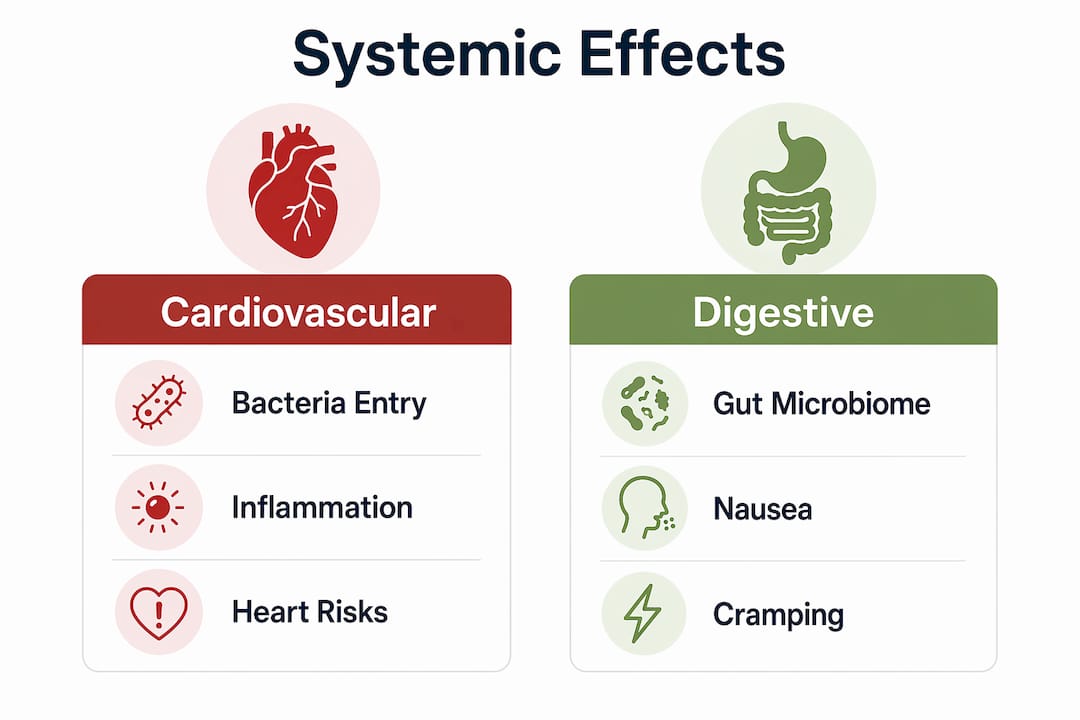
| System affected | How dental infection contributes | Key risk |
|---|---|---|
| Cardiovascular | Oral bacteria inflame blood vessel walls | Increased stroke and heart attack risk |
| Digestive | Swallowed bacteria disrupt gut microbiome | Nausea, cramping, gut dysbiosis |
| Immune | Chronic infection exhausts immune response | Slower healing, higher infection susceptibility |
| Musculoskeletal | Jaw infection spreads to surrounding bone | Osteomyelitis, bone loss |
Pro Tip: If you have been experiencing unexplained stomach problems, fatigue, or recurring headaches, ask your dentist to check for silent dental infections at your next visit. An X-ray can reveal abscesses that produce no pain at all.
How are rotten teeth treated to prevent sickness and complications?
Treating a rotten tooth promptly is the most effective way to prevent systemic illness. The two primary treatment options are root canal therapy and tooth extraction, and the right choice depends on how much healthy tooth structure remains. Root canal treatment removes the infected pulp, cleans the root canals, and seals the tooth to prevent reinfection. It preserves the natural tooth and eliminates the bacterial source driving systemic inflammation. Research confirms that treating deep dental infections yields measurable systemic health benefits, including improved blood sugar control and reduced systemic inflammation.
Antibiotics play a supporting role, not a curative one. A dentist may prescribe antibiotics to control the spread of infection before or after a procedure, but antibiotics alone cannot resolve a dental abscess. The physical source of the infection, the dead or dying pulp tissue, must be removed for the infection to clear completely.
- Book an urgent dental appointment as soon as you notice pain, swelling, or any systemic symptoms. Do not wait to see if it resolves on its own.
- Get a full dental examination and X-rays to identify the extent of infection, including any silent abscesses not visible to the naked eye.
- Discuss root canal therapy or extraction with your dentist based on the tooth’s condition and your overall health.
- Complete any prescribed antibiotic course in full, even if symptoms improve before the course ends.
- Follow up with a crown or restoration after root canal treatment to protect the tooth from fracture and reinfection.
- Establish a prevention routine that includes twice-daily brushing, daily flossing, and regular dental check-ups every six months.
Prevention remains the most cost-effective strategy. Good oral hygiene, a low-sugar diet, and professional cleans every six months dramatically reduce the risk of tooth decay progressing to the point where systemic illness becomes a concern. Patients who attend regular dental visits catch decay early, when a simple filling is all that stands between a healthy tooth and a dangerous infection.
Key takeaways
An untreated rotten tooth is a genuine medical risk, not just a dental inconvenience. Treating the infection early prevents systemic complications including sepsis, cardiovascular disease, and gut dysbiosis.
| Point | Details |
|---|---|
| Rotten teeth cause systemic illness | Bacteria from an infected tooth can enter the bloodstream and affect the heart, gut, and immune system. |
| Silent infections are common | Pain stopping does not mean infection has cleared; bacteria can silently destroy bone after the nerve dies. |
| Sepsis is a real risk | Rapid heart rate, confusion, and laboured breathing alongside a dental abscess require emergency hospital care. |
| Cardiovascular risk is significant | Periodontal disease is linked to a 44% increased stroke risk and 28% higher heart attack likelihood. |
| Early treatment prevents complications | Root canal therapy or extraction, combined with good oral hygiene, eliminates the bacterial source and protects overall health. |
What I have seen that most articles miss
By Ashish
The patients who concern me most are not the ones in obvious pain. They are the ones who come in reporting fatigue, recurring headaches, or a vague feeling of being unwell for months, and who have been told by their GP that nothing is wrong. A dental X-ray then reveals a large periapical abscess sitting quietly at the root of a tooth that stopped hurting two years ago. The nerve died, the pain went away, and the patient assumed the problem resolved itself. It did not.
The conventional advice to “see a dentist if you have a toothache” misses this group entirely. A significant number of dental infections produce no pain at all by the time they are causing systemic symptoms. The mouth-body connection is not a concept for medical journals. It shows up in the clinic every week, in patients whose digestive complaints, fatigue, or blood sugar instability trace directly back to an infected tooth.
My honest view is that oral health needs to be integrated into general health checks, not treated as a separate concern. If your GP is investigating unexplained systemic symptoms, a dental review should be part of that workup. The evidence linking periodontal disease to cardiovascular risk, gut health, and immune function is strong enough that treating them as unrelated systems is no longer defensible.
— Ashish
Treating a rotten tooth at Paynless Dental
Paynless Dental offers gentle root canal treatment at both the Toongabbie and North Ryde clinics, using advanced technology to remove infection with minimal discomfort. The team treats urgent dental infections promptly, with same-day appointments available for patients experiencing pain, swelling, or systemic symptoms. If a tooth cannot be saved, dental implants provide a permanent, health-protective replacement that prevents bone loss and restores full function. Paynless Dental serves patients across Western Sydney and the North Ryde corridor, including Wentworthville, Chatswood, Ryde, and Eastwood. Early treatment costs far less, in every sense, than managing the complications of a neglected infection.
FAQ
Can a bad tooth make you feel tired and unwell?
Yes. A tooth infection triggers a systemic immune response that causes fatigue, headaches, and a general feeling of being unwell. These symptoms often appear before or instead of localised tooth pain.
How do I know if my tooth infection has spread?
Signs that a tooth infection has spread include fever, swollen lymph nodes in the neck, jaw stiffness, facial swelling, and difficulty swallowing. Any of these symptoms alongside a known dental problem requires urgent care.
Can a rotten tooth cause stomach problems?
Yes. Swallowing bacteria from an infected tooth disrupts the gut microbiome and can cause nausea, cramping, and digestive discomfort that persists until the dental infection is treated.
Is a rotten tooth a dental emergency?
A rotten tooth with swelling, fever, or difficulty swallowing is a dental emergency. Facial swelling and breathing difficulty require immediate hospital care, as these signs indicate the infection has spread beyond the tooth.
Can root canal treatment stop a tooth infection from making you sick?
Yes. Root canal therapy removes the infected pulp and eliminates the bacterial source driving systemic inflammation. Research confirms that treating deep dental infections reduces systemic inflammation and improves overall health outcomes.